
A Guide to Lake Manyara National Park
A Guide to Lake Manyara National Park, In Tanzania, the northern circuit is popular for wildlife safari and mountain climbing. Serengeti, Ngorongoro Crater, and Kilimanjaro make the bucket list for many travelers. Since they are popular, these parks get huge traffics, especially in the high season. Sometimes, you may share a lion sighting with more than ten vehicles.
Here’s a way out. Lake Manyara is great option if you are looking for a unique, quiet destination in the north. Lake Manyara National Park is a 330-sq-km park located in the midway between Arusha and Ngorongoro Crater. We love it for its quietness and unique attractions, including the tree-climbing lions, flamingos, and baboons.
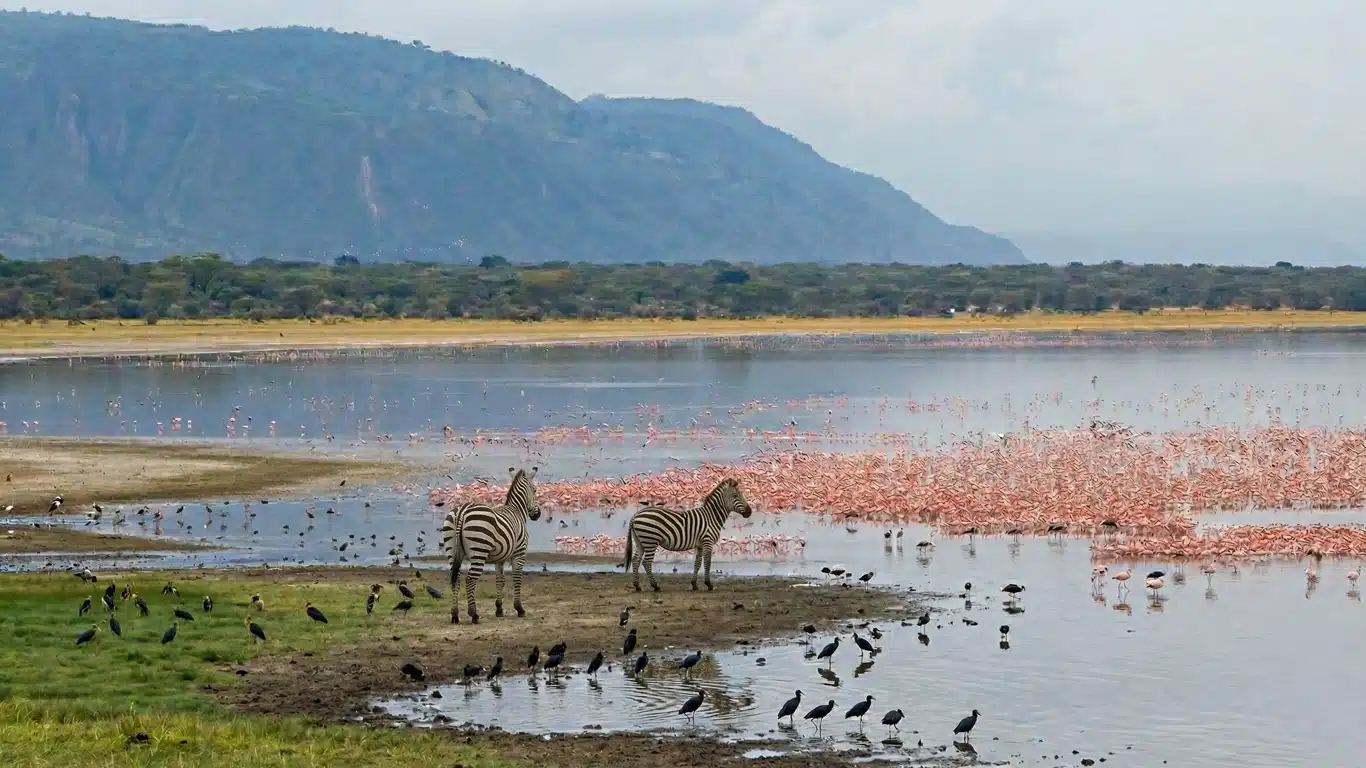
Lake Manyara sits at the base of an escarpment of the East African Rift Valley. The soda lake (Manyara) accounts for about 75% of the park. Only 25% of the park is terrestrial. But that land portion has a lot to offer in terms of wildlife sightings. our guests make the most of their safari here. Read our guide to this beautiful park. If you still more information email us.
What attractions are there in Lake Manyara?
Diverse wildlife
More 10 species of big game call Manyara home. While that number may be small compared to Tarangire’s, Lake Manyara has high concentration due to small size. On a game drive, you view herds of elephants, buffalo, wildebeest, and zebras. woodlands.
The park also hosts baboons, vervet, blue monkeys, and colobus monkeys in its groundwater forests, and it’s the only the park with the highest concentration of primates in Tanzania.
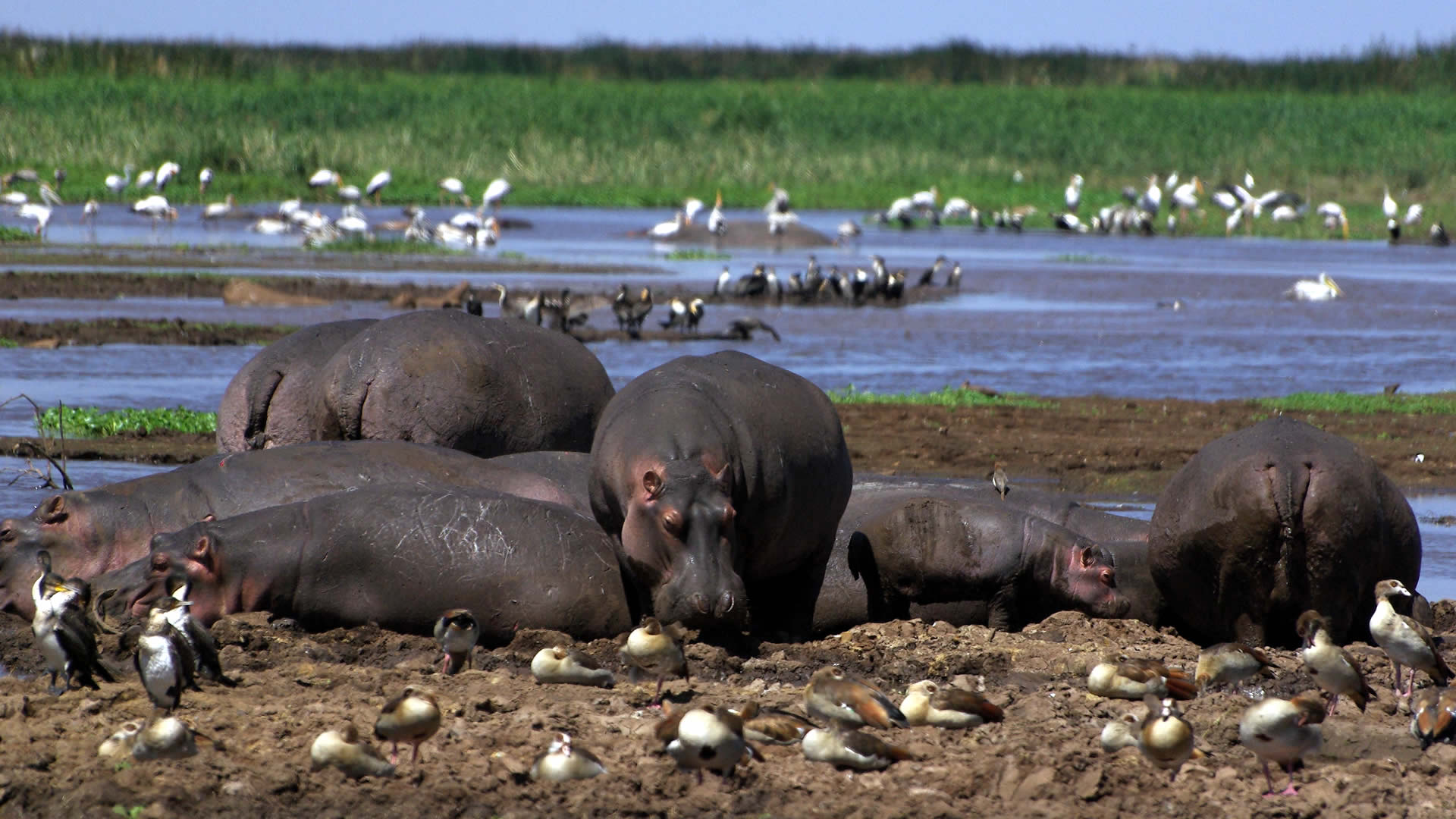
You can also see predators like lions and spotted hyenas in good numbers, while leopards, cheetahs, and wild dogs are occasional. As the sun sets, nocturnal species such as wild cats, servals, civets, and jackals come live. Hippos and crocodiles are spotted in the marshes around Lake Manyara.
Tree-climbing lions
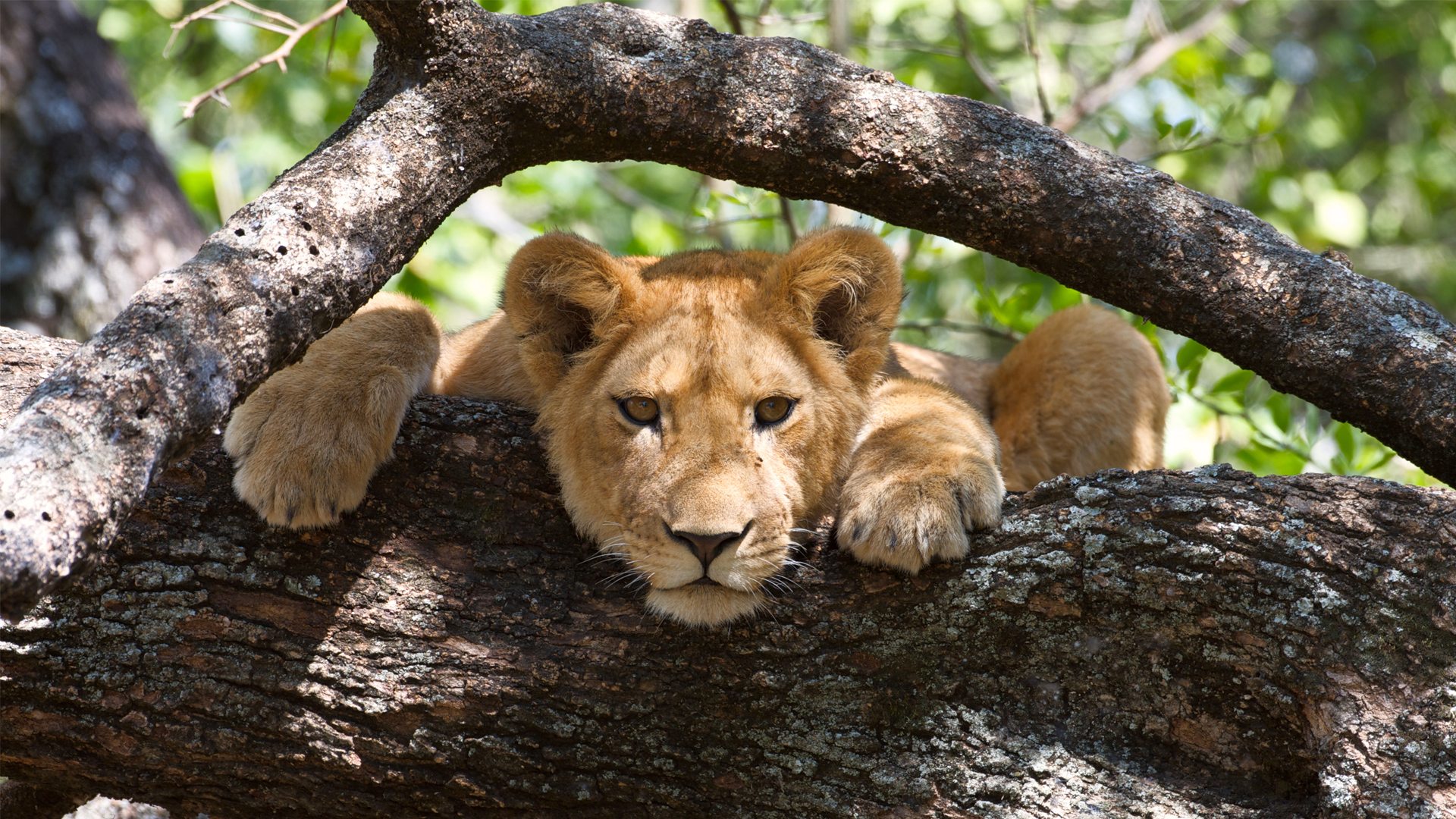
We all know that leopards and cheetahs are good at climbing trees. Lions are not good at this, right? Wondrously, lions of Lake Manyara can actually climb trees. And you can see this subspecies of lions in Lake Manyara in Tanzania and Queen Elizabeth National Park in Uganda (lions of Ishasha).
Are you curious at what made these land-based predators to climb trees? We got you covered. Some studies suggest that they do so to avoid the heat on the ground, especially during afternoons. And of course, you’ll find them napping on a branch of acacia tree when the afternoon heat creeps in. Others suggest that they use trees as a vantage point for hunting and to avoid insects.
Flamingos
On the shallow shore of Lake Manyara lies large flocks of greater flamingos. These unique birds decorate the soda lake staining it pink with their pinkish hues. As you approach Lake Manyara, you notice their presence – the lake appears pink.
Lake Manyara alongside other soda lakes (Lake Natron, Turkana, and Magadi) are breeding sites for both greater and lesser flamingos. They have high concentration of spirulina algae, which is the favorite food for these birds.
Treetop canopy walkway
Lake Manyara has a 350-meter-long canopy walkway into the groundwater forests. This bridge is suspended at 15 meters off the ground and is designed to give you a bird’s eye view of the park beyond traditional game drive.
Most guests choose to walk on this walkway, especially in the afternoon’s dead time or evening. You may spot baboons, colobus monkeys, and blue monkeys during this walk. On top of that, the joy of walking in the air is always amazing.
Birdlife
Manyara has an incredible birdlife with over 400 bird species. The first bird you’ll probably see as soon as you enter the park is a pink flamingo. But there are many other species, including African fish eagle, Ashy starling, grey-crested eagle, yellow-billed stork, crowned eagle, kingfisher, and many others.
When is the right time to visit Lake Manyara?
We recommend visiting it during the dry season, from June to October. Conditions are good for game viewing. And such conditions include accessible roads, thin vegetation, and clear skies. Lake Manyara has low traffic throughout the year. But prices may rise a bit as lodges charge higher due to limited spots.
Apart from the long dry season, some months are also good for safari. December, January, and February receive very low rainfall, and prices are at their lows. Birdwatching is also at its peak during this period.
How to get to Lake Manyara?
You can get to Lake Manyara by driving or flying. The best entry point for international visitors is Kilimanjaro International Airport (JRO) in Arusha. From Arusha, you can then fly from Kilimanjaro Airport (or Arusha Airport (ARK)) to Lake Manyara Airstrip. This flight takes about 45 minutes.
Driving is also the best way to access Lake Manyara. From Arusha, you will spend about 2 hours arriving at the main gate. And along the way, you will view local villages, coffee plantations, and more. At some point, you can stop to catch your breath or just have fun along the way.
What to do in Lake Manyara?
Wondering what you can do in Lake Manyara? We’ve got you covered. Here are the best things you can do while in this wonderful park.
Game drives: Daily safari drives bring you to the world of big game like elephants, buffalo, wildebeest, zebras, and warthogs. Keep an eye on acacia trees for tree-climbing lions, especially during afternoons.
Night safaris: You can drive at night in Lake Manyara. (It’s illegal to drive in the Serengeti and Ngorongoro during the night. You can spot nocturnal species like civets, jackals, porcupines, owls, nightjars, and aardvarks.
Canoeing and boat safaris: When the sea level is higher, especially from November to May, canoeing is possible. On this journey, you will explore aquatic species like hippos, crocs, fish, and birds.
Walking safaris: You can explore natural beauty slowly on a guided walk inside this stunning park. On this tour, you will discover scenes that you can’t spot from the height of a safari vehicle.
The bottom line
Now, let’s make your dream a reality. At Explore African Safaris, we treat every visitor differently. Tell us your story (how you want your safari to be), and we’ll make it true. Please give us a call or email us.