
5 Interesting Facts abo ut Mount Kilimanjaro
5 Interesting Facts about Mount Kilimanjaro, In Tanzania stands Africa’s highest peak, Mount Kilimanjaro, which rises to 5,895 meters (19,341 ft) above sea level. This dormant volcano, believed to have erupted approximately 2.5 million years ago, is one of the most fascinating mountains to climb and observe. We bet you know a little bit about this glorious stratovolcano. We’ve gathered some of the jaw-dropping facts about Mount Kilimanjaro.
1. Kilimanjaro is one of the world’s Seven Summits.
The Seven Summits features the tallest mountain (or peak) in each of the world’s seven continents. Mount Kilimanjaro, Africa’s tallest, lines up with Everest, the world’s highest mountain.
The list includes Mount Everest (Asia), Mount Denali (North America), Mount Aconcagua (South America), Mount Elbrus (Europe), Mount Kilimanjaro (Africa), Mount Kosciuszko (Australia), Carstensz Pyramid (Australasia or Oceania), and Vinson Massif (Antarctica).
Adventurers who aim to conquer the seven summits often start with Mount Kilimanjaro. Why should you start with Kilimanjaro? Because it’s not technical, while the rest are actually technical climbs. You start easy, adapt to higher altitudes, then go on to hike the highest mountains.
2. Kilimanjaro is a non-technical climb.
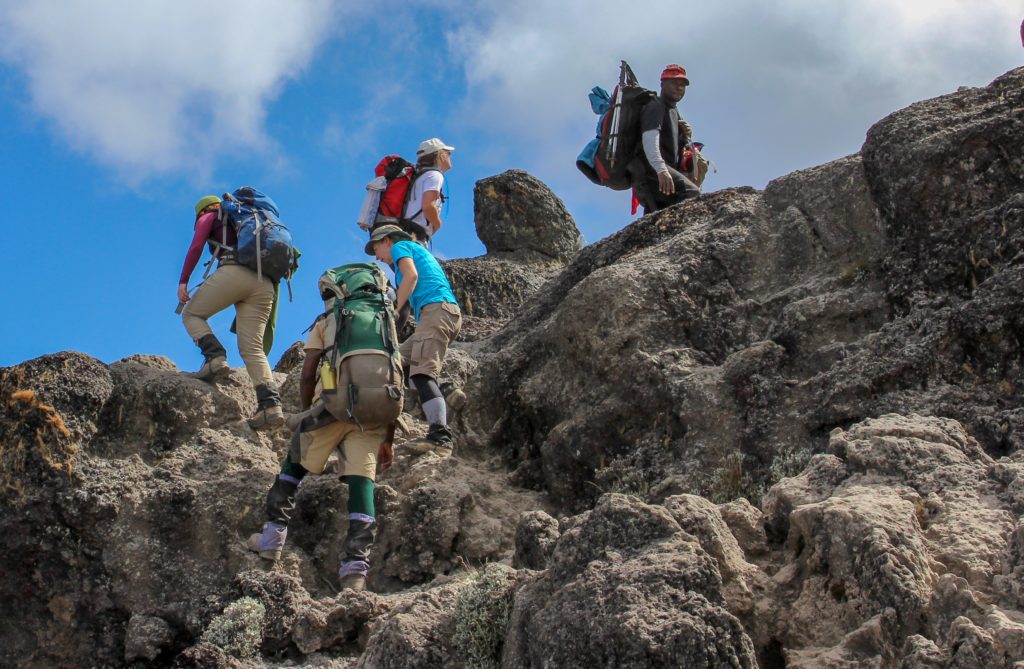
Many great mountains require technical mountaineering skills to beat. But you don’t need all these skills to climb Mount Kilimanjaro. Among the Seven Summits, only Mount Kilimanjaro is a non-technical climb. (That’s why climbers often start with it before attempting the rest).
What level of fitness do you need to conquer Kilimanjaro? Just basic. We actually advise you to train. Run, lift light weights, and walk. You should also prepare your body for higher altitudes. Mount Meru, located in Arusha, a few miles from Kilimanjaro, is ideal for acclimatization.
Everyone can climb Mount Kilimanjaro. Anne Lorimor, the oldest person to summit Kilimanjaro, for instance, was 89 years old when she comfortably walked up to Uhuru Peak in 2019. And that wasn’t the first time she submitted Kilimanjaro. This shows that everyone with stamina and who has enough time can climb the roof of Africa.
3. Kilimanjaro has five distinct ecological zones.
From start to finish of your climb, you will pass through five ecosystems. At the foot of the mountain (between 800 m and 1,800 m) is the cultivation or agricultural zone. The Chagga people live at the foot of Kilimanjaro and grow bananas, maize, coffee, and beans on the arable land. You will experience this as you drive through villages to the entry gate.
The second zone is the rainforest. This lies between 1,800 and 2,800 meters above sea level. The region features an afro-montane rainforest of evergreen trees and flowers. It’s in this zone where climbers may see wild animals such as duikers, serval cats, blue monkeys, bush babies, and colobus monkeys. Slipperiness is common in this zone. So, using gaiters and trekking poles is a good idea here.
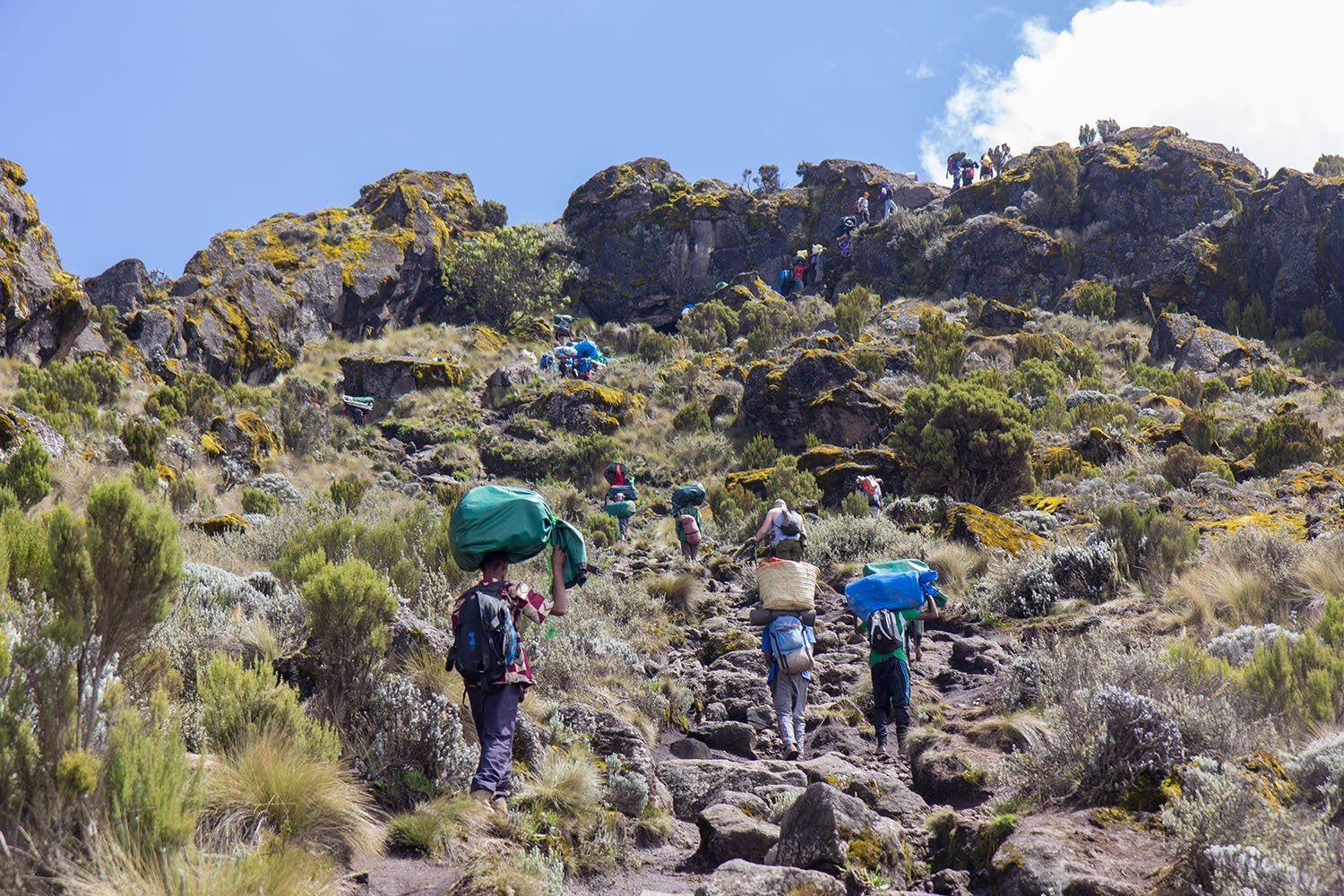
The third zone is alpine moorland. The Moorland zone lies between 2,800 and 4,000 meters above sea level. You will reach it on your third day of the hike. Several animals have been spotted in this zone, including eland, Kilimanjaro tree hyrax, and the four-striped grass mouse. There are also birds such as the augur buzzard, alpine swift, mountain buzzard, and alpine chat.
The fourth zone is an alpine desert. The region is often drier than the rest and lies between 4,000 and 5,000 meters above sea level. This zone is home to a few rodents and birds. The four-striped grass mouse is reported to live here and the white-necked raven.
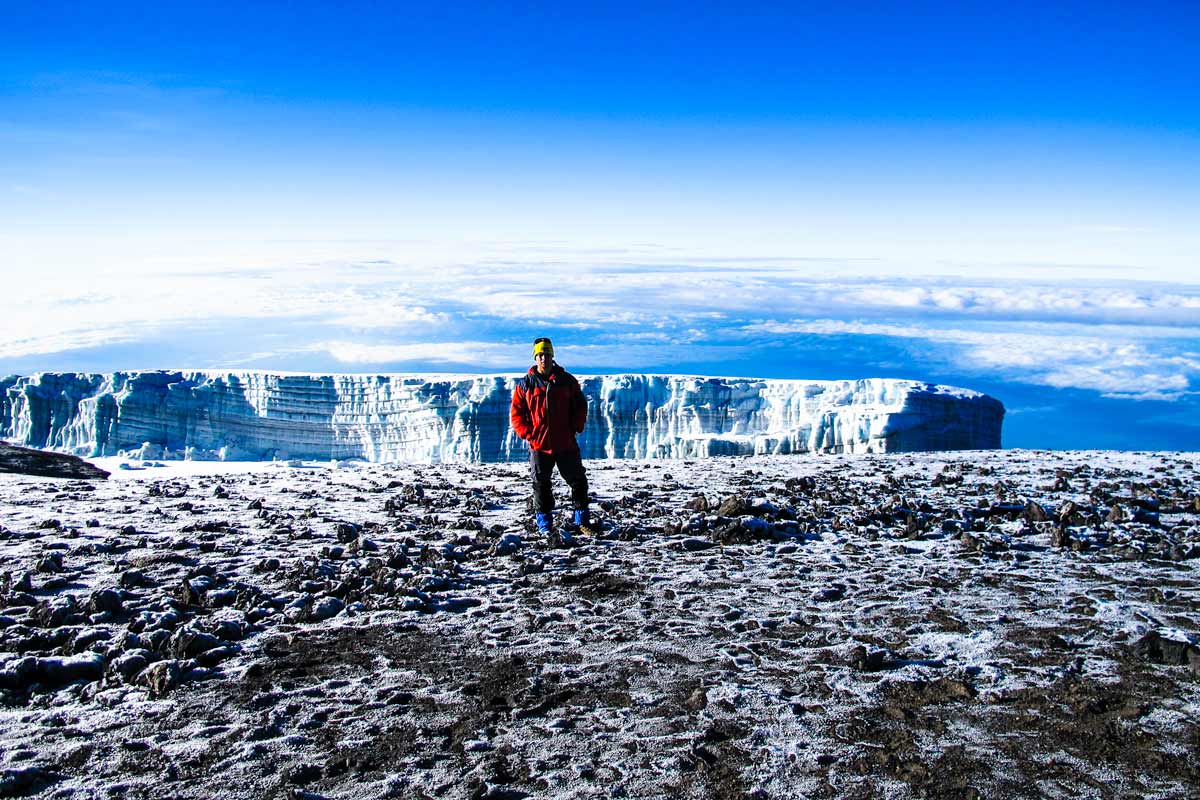
The fifth ecological zone is arctic. It lies above 5,000 meters above sea level. The region comprises large glaciers and has a temperature range of about -20°C and -10°C. There’s no wildlife in this zone. However, a frozen leopard was discovered in 1926. Additionally, a pack of wild dogs was also reported in 1962.
4. Kilimanjaro has seven routes to the summit.
Some peaks have fewer climbing routes. But Kilimanjaro has seven well-established trekking routes, namely, Marangu, Machame, Rongai, Umbwe, Shira, Lemosho, and the Northern Circuit route, each with its own distance and climbing difficulty.
Marangu, which is the oldest route, is praised for its shorter length and well-established accommodation. It takes only five days to complete the round-trip trek. And during the climb, you will stay in A-framed huts stationed in three camps: Mandara Huts, Horombo Huts, and Kibo Huts.
The downside of the Marangu route is that it gets huge traffic, especially during the high season (June to August). It also offers a low summit success score of about 60% for a 5-day climb. Adding an extra day of acclimatization may increase your summit success up to 90%. And to avoid crowds, plan your climb in the shoulder months of September and October or January through February.
Machame is the second most popular route on Kilimanjaro. It usually takes 7 days to complete and has a success rate of 80%. It’s also great for beginners, but some sections are even tougher, for example, the Barranco Wall.
Our favorite routes are Lemosho, Rongai, and Northern Circuit. We love Lemosho because it’s scenic and takes 8 days to complete, giving you enough time to acclimatize. Rongai is remote and the only route in the north of Kilimanjaro. It has beautiful scenery along the way and is great for avoiding the crowds, even in the high season. It is also a good option for climbers in the rainy season because the northern side of Kilimanjaro receives very little rainfall.
The Northern Circuit route is, without a doubt, the newest and longest one. But it is the most successful route with summit success rates of 98%. The reason it’s highly successful is because of its length. It takes between 9 and 11 days to complete. That gives your body enough time to adapt.
Umbwe is the shortest route. But we only recommend an expert climber to attempt it because of its steep slope. The same applies to the Shira route.
5. Kilimanjaro has three volcanic cones.
Kibo, Mawenzi, and Shira are three cones of Kilimanjaro. Each resulted from a volcanic eruption. Shira is the oldest one, believed to have formed about 2 million years ago. Shira is 3,962 meters (13,000 ft) high. It’s an extinct volcano that has evolved into the highest plateau on Earth.
Mawenzi Peak is 5,149 meters (16,893 ft) high. It’s an extinct volcano formed thousands of years after the first cone. Kibo Peak is the youngest, formed about 400,000 years ago after Mawenzi. The highest peak of Kilimanjaro, Uhuru Peak, is on Kibo. It is 5,895 meters (19,341 ft) above sea level and is Africa’s highest peak so far.
Let’s plan your climb.
At Explore African Safaris, we guide climbers to the top of the world’s freestanding mountain. Whether it’s your first time or not, our mountain guides will make your climb successful. Let’s help you design your adventure. Email us at info@explorefricansafaris.com.