
Where to See the Big Five in Tanzania?
Where to See the Big Five in Tanzania, the Big Five, lion, leopard, elephant, buffalo, and rhino, are among the most sought-after animals during an African safari. The term “Big Five” has nothing to do with the size of these animals. It was coined by the old-school hunters, who, by then, found it difficult to hunt them on foot.
When cornered, these five animals reacted furiously, endangering the life of the hunter. Their reaction, however, didn’t protect them from trophy hunters since a trophy for killing one of them was considered hilarious and victorious. Tourism adopted the term “Big Five” for marketing purposes. Nowadays, photographing exceeds hunting.
Tanzania is one of the best African countries for viewing the Big Five. In this country, you have the chance to view these mysterious games in a single safari. You can also switch from one park to another just to increase your chances of ticking the Big Five off the bucket list. In this article, we’ll walk you through the best places for watching the Big Five.
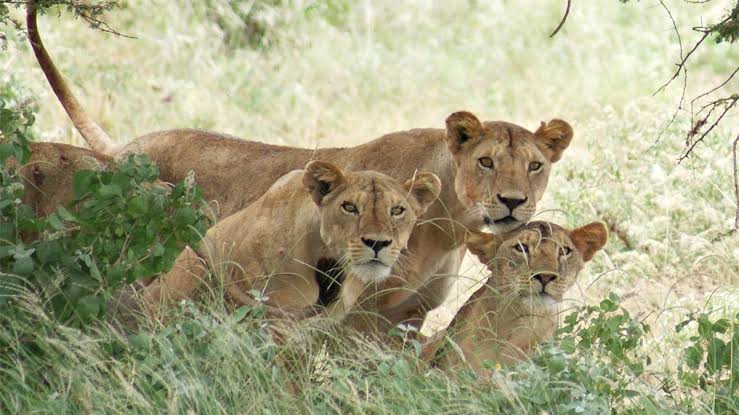
Serengeti National Park: Home of the Great Migration and the Big Five
Famed for the great wildebeest migration, the Serengeti appeals to every wildlife lover. It is rich in fauna species, especially big game, plus its ‘endless plains,’ which make it easier to watch animals. A variety of animals call the Serengeti home, including the Big Five.
Lions top the list in terms of concentration. The Serengeti holds about 4,000 lions and, of course, one of the largest lion populations in the world. This park alone hosts over 300 prides, each controlling a territory of about 100 square kilometers. Areas with a higher concentration of lions include central Serengeti (Seronera), southern Serengeti, and Namiri Plains.
Buffaloes are also available in large numbers in the plains of the Serengeti. Estimates put the buffalo population in the Serengeti at around 50,000. Their favorite habitats include woodlands and plains, where they eat grass. You can also spot them in a herd near a river in the afternoons.
Elephants roam the woodlands and forests in small matriarch herds of up to 20. They are the architects—they trim forests, paving ways for other herbivores like buffalo to pass through. Areas where you can see many elephants include Lobo, Seronera, and Grumeti.
The Serengeti holds about 1,000 leopards. Yet spotting one is very difficult. These elusive predators spend most of their daytime hidden in trees, preferably sausage and acacias. They are usually seen in the bank of the Seronera River, especially in early mornings and evenings. As we drive, keep an eye out for trees for a possible sighting.
The black rhinos are extremely rare, even when you drive past their favorite hideouts—the thickets. The Serengeti has around 160 black rhinos—that’s one rhino in 92 square kilometers. Honestly, the search for a rhino in the Serengeti may sometimes be unsuccessful. The best regions for spotting them include Moru Kopjes, Seronera, and northern Serengeti.
Ngorongoro Crater: Best Place to See All Big Five
The crater, spanning 260 square kilometers, is the world’s largest unbroken caldera formed over 2 million years ago from volcanic activity. This fascinating bowl hosts over 25,000 animals, including the Big Five. The crater offers the best chance to view the Big Five because it’s easy to spot the black rhino in its natural habitat in the crater, a rare case in other parks.
Approximately 35 black rhinos live in the crater, often in thickets. However, the nature of the crater’s habitats makes it easy to spot them. These horned giants love thickets and shrubs. They often hide in such habitats to avoid disruptions from grazers and predators. The crater, on the other hand, has plains and a few shrubs. As we drive through the zig-zag trail, you may spot a rhino resting under a tree.
The leopard is another member of the Big Five, which is even more difficult to spot. It spends time resting on the branches of acacia and fig trees. A large portion of the crater comprises grasslands and open woodlands, but there’s a forest patch called Lerai Forest, where leopards and elephants like to stay.
Cape buffalo, elephant, and lion are among the common sights on the crater floor. Large herds of the cow-like mammals graze the fresh grass. Elephants, the largest land-dwelling animals, roam the woodlands and the Lerai Forest. Both elephants and buffalo may be spotted near water bodies in the afternoons as they wallow in the mud to cool their bodies.
The Ngorongoro Crater has the highest concentration of lions. This wonderful caldera boasts about 70 lions—that’s one lion for every 3.8 square kilometers. That number is promising for every nature lover in a 260-sq-km caldera. Additionally, you can view other large animals, such as wildebeest, zebras, hyenas, cheetahs, and impalas.
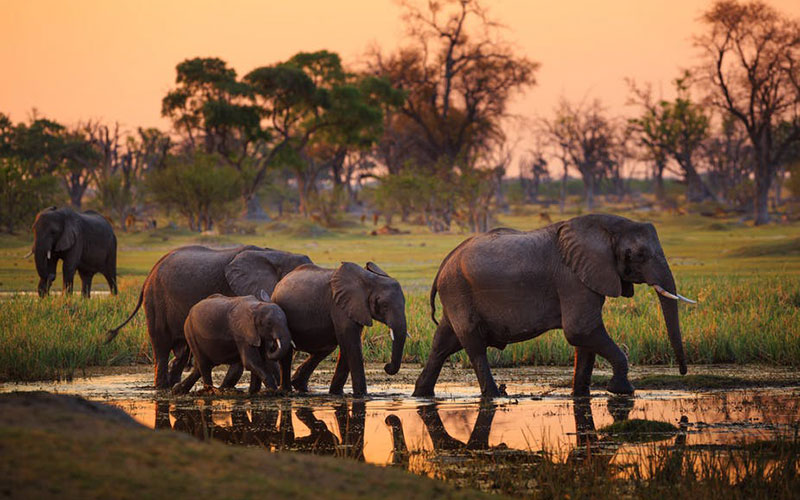
Nyerere National Park: Big Five in Southern Tanzania
The remote Nyerere (formerly Selous) is Africa’s largest standalone national park. It spans about 30,000 square kilometers and lies on the forgotten southern side of Tanzania. The best entry point to access this park is Dar es Salaam, Tanzania’s business capital. From this city, you can fly from Nyerere Airport to any airstrip (close to your lodge), including Mtemere, Beho Beho, Kiba, Matembwe, and Siwandu.
Can you see all the Big Five in Nyerere? It’s a bit of luck. Yes, it is possible to see all the Big Five in Nyerere. But the black rhino is extremely rare here. First, because there are very few rhinos here. Second, the vegetation of Nyerere is dense, making it difficult to find these elusive creatures. Lastly, poaching had decimated the number of rhinos in this park. A few decades ago, Selous (Nyerere) was home to a lot of rhinos.
To be honest, people don’t expect to see the Big Five here. But the fact that Nyerere got two nominations by the World Travel Awards in 2025 and 2026 for Africa’s Leading Big Five National Park Award makes sense. Plus, there’s a lot to see for anyone on a slow-paced safari, such as its large population of African wild dogs, hippos, and rare creatures like roan antelopes, blue wildebeest, and Lichtenstein hartebeest.
Additional Places for the Big Five
Viewing all the Big Five in a single destination is unforgettable. The Big Five parks we’ve covered so far are perfect for this. But that comes with fear—the fear of missing out (FOMO) and uncertainty. The Big Five are just wild animals living in their natural habitats. This day you find one on this corner, and so forth.
Our advice is to visit most of the safari parks known for promising sightings of a certain member of the Big Five. Tarangire, for instance, is great for viewing massive herds of elephants; Lake Manyara for watching the iconic tree-climbing lions and elephants; Ruaha for both lions and elephants; and Mkomazi for watching the black rhino.
The bottom line
Every member of the Big Five carries natural beauty and authority. To witness these special animals, we ask you to slow down. To breathe as you watch an elephant break a branch of acacia. You will enjoy your trip and have all the photos taken and your bucket list ticked off. Talk to our experts at info@exploreafricansafaris.com.