
A Guide to Tarangire National Park
A Guide to Tarangire National Park, most northern parks, like Serengeti and Ngorongoro, experience crowds during the high season. Tarangire is an exception. While this park lies in the north between the Arusha and Manyara regions, it remains relatively uncrowded throughout the year.
As many travelers scramble for a wildlife sighting in the Serengeti and Ngorongoro Crater, you can view wildlife alone. In Tarangire, you will find the highest density of elephants and an overlooked wildlife migration. Our article provides comprehensive information about Tarangire National Park.
Where is Tarangire located, and how do you get there?
As we mentioned, Tarangire is located in the northern part of Tanzania, about 140 km from Arusha. The park is reachable by flight or road transfer.
By flight
You can fly from Arusha Airport (ARK), Kilimanjaro Airport (JRO), or Zanzibar Airport (ZNZ) to Kuro Airstrip, the only airstrip in Tarangire. Because many travelers choose driving over flying, only a few airlines run scheduled flights to this park. These include Auric Air, Air Excel, Coastal Aviation, and Regional Air. These companies also offer chartered flights.
Alternatively, you can fly on a scheduled flight (Auric Air is the best option) to Lake Manyara Airstrip, then drive for 90 minutes to Tarangire. We recommend this option if your safari program includes both Tarangire and Lake Manyara.
By driving
Arusha is within easy reach of Arusha, Tanzania’s safari capital. Driving takes only 2 hours to reach Tarangire from your hotel in Arusha. That means you can go there for a full-day game drive. Road conditions are great, with the first (and largest) part being a tarmac road. The short, second part is unpaved.
What attractions are there in Tarangire?
Tarangire has a lot of things to see for every safari-goer. From the highest density of tuskers to the giant baobab trees, you will explore many attractions. Here are our favorites.
1. The highest concentration of elephants
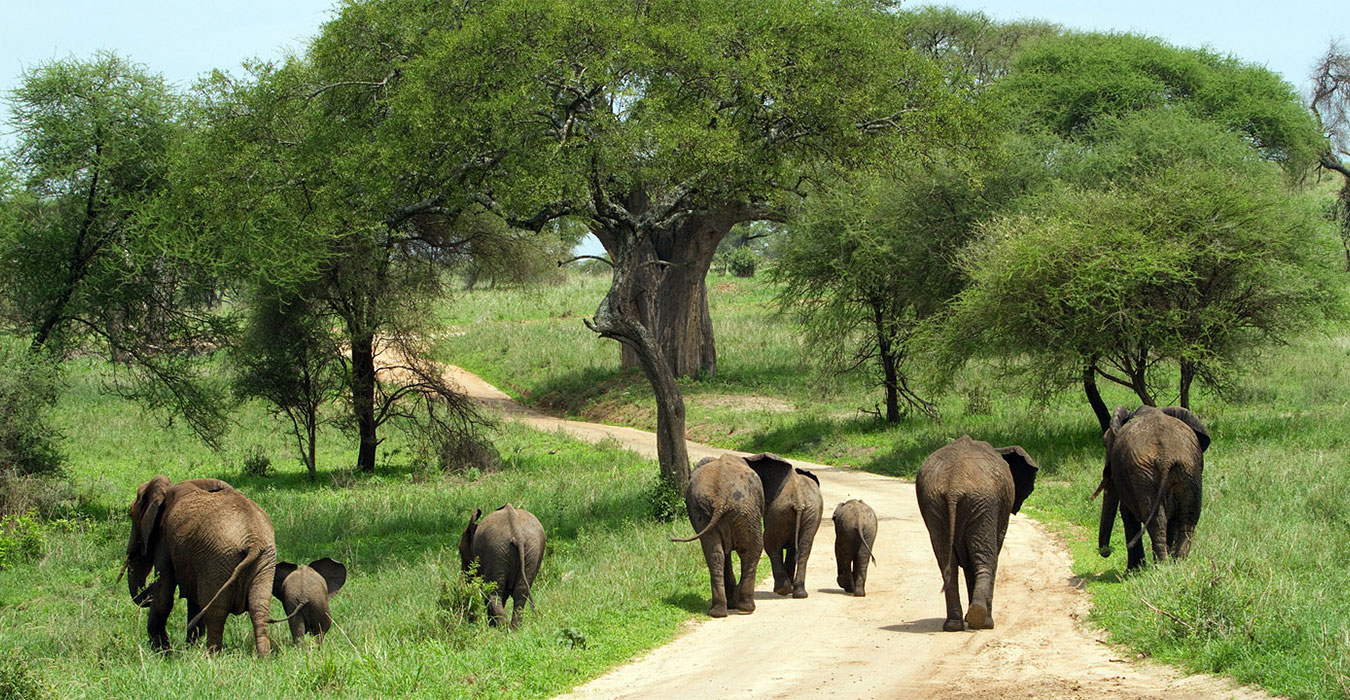
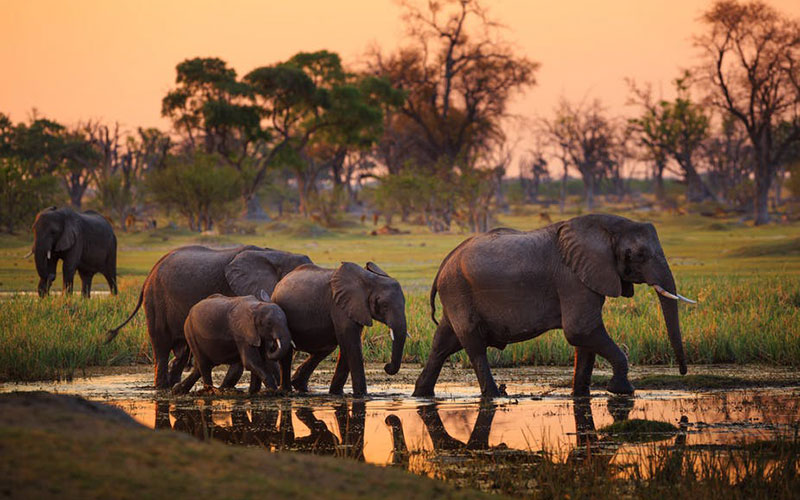
No other park compares to Tarangire’s massive elephant herds. About 1,000 elephants call Tarangire home; that’s about 29 family clans. Normally, elephants form small- to mid-sized groups of between 10 and 20 individuals. But in Tarangire, you can witness 300-strong herds.
In 2025, Tarangire won an accolade as Africa’s Elephant Paradise National Park, beating Kenya’s Amboseli, South Africa’s Addo Elephant National Park, and Zimbabwe’s Hwange National Park. The number of elephants increases significantly during the dry season as elephant clans, guided by their matriarchal leaders, travel from other areas to Tarangire.
2. Wildlife migration
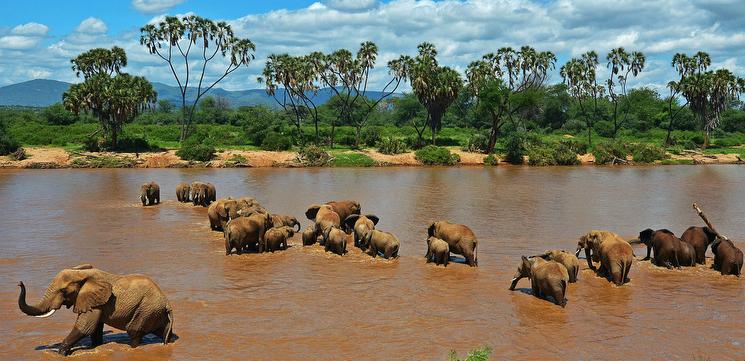
You are probably aware of the Serengeti’s wildebeest migration (because it’s world famous). Tarangire has its very own wildlife migration, which features a variety of big game. During the dry season (June to October), many water sources dry up. The mighty Tarangire River remains a lifesaver, hence attracting animals from other parks.
Common animals you will see include elephants, buffalo, zebras, wildebeest, gazelles, and impalas. You will also see predators such as lions, leopards, hyenas, cheetahs, and jackals. And if lucky, you may witness a kill.
3. Other Attractions
Tarangire has other beautiful things worth watching. Baobabs, 500 bird species, the Tarangire River, and more.
Regarding vegetation cover, baobabs are among the iconic trees covering the savannahs of Tarangire. Some are as old as 300 years, while others are young, fresh trees. They serve as a source of food for various animals, including elephants and monkeys.
Birds thrive in Tarangire. The park hosts approximately 588 bird species (avibase.bsc-eoc.org), ranging from large, land-based birds such as ostriches and ground hornbills to small, colorful birds like red-bellied parrots and ashy starlings. They include the yellow-billed duck, Egyptian goose, greater and lesser flamingo, grey-crowned crane, lilac-breasted roller, Kori bustard, and yellow-billed stork, among others.
The Tarangire River is another striking feature in this park. Flowing throughout the year, this river serves as a water source for animals during the dry season. It also hosts species like Nile crocodiles, hippos, and river birds like kingfishers and African skimmers.
When is the best time to visit Tarangire National Park?
Tarangire is good year-round. But we know you don’t have enough time to spend on holiday. And you don’t want to regret going for a vacation in Tarangire. For convenient wildlife viewing, visit Tarangire from June to October, when the conditions are good.
The sky is clear; hence, no rainfall. Short grass and clear vegetation mean you will view animals without obstruction. As the water supply dwindles in other protected areas, the Tarangire River remains the only reliable water source. Animals gather on the riverbank, making game viewing easier. You will see large herds of elephants, buffalo, wildebeest, and zebras.
Worried about crowds? Tarangire doesn’t get traffic like its sister parks. Most travelers go there in a rush (to the Serengeti and Ngorongoro Crater), so they don’t stay for so long. On top of that, you will see the value of your money since lodges are fairly priced.
You can also visit Tarangire during the low season, from November to May. Tarangire sees a lot of migratory birds settling for nesting. The green vegetation, stunning flowers, and birds also create a perfect backdrop for your photographs. The costs are also at their all-time lows in these months.
Where to stay in Tarangire National Park?
Like other parks, the choice of your place to stay mainly depends on your budget. In Tarangire, you can stay either inside or outside of the park. Inside the park, Tarangire Treetops, Kuro Camp, Oliver’s Camp, and Little Chem Chem are great high-end options.
If you want to save, consider affordable camps, like Whistling Thorn Camp, Ang’ata Tarangire Camp, and Tarangire River Camp. You can also stay outside the park in Arusha and Karatu. Can’t decide precisely? Worry not! We can help you pick the right one.
The bottom line
If you want to explore wildlife in harmony or without the prices skyrocketing, put Tarangire at the top of your bucket list. Plus, we are here to help. We recommend setting aside two days for a slow, insightful safari. Ready to explore Tarangire? Please give us a call.