
Tanzania’s Southern Safari Circuit
Tanzania’s Southern Safari Circuit, Most travelers are drawn to the Serengeti, Mount Kilimanjaro, and Ngorongoro Crater, which lies in the north of Tanzania. Add to the list natural wonders like the Ol Doinyo Lengai volcano, Lake Natron, Lake Manyara, Tarangire, and Lake Eyasi. It always seems like the North is packed with numerous attractions.
And there’s a southern side of the country. The north often overshadows it and therefore receives only a fraction of visitors. The wildlife is undisturbed, the landscape is virgin, and you can rarely see another safari van while exploring this underrated region of Tanzania.
On this blog, we will unveil everything about Tanzania’s safari circuit. We will uncover untold truths about it, feature the best destinations, and guide you on how to book a safari to this hidden region. Let’s dive in.
Getting there.
A few northern parks have connecting flights to the south, including the Serengeti. Auric Air and Coastal Air offer direct chartered flights to Ruaha National Park. From Ruaha, you can catch a flight to Nyerere (Coastal Air operates this route).
The most convenient way to combine the northern, southern, and western circuits is by flying. Land in Arusha. Explore northern parks—Tarangire, Lake Manyara, Ngorongoro Conservation Area, and finally the Serengeti. Then catch a flight from Seronera, Serengeti’s main airstrip, to Ruaha.
If you want to swap the north for south, we advise you to land at the Julius Nyerere International Airport in Dar es Salaam. From there, catch a 45-minute flight to one of Nyerere’s airstrips, Kiba, Mtemere, or Matembwe. You can catch a 1.5-hour direct flight to Ruaha National Park.
There are options to get to the south by train and by road. Choose them only if you have enough time to stay in Tanzania. The road conditions can be tricky in some areas. There may also be some delays if you choose to travel by train.
Attractions in the Southern Safari Circuit
1. Ruaha National Park
Ruaha is Tanzania’s second-largest park after the Nyerere. The park spans 20,226 square kilometers (about 7,800 square miles)—that’s about 37% bigger than the Serengeti. Ruaha offers uninterrupted views of wildlife just like the Serengeti, though there’s no wildebeest migration.
Ruaha doesn’t host the Big Five animals, but if you want to see large herds of elephants, this is the right place to be. Estimates put the population of elephants at around 12,000. They form large herds as a result of a combination of related matriarchal herds. In the day, they break down branches of baobabs and act as the architects of the bush.
Ruaha holds about 10% of the world’s lion population. On a safari drive, you can spot large prides resting. The best part is that you don’t have to compete with ten safari vans for a lion sighting. It’s just you and the guide. Ruaha also has a good count of hippos and crocodiles in the Great Ruaha River.
What to do in Ruaha National Park
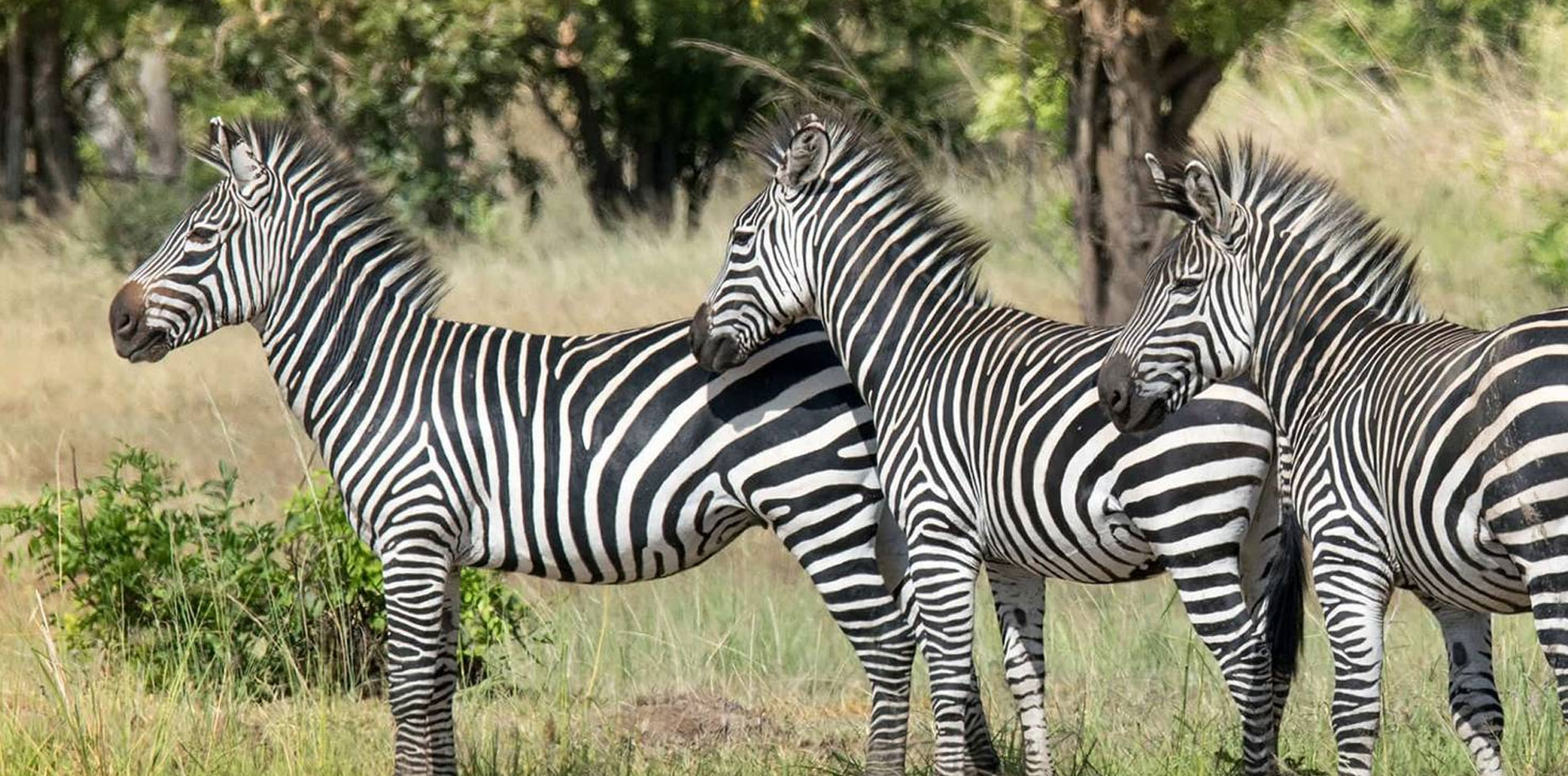
Game viewing: A drive in Ruaha is always full of scenes. You will see big game, including elephants, lions, hyenas, giraffes, buffalo, wildebeest, and zebras. You can also view small game like dik-diks, mongooses, hares, civet cats, and servals.
Boat riding: Ruaha offers a unique experience beyond traditional game drives, something you won’t experience in the north. A boat safari in the Ruaha River allows you to watch hippos and crocodiles up close.
Hot air ballooning: Floating over the vast savannahs of Ruaha is extraordinary. Herds of buffalo appear black from atop, while elephants appear as massive bodies traversing the woodlands. The flight is often scheduled for early mornings so you can catch the sunrise from above.
Walking safari: A guided walk in Ruaha is a perfect reset for your safari. It connects you with nature. You start noticing small creatures like rock hyraxes, butterflies, and more. You will also learn about medicinal plants as our local guide explains them to you.
Fly camping: Fly camping evolved from the old-school hunters’ camps. Back then, they used to set up a simple, mosquito-netted flysheet for an overnight. Today, this experience allows you to feel nature using all your senses—smell, vision, touch, sound, and taste. The experience is organized by a few camps in Ruaha, including Kigelia Ruaha, Jabali Ridge, Jongomero Camp, Usangu Camp, and Kichaka Camp.
Night safari: Night drives are forbidden in the Serengeti and Ngorongoro Conservation Area. In Ruaha, you can drive at night in search of nocturnal species, such as civets, porcupines, nightjars, owls, aardvarks, and mongooses.
2. Nyerere National Park
Nyerere is Tanzania’s and Africa’s largest park, spanning 30,893 square kilometers (11,928 square miles)—two times bigger than the Serengeti. And it has roughly the same size as Belgium. Before it was officially gazetted as a park in 2019, Nyerere was part of the Selous Game Reserve, with an estimated size of 50,000 square kilometers (19,300 square miles).
Despite being huge, Nyerere only gets a fraction of visitors per year. You will likely find yourself alone in the middle of its vast, unexplored jungle. The wild dogs, for instance, are a rare sight in the north. Nyerere holds the highest concentration of these nomadic canids.
What to do in Nyerere National Park
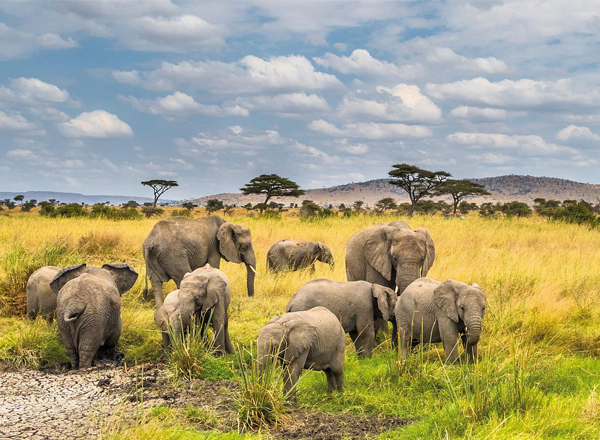
Game viewing: Nyerere hosts a variety of wild animals, all to be viewed on a game drive. Search for elephants, buffalo, wildebeest, giraffes, and bushbucks. You can also search for rare species such as blue wildebeest, roan and sable antelope, and Lichsteteein hartebeest.
Boat riding: Boat cruising is possible in the giant Rufiji River and in the seasonal lakes. Most visitors would choose to spend their evening floating along the Rufiji while watching pods of hippos, crocodiles, and river birds.
Night safari: Some lodges offer this incredible experience. This safari often begins at around 20:00 hours after a scrumptious dinner and will run through 23:00 hours. On this nighttime adventure, you can spot hippos that come out to graze at night and many other nocturnal species.
…Ruaha and Nyerere are often included in southern safari packages as main destinations. And there are add-ons, which are small parks, including Udzungwa Mountains National Park, Kitulo National Park, and historical sites like Kondoa Rock Art.
Mikumi National Park
Mikumi National Park, which is located in the southeast, is also included in most tour packages. This park offers frequent wildlife sightings, with lions, elephants, giraffes, zebras, wildebeest, buffalo, and gazelles being among the most common species. To access Mikumi, drive from Dar es Salaam for 2 hours or fly from either Nyerere or Ruaha.
Kitulo National Park
Kitulo National Park lies in the far southern corner of Tanzania. The park is renowned for its dazzling flowers, which bloom between November and April. The ‘Garden of Eden’ hosts over 45 species of orchids alongside other plant species. People come here not to watch wildlife but to watch flowers and vascular species.
The bottom line
There’s always a tradeoff: you visit the northern circuit to watch the annual migration, tick the Big Five, climb Africa’s roof, and hang out with the Maasai. Keep in mind that traffic usually builds. Or you go to a quiet, untouched, yet wildlife-rich side of the country to enjoy uninterrupted views at the right price. We are here to help you. Talk to our experts.