
The Big Cats of Tanzania and Where to See them
The Big Cats of Tanzania and Where to See them, Most safari-goers, especially first-timers, direct much of their focus to searching for the Big Five. While these animals are quite impressive, they aren’t the only thing Tanzania can offer.
At Explore African Safaris, we go beyond using so much fuel to look for just one animal; we expand the list, from five animals to watching the excellent predators bring down their prey. This article is the story of the African big cats and how and where you can see each one of them. Let’s get right into it.
What are the Big Cats?
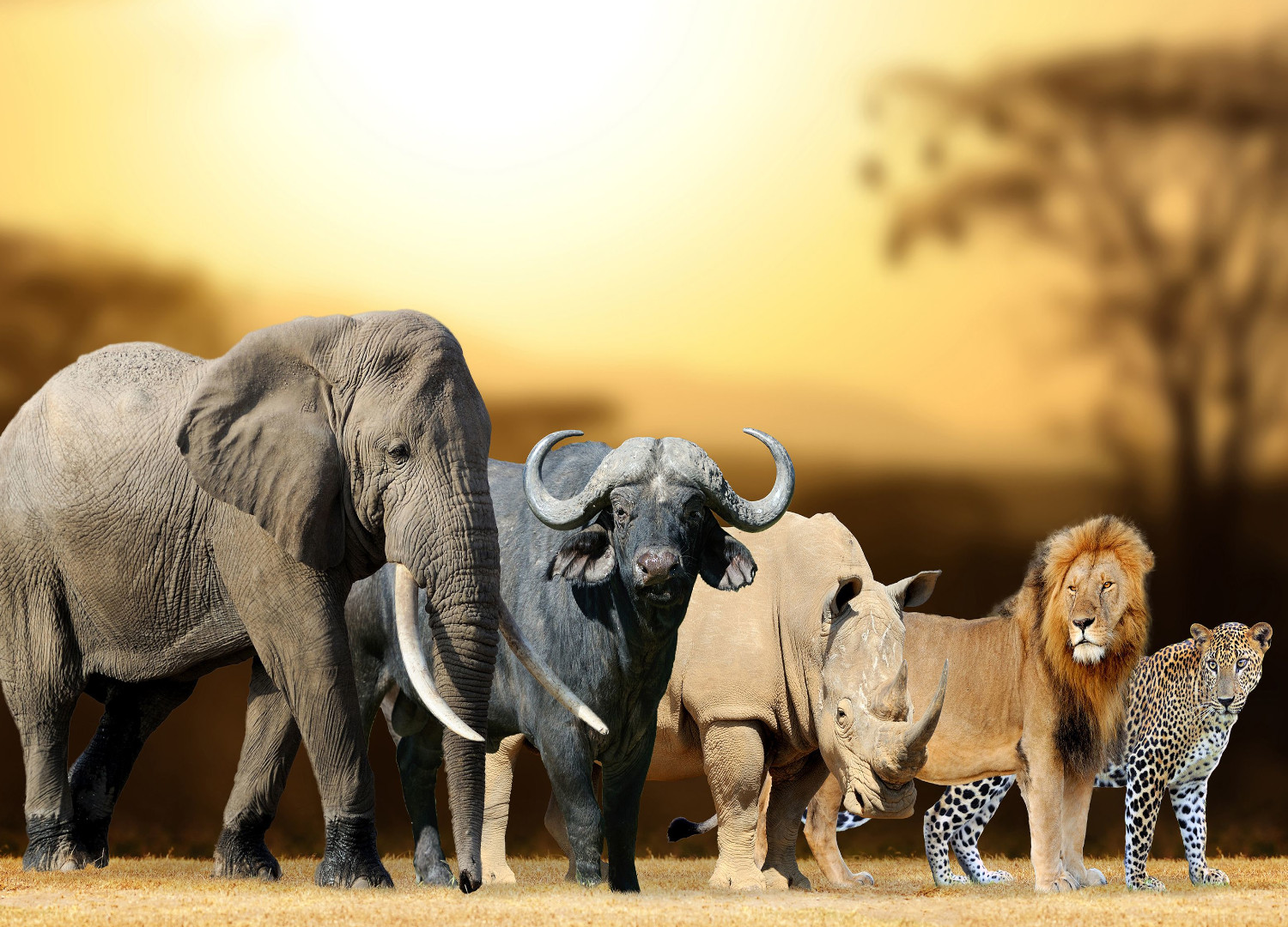
The big cats, including lions, leopards, and cheetahs, share a common family lineage with dogs and domesticated cats. They are called ‘big cats’ because of their size and weight, which are larger than those of common cats. The lions are even bigger than both the leopard and the cheetah.
Lion (Panthera leo)
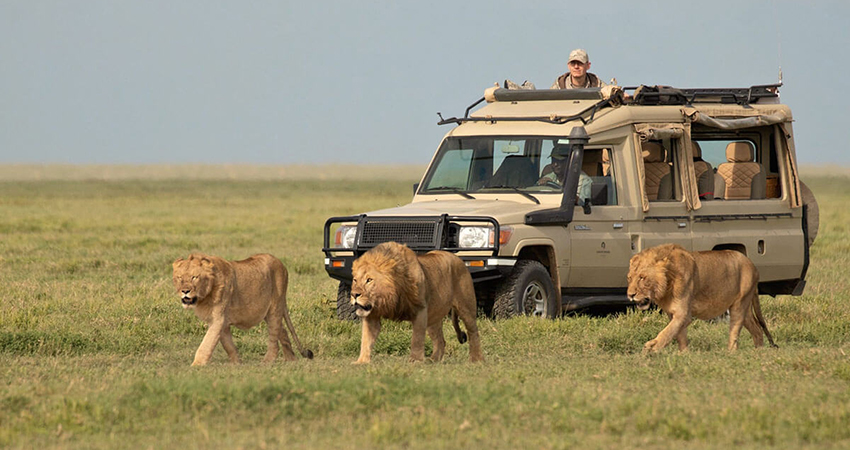
The lion, African king of the savannas, is undoubtedly the most terrifying big cat among the three. Lions are extremely social animals, forming groups called prides. A pride comprises related females, cubs, and one or more male maned giants. The females feed the cub while the males protect the territory.
Lions rely on stealth hunting and teamwork, and lionesses do most of the hunting. They stalk their prey for a certain period before launching a coordinated attack. Their favorite preys include wildebeest, zebras, buffalo, and antelopes. Lions can also scavenge on carcasses left by other predators. Sometimes they steal prey from leopards, cheetahs, and hyenas.
The best places to see lions in Tanzania include the Serengeti, Ngorongoro Crater, Ruaha, Tarangire, Nyerere (Selous), and Lake Manyara (where tree-dwelling lions live). In terms of concentration, the Serengeti comes first.
Leopard (Panthera pardus)
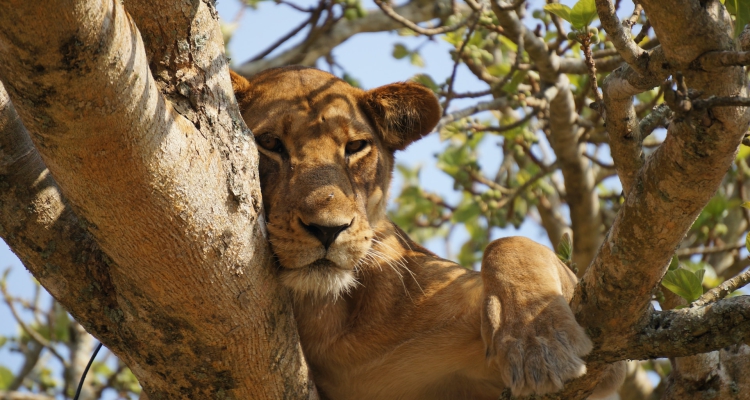
Leopards are elusive. They spend much of their time alone in trees, preferably acacia and sausage trees. Unlike lions, which form bigger prides, leopards live in small family groups mainly comprising the mother and her cubs. Males only spend time close to females during mating.
Leopards rely on speed hunting. They would try as much as possible to get close to their prey before launching an imminent, explosive ambush. They use vantage points, such as trees and rock outcrops, to scan first. Once successful, leopards often drag their kills into trees to avoid scavengers like lions and hyenas. Their favorite prey includes impala, bushbuck, and spotted deer. Sometimes, they would kill monkeys, warthogs, and even small reptiles.
Leopards are rarely spotted on safari, not because they are endangered. But because they are shy and elusive. They are usually active in early mornings and late evenings when the temperature is low. The best places to see leopards on safari include the Serengeti, Tarangire, and Ngorongoro Crater.
Cheetah (Acinonyx jubatus)
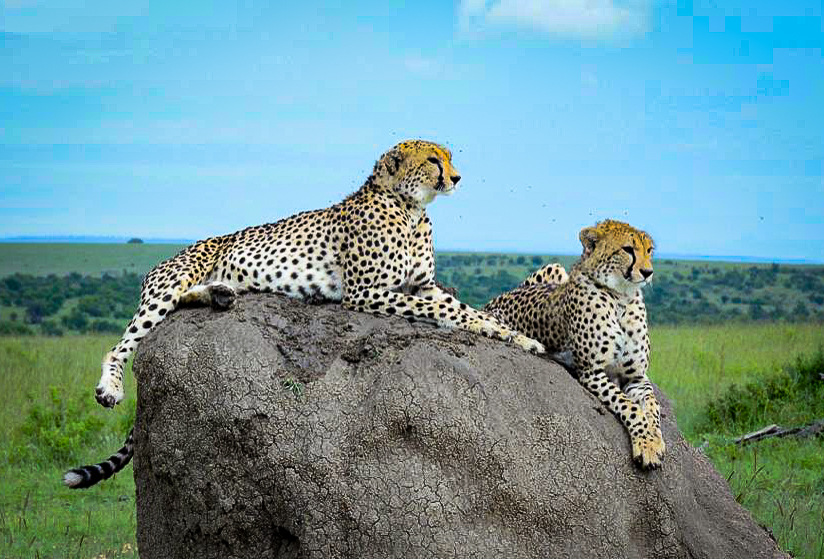
Like leopards, cheetahs are less social. They live in small groups of up to five members, mainly comprising the mother and her cubs. Of course, the mother-to-cub bond is the strongest. And females may stay together for a long time with their mother. Males only appear together with the group during mating.
Cheetahs use both stalking and high-speed chases during hunting. They stalk the prey and then launch a rapid, violent attack. Given their streamlined body and flexible limbs, cheetahs can chase their prey to their maximum speed, which is the world’s fastest. They aren’t successful in every hunt, especially when the prey runs into shrubs and dense forests.
Our favorite destination for watching cheetahs is Serengeti National Park. The Namiri Plains, located in the eastern Serengeti, are home to these beautiful cats. These plains were once reserved for the cheetah conservation project. Other places include Ngorongoro Crater, Ruaha National Park, and Nyerere (Selous) National Park.
Where to see big cats in Tanzania
So, where should I go to watch all the big cats in one place? The first place you should visit is the Serengeti. Here, you will find lions in large prides, leopards hidden in trees, and cheetahs resting on rock outcrops. The central region, Seronera, is great for lion and leopard sightings, while Namiri Plains is perfect for cheetah views.
Ruaha and Nyerere in the south are perfect spots for watching the big cats. Ruaha is particularly perfect for watching lions in big prides. You can also spot cheetahs and leopards. Nyerere adds a unique flavour to your safari – the views of the rare African wild dogs.
Lake Manyara is a great place to search for the unique tree-dwelling lions. Leopards and cheetahs are occasionally seen in Lake Manyara and Tarangire. It’s also worth taking a note that leopard sightings are quite rare even in wildlife-rich destinations like the Serengeti and Ngorongoro Conservation Area.
When is the best time to see big cats in Tanzania?
Tanzania is good year-round. But for a comfortable safari, avoid wet months, including November, March, April, and May. The weather is favorable for the rest of the time. June through October is always favorable for game viewing due to clear skies, dry trails, and the concentration of animals near water sources.
The big cats are always in pursuit of their prey. They follow where herbivores go. In the Serengeti, for instance, predators follow the Great Migration of wildebeest, zebra, and gazelle in their quest for greener grazing grounds. In Tarangire, they follow the wildlife migration to the life-giving Tarangire River.
The peak of the wildebeest migration is between June and October when herds start to cross the Mara River in the north. While more eyeballs and attention go to the river crossings and actions of Nile crocodiles, the big cats are always there to take their share.
Experience the Big Cats with Explore African Safaris
Watching the big cats finish their kill is a once-in-a-lifetime experience. Yet, just like other wild animals, these cats can be unpredictable at times. Wrong timing may make you miss the most interesting wildlife views. That’s where our experts come in. They know exactly where to find lions, which trees are leopards’ favorites, and where cheetahs like to chill out and relax. To plan your big cat safari, email us at info@exploreafricansafaris.com.