
Escaping the crowd in the peak season
Escaping the crowd in the peak season, Tanzania is, without a doubt, a top safari destination in the world. It’s home to the Serengeti, home of the Great Wildebeest Migration; the Ngorongoro Crater, the world’s largest unbroken caldera; and Tarangire, the elephant paradise national park. The country has won the World’s Leading Safari Destination 2025, an accolade organized by the World Travel Awards.
In a country with some of the world’s leading national parks, such as the Serengeti, crowds are common. In 2025, for example, Tanzania recorded 2,294,495 international tourist arrivals, with 65% of arrivals coming for leisure and holidays. Where are these people visiting for leisure? Parks and beaches. That means some parks and beaches are flooded with visitors during certain months.
We love leisure and holidays, but we hate crowds. And what’s more challenging is that crowding is often common during that time when conditions are great for both safari and beach holidays. However, there’s a way out. At Explore African Safaris, we can ensure you enjoy your tour without the crowds. Read more about how to escape the crowd in the peak season in this article.
When is the peak season?
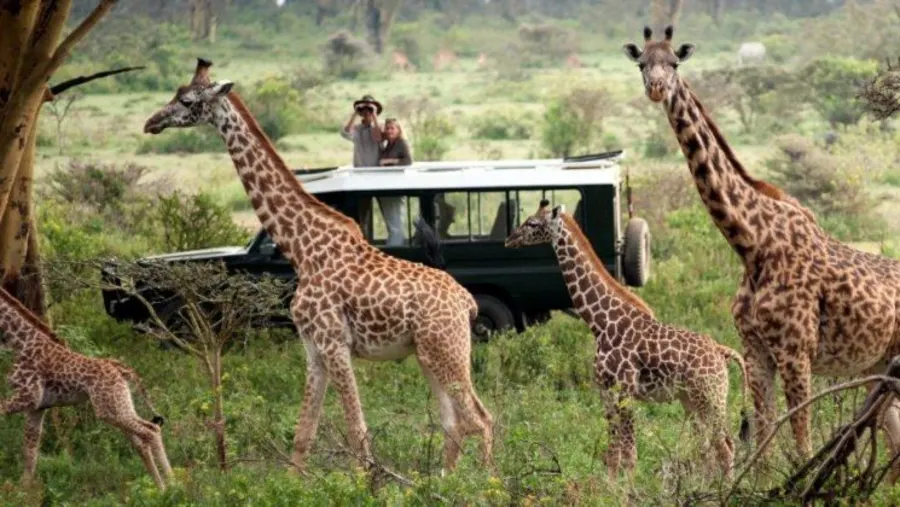
In Tanzania, the peak season runs from June to October. It’s the peak season because conditions are good for safari and beach holidays. The weather is amazing with clear skies throughout the day, except for a few days. There’s no rain to interrupt you and the trail. As a result, driving is much easier because there’s no mud or slipperiness on the road. Water is scarce, forcing animals to concentrate in the few available water sources within the park. This makes game viewing simple.
What are the upsides and downsides of the peak season?
Upsides
It coincides with peak vacation months for many families.
Many workers in Europe and North America take their annual leave between June and August. In the US, for example, the peak vacation months are June and July, according to Statista. Many families go on a family vacation when K-12 schools are on summer break in June. In Europe, family-owned businesses closed in the Great August Shutdown. Therefore, June, July, and August are great months to connect with your family and friends in popular places like the Serengeti.
Game viewing is at its peak.
Many travelers come with their list of animals to see. And it makes sense. The best time to view animals is from June through October due to clear skies, dry trails, and fewer water sources. The vast plains of the Serengeti thin out, making it easy to scan for large lion prides, buffalo herds, and more. The wildebeest migration reaches its grand finale in July and September when herds start to cross the Great Mara River.
Downsides
Large crowds in some parks.
This is a common setback. But it’s only prevalent in popular northern destinations, such as Stone Town and Zanzibar beaches. According to recent stats released by the National Bureau of Statistics, leading tourist destinations accounted for 59% of total visits in 2025. At the top of the list is Ngorongoro Conservation Area, followed by the Serengeti, Stone Town, Beaches, and Tarangire.
Higher prices
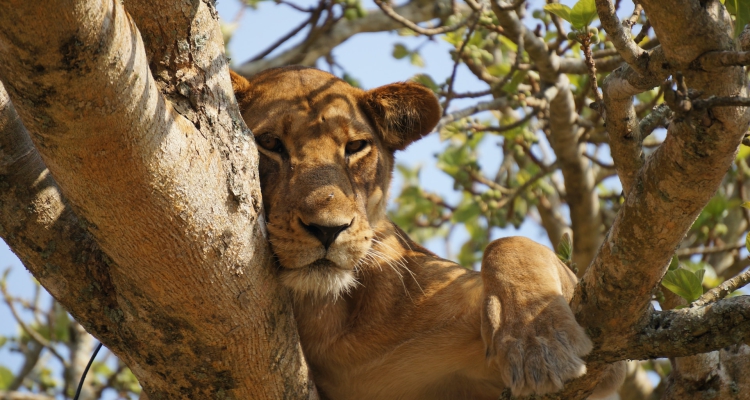
It’s normal for prices to rise when demand reaches its peak. Tanzania’s most popular destinations (the Serengeti, Ngorongoro Crater, you name it) attract thousands of visitors from around the world. As a result, park fees, flights, and accommodation become expensive. This will hit you especially if you are a budget-conscious or value-for-money traveler.
How to escape the crowd in the peak season.
Let’s face the elephant in the room. The simplest solution to this crowding problem would be to avoid the peak season at all costs. By the way, this is what many tour operators do. We have a different point of view because, as we said earlier, most work leaves (and shutdowns) fall in June, July, and August. If we simply say “avoid the peak months,” we deny families the opportunity to explore the Serengeti and Ngorongoro Crater on their much-needed family safari. Here’s how you can do a safari in the peak season without the crowd.
1. Stay in private concessions.
Private concessions are good at cutting the long queue of safari vehicles by bringing low-impact tourism. They are a small portion of protected areas managed by private entities, including conservation organizations and hospitality brands. They allow a wide range of safari activities, including off-road game driving, night safaris, and walking safaris, all of which are either prohibited or limited in the main parks and conservation areas.
The Serengeti ecosystem, for instance, has three private concessions: Singita Grumeti Reserve in the west, Mwiba Wildlife Reserve in the southeast, and Klein’s Camp concession (inside Loliondo Game Controlled Area) in the northeast.
Singita Grumeti Reserve is a 350,000-acre concession in western Serengeti managed by Singita, a conservation brand. It’s open for game driving exclusively for guests staying inside it. No outsider is allowed to visit unless you are staying in one of the Singita properties: Sasakwa, Faru Faru, Sabora, Milele, and Kilima, all of which are high-end lodges and camps. The best way to get into this reserve is to fly into Sasakwa Airstrip inside the reserve.
Mwiba Wildlife Reserve is a 125,000-acre private concession in the southeast of the Serengeti. It borders both the Serengeti and Ngorongoro Conservation Area and is managed by the Friedkin Conservation Fund. The wildebeest migration reaches this reserve between December and May. It’s open for guests staying in the luxury Mwiba Lodge.
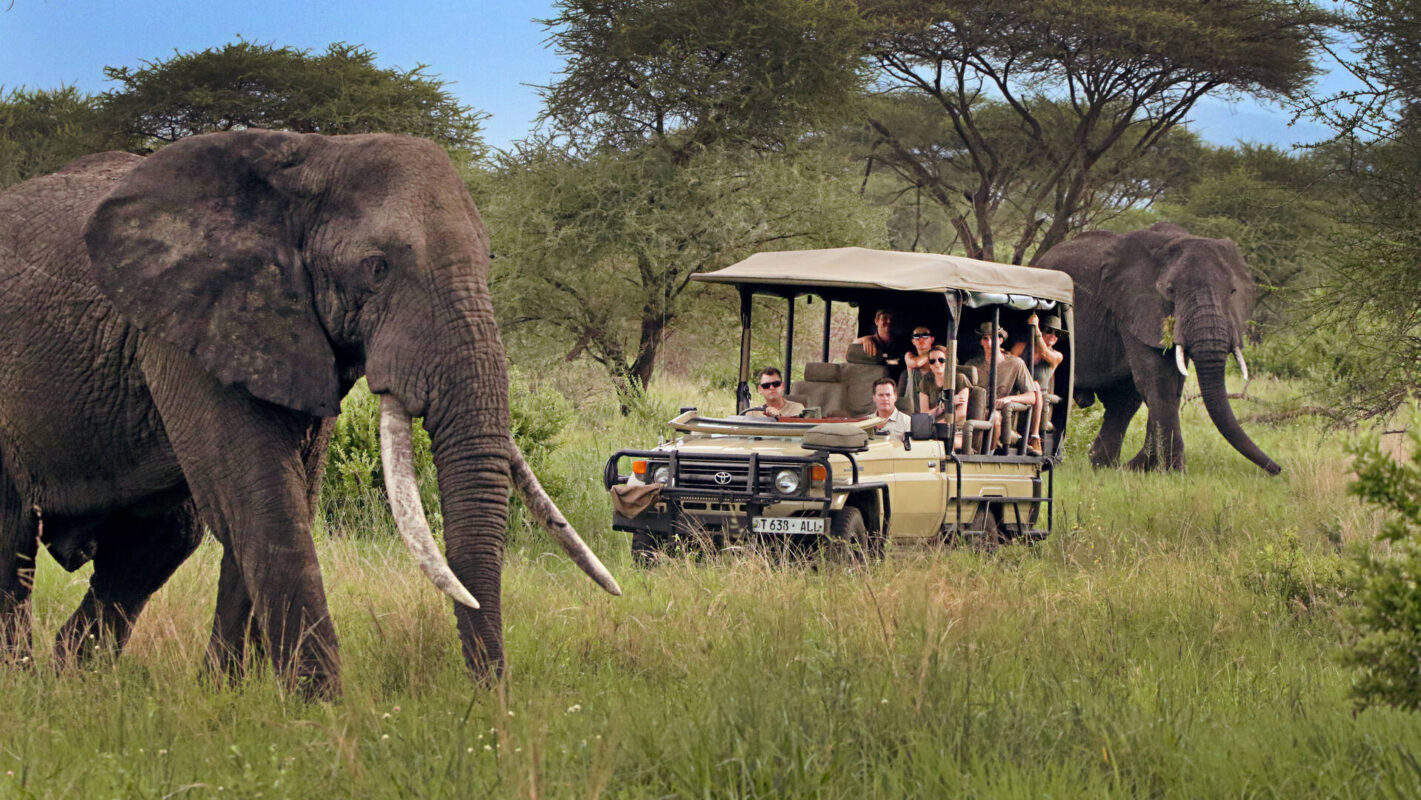
Klein’s Camp concession spans 24,700 acres on the northeastern border of the Serengeti. It’s located within the Loliondo Game Controlled Area and is managed and run by &Beyond. The concession is only open to guests staying at the luxury Klein’s Camp. The best way to get there is to fly into Klein’s Airstrip or drive through Klein’s Gate.
2. Visit hidden corridors.
What if a private concession is out of your reach? You still have a chance to view wildlife even in the most popular destinations. In the Serengeti, for instance, crowds build up in the central region (Seronera) and in the northern regions near crossing points. The remaining regions, including wildlife-rich southern plains and the western region, are crowd-free.
The central region is home to the largest number of safari lodges. Cars congregate here just a few miles from lodges to save fuel. And the result? Queues build because most travelers going to the Serengeti suffer budget constraints. At Explore African Safaris, we avoid this by driving to the hidden corridors of the Serengeti. We also partner with lodges situated in remote regions where our clients can enjoy raw, untamed beauty.
In the Ngorongoro Conservation Area, crowds are prevalent in the Ngorongoro Crater. The crater opens at 6.00 a.m. and closes at 4.00 p.m. But if you get there as early as possible, when most travelers are in their beds, you will enjoy the drive. Staying on the crater rim gives an edge to viewing the crater and descending early after it opens. On top of the crater, you can also visit other regions of the conservation area, such as the Olduvai Gorge, Empakai Crater, Ndutu Plains, Olmoti Crater, and Laetoli.
3. Go to less popular destinations.
Another way to avoid sharing a wildlife sighting with ten safari vans is to go off the beaten track. The northern circuit is somehow overrated. The southern circuit is home to Nyerere and Ruaha, Tanzania’s largest and second-largest parks, respectively. But if you look at the number of visitors they get annually, you realize that something isn’t right. In 2025, Nyerere (Selous) and Ruaha accounted for a share of about 0.7% and 0.6% of total visitors, respectively. That’s very small compared to the Serengeti’s visits.
Katavi National Park, in the southwest, is another hidden gem. The concentration of wildlife is spectacular, but it’s not even in the top 15 most visited tourist attractions. Which means only a few curious (mostly repeat) visitors go there. In the same western corner, there are Gombe and Mahale, both located on the eastern shore of Lake Tanganyika, the world’s deepest freshwater lake. They are home to a thriving chimpanzee population.
Let’s help you with planning.
You don’t have to overthink your trip. We handle everything from flights to lodge stays. And with our expert planners and drivers, every detail is taken care of. Email us at info@exploreafricansafari.com for further inquiries.
