
Is Arusha National Park Worth Visiting?
Is Arusha National Park Worth Visiting, Nestled in the shadow of Mount Meru and within easy reach of the bustling city of Arusha, Arusha National Park is one of Tanzania’s most accessible yet underrated wildlife destinations. Covering approximately 552 square kilometres, it may be modest in size compared to the Serengeti or Ngorongoro Crater, but it compensates with an extraordinary diversity of ecosystems, dramatic scenery, and a rich variety of wildlife — all packed into a surprisingly compact area.
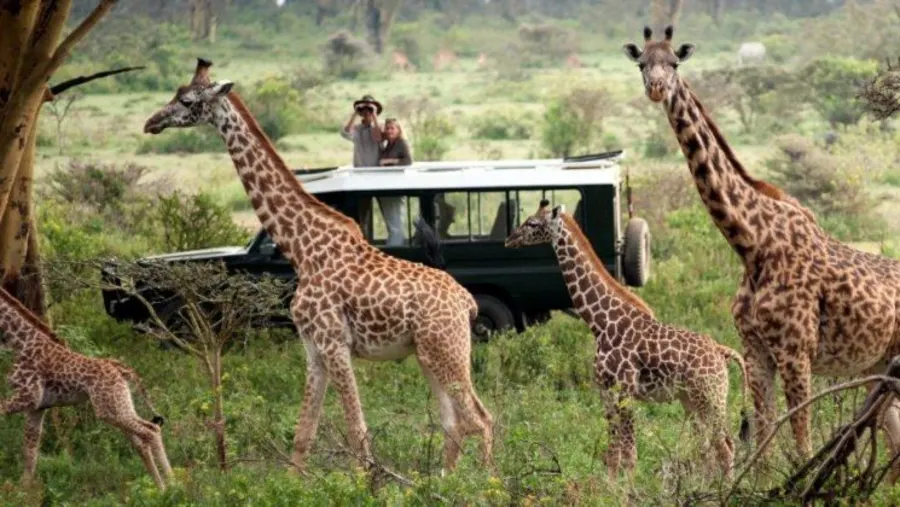
Despite its proximity to one of Tanzania’s main safari hubs, Arusha National Park remains relatively uncrowded, offering visitors a more intimate and tranquil safari experience. Whether you are a seasoned safari-goer or a first-time visitor to East Africa, this park has something compelling to offer.
This article explores everything you need to know about Arusha National Park — from its landscapes and wildlife to its activities, accessibility, and practical travel tips — to help you decide whether it deserves a place on your Tanzania itinerary.
Location and Accessibility
Arusha National Park is located in northern Tanzania, approximately 25 kilometres east of Arusha city. It sits between two of Tanzania’s most iconic peaks — Mount Meru to the west and Mount Kilimanjaro to the east, both of which are visible on clear days. This strategic position, combined with its proximity to Kilimanjaro International Airport (roughly 58 kilometres away), makes it one of the easiest national parks in Tanzania to reach.
The park serves as a natural starting or ending point for the northern Tanzania safari circuit, which includes the Serengeti, Ngorongoro Conservation Area, Tarangire, and Lake Manyara. Many visitors combine a day trip or overnight stay at Arusha National Park with these longer safari destinations, using it as a gentle introduction to Tanzania’s wildlife or a rewarding final flourish before flying home.
Getting There
- From Arusha city: approximately 45 minutes to 1 hour by road
- From Kilimanjaro International Airport: roughly 1 to 1.5 hours by road
- The main Ngurdoto Gate is well signposted and accessible via tarmac and murram roads
- Self-drive is feasible, though hiring a guide and driver is highly recommended
Landscapes and Ecosystems
One of the most remarkable features of Arusha National Park is its incredible diversity of habitats within a relatively small area. The park encompasses montane forest, open grassland, highland moorland, alkaline lakes, swamps, and the dramatic crater of Ngurdoto — often nicknamed ‘Little Ngorongoro.’
Mount Meru
Dominating the western side of the park, Mount Meru rises to 4,566 metres, making it Africa’s fifth-highest peak. It is a dormant stratovolcano with a spectacular horseshoe-shaped crater formed during a massive eruption approximately 8,000 years ago. Hikers can summit Mount Meru on a three to four-day trek, passing through montane forest, heath zones, and open moorland before reaching the ash cone and the rocky summit.
The climb offers breathtaking views of Mount Kilimanjaro on clear mornings and is considered excellent acclimatization training for Kilimanjaro ascents. However, it is a serious mountaineering undertaking and requires physical fitness and appropriate preparation.
Ngurdoto Crater
The Ngurdoto Crater is a collapsed caldera measuring roughly three kilometres in diameter. Unlike Ngorongoro, visitors are not permitted to descend into the crater floor, which functions as a natural sanctuary for wildlife. Viewing is done from the rim, offering scenic vantage points over the marshland and forest below.
The Momella Lakes
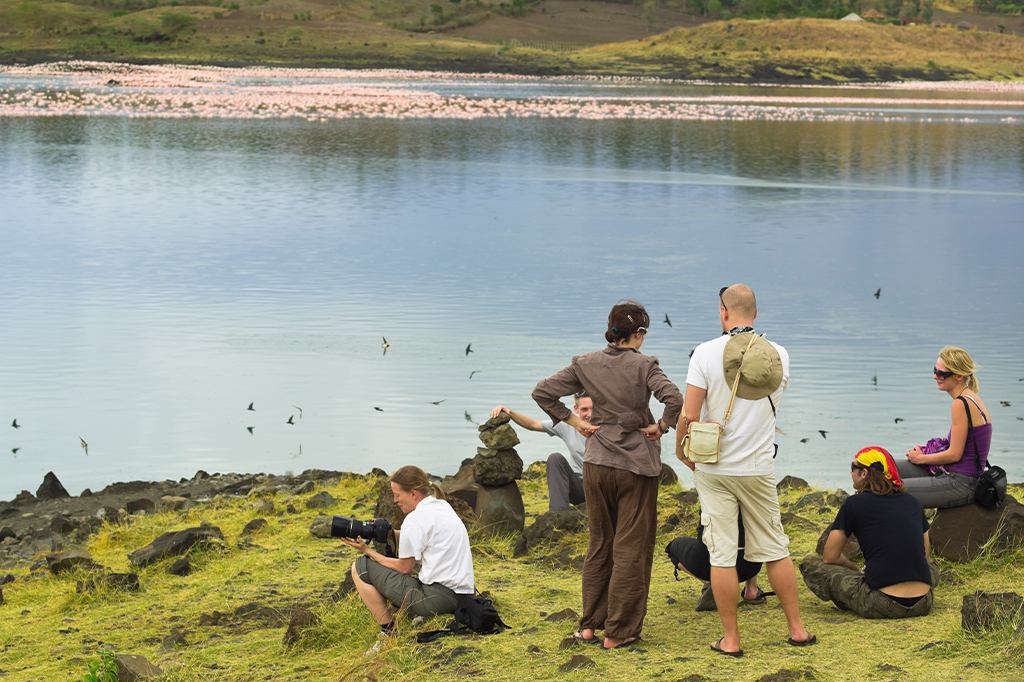
Perhaps the most visually striking feature of the park is the chain of seven shallow alkaline lakes known as the Momella Lakes. Each lake has a slightly different mineral composition, resulting in varying shades of green, turquoise, and blue — a surreal and photogenic landscape. The lakes attract large concentrations of flamingos (both lesser and greater), as well as hippos, waterfowl, and numerous wading birds.
Montane Forest
The park’s lush montane forest is home to olive trees, yellow-barked fever trees, and giant fig trees draped in moss. The forest harbours colobus monkeys, blue monkeys, bushbuck, and various forest birds, and provides a cool, atmospheric contrast to the open savannah found elsewhere in northern Tanzania.
Wildlife
While Arusha National Park lacks lions, leopards, elephants, and the spectacular wildebeest migration found in other Tanzanian parks, it compensates with a rich variety of other species and offers some unique wildlife experiences that are not available elsewhere in the northern circuit.
Primates
- Black-and-white colobus monkeys are frequently encountered in the montane forest and are one of the park’s highlights
- Blue monkeys are also common throughout the forested zones
- Olive baboons are widespread and often seen around the Momela Lakes area
Plains Game
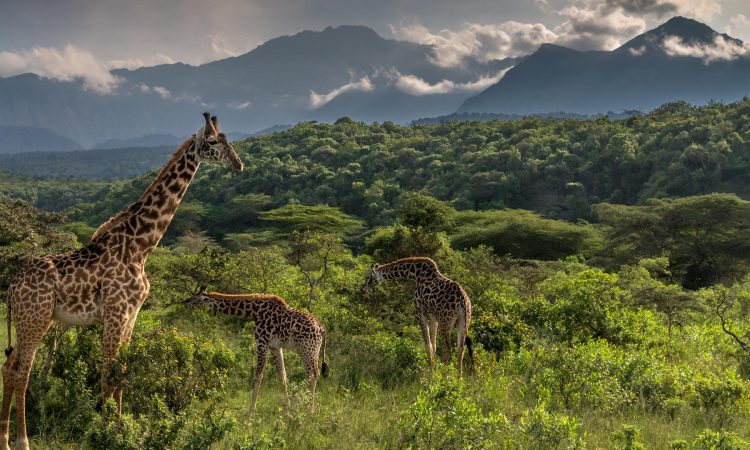
- Large herds of Masai giraffe roam the open grasslands and are frequently seen at close range
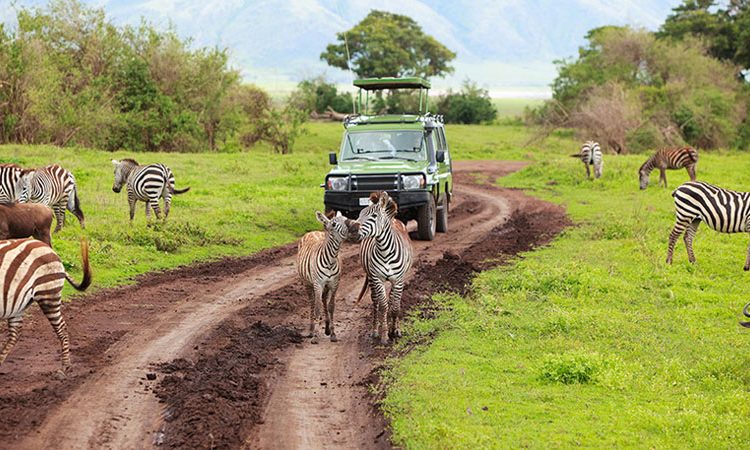
- Zebra, buffalo, warthog, and waterbuck are commonly encountered
- Reedbuck, dik-dik, and bushbuck are found in various habitat types
- Hippos wallow in the Momela Lakes, with excellent viewing opportunities from the shores
Birdlife
Arusha National Park is a birder’s paradise, with over 400 bird species recorded. The Momela Lakes are particularly rich in birdlife, attracting thousands of flamingos and a variety of herons, egrets, storks, kingfishers, and raptors. The montane forest supports endemic and range-restricted species, including the crowned eagle, Hartlaub’s turaco, bar-tailed trogon, and the spectacular narina trogon.
Birdwatching is excellent year-round, though the wet season (November to April) brings migratory species from Europe and Asia, further enriching the diversity.
Notable Absences
It is important to set realistic expectations. Visitors hoping to see the ‘Big Five’ — lion, leopard, elephant, rhino, and buffalo — should note that lions are absent from the park, rhinos are not present, and elephants are rare though occasionally spotted. Buffalo, however, are common. Those seeking a classic Big Five safari experience should pair Arusha National Park with the Serengeti or Tarangire.
Activities and Experiences
Arusha National Park offers a wider range of activities than most Tanzanian national parks, catering to different interests, fitness levels, and travel styles.
Game Drives
Standard game drives by vehicle are the most popular way to explore the park. A morning or afternoon drive around the Momela Lakes circuit and through the open grasslands typically takes two to four hours and offers excellent wildlife viewing. Self-drive is permitted, though guides greatly enhance the experience by identifying wildlife and navigating the tracks.
Walking Safaris
Arusha National Park is one of the few parks in Tanzania where guided walking safaris are permitted, and this is arguably one of its most compelling attractions. Walking through the forest and open grassland with an armed ranger provides an entirely different perspective on the African bush — one that is intimate, sensory, and deeply immersive. Walkers can approach zebra, giraffe, and buffalo on foot, which is an exhilarating and unforgettable experience.
Canoe Safaris on the Momela Lakes
Canoeing on the shallow Momela Lakes is a unique and peaceful activity that allows visitors to glide silently past hippos, flamingos, and waterfowl at close range. Guided canoe safaris are available through the park and are particularly popular at dawn when the lakes are mirror-calm and the birdlife is most active.
Mount Meru Trekking
For those with time, fitness, and a love of hiking, the multi-day trek to the summit of Mount Meru is a world-class mountaineering experience. The trek passes through diverse vegetation zones and offers spectacular wildlife encounters — including buffalo, giraffe, and colobus monkeys — within the first day of hiking. The crater rim offers extraordinary views across northern Tanzania.
The ascent typically takes three to four days and requires permits, an armed ranger (mandatory for wildlife safety), and overnight stays in TANAPA huts along the route.
Photography
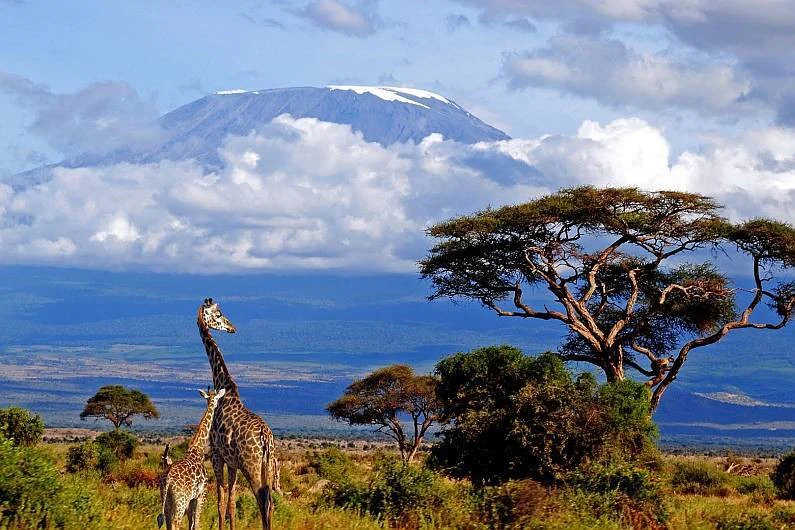
The park’s photogenic landscapes, dramatic volcanic scenery, colourful lakes, and relatively approachable wildlife make it an excellent destination for photography. The golden light of early morning over the Momela Lakes, with flamingos in the foreground and Mount Kilimanjaro rising above the clouds in the distance, is among the most memorable natural tableaux in East Africa.
Best Time to Visit
Dry Season: June to October
The dry season is generally considered the best time for wildlife viewing, as animals congregate around water sources and vegetation is lower, improving visibility. Skies are clearer, making this the best period for views of Mount Kilimanjaro and Mount Meru. Daytime temperatures are pleasant, though nights can be cold at higher elevations.
Short Rains: November to December
The short rains bring lush green landscapes and are excellent for birdwatching, as migratory species arrive. Showers are typically brief and predictable. Wildlife remains easy to spot and visitor numbers are lower than the peak dry season.
Long Rains: March to May
The long rains bring heavier, more sustained rainfall and are generally considered the low season. Road conditions can deteriorate and some tracks may become impassable. However, the park is at its greenest and most photogenic, and accommodation rates drop significantly. This period is suitable for experienced travellers who are flexible and do not require guaranteed wildlife sightings.
January to February
These months fall between the two rainy seasons and offer good conditions for both wildlife viewing and mountain trekking. Flamingo numbers on the Momella Lakes can be particularly impressive during this period.
Accommodation
Accommodation options near and within Arusha National Park range from simple campsites to comfortable lodges and luxury tented camps. The park has public and special campsites managed by TANAPA (Tanzania National Parks Authority), as well as private lodges located just outside the park boundaries.
Options Include
- Momela Wildlife Lodge: a classic, characterful lodge with views across the park
- Hatari Lodge: a stylish, mid-range lodge with a fascinating safari history and excellent service
- Ngurdoto Mountain Lodge: a larger property with comfortable facilities near the park gates
- TANAPA public campsites: basic but well-located options for budget-conscious travellers
- A range of hotels and guesthouses in Arusha city, suitable for day-trippers to the park
Park Fees and Practical Information
Entry Fees
Park fees are charged per person per day and are set by TANAPA. As of 2024, non-resident adult fees are approximately USD 45 to USD 70 per person per day, depending on the season. Additional fees apply for mountain climbing, walking safaris, and canoe activities. Fees are subject to change and should be confirmed with TANAPA or your tour operator prior to travel.
Guides and Rangers
Hiring a knowledgeable local guide is strongly recommended, both for safety (particularly on walking safaris and mountain treks, where armed rangers are mandatory) and for the quality of the experience. Guides can be arranged through TANAPA at the park gates or through reputable tour operators in Arusha.
Health and Safety
- Malaria risk is low at higher elevations but precautions are still advisable
- Yellow fever vaccination is recommended for Tanzania
- Travellers ascending Mount Meru should be aware of altitude sickness risks above 3,000 metres
- Walking safaris involve approaching potentially dangerous wildlife; always follow ranger instructions
- Ensure travel insurance covers wildlife activities and high-altitude trekking if applicable
What to Bring
- Lightweight, neutral-coloured clothing for game drives and walks
- Warm layers for early morning drives and highland areas
- Waterproof jacket, particularly in the wet season
- Binoculars and a good camera with a telephoto lens
- Sunscreen, insect repellent, and a hat
- Sturdy hiking boots if walking or trekking
How Does It Compare to Other Tanzanian Parks?
Arusha National Park occupies a distinct niche within Tanzania’s safari landscape. It is not designed to compete with the Serengeti’s vast plains and spectacular migration, or with Ngorongoro’s extraordinary crater ecosystem. Instead, it offers something different: variety, intimacy, and accessibility.
Compared to Tarangire and Lake Manyara — other popular northern circuit parks — Arusha offers a broader range of activities, including walking safaris and canoeing, and a more dramatic, volcanically shaped landscape. Its wildlife density is lower than these parks, but the quality and variety of experiences available is arguably higher.
For travellers with limited time who are based in Arusha, the park is an outstanding day trip option that delivers genuine safari thrills without the need for an overnight journey. For those with more time, combining Arusha with the Serengeti, Ngorongoro, and Tarangire creates one of the most well-rounded safari itineraries in Africa.
Verdict: Is Arusha National Park Worth Visiting?
The short answer is: absolutely yes, for the right kind of traveller.
Arusha National Park is worth visiting if you value scenic diversity over sheer wildlife numbers, prefer a quieter and more intimate atmosphere over the busier circuits of the Serengeti, are interested in activities beyond the standard game drive — particularly walking safaris, canoeing, or mountain trekking — or are based in Arusha and have limited time to explore northern Tanzania.
It is perhaps less suited to travellers whose primary goal is to see lions, leopards, or vast herds of migratory wildebeest. Those visitors should prioritise the Serengeti or Ngorongoro, where those experiences are reliably available.
However, for the visitor who arrives with curiosity, an appreciation for diverse landscapes, and a willingness to engage with the bush on foot as well as from a vehicle, Arusha National Park delivers memories that rival — and in some respects surpass — those of its more famous neighbours. The sight of a giraffe silhouetted against the snow-capped cone of Mount Kilimanjaro at dawn, or the stillness of paddling a canoe through a lake fringed with pink flamingos, are experiences that no amount of wildebeest can replace.
Top Tips for Visiting Arusha National Park
- Start your game drive early — wildlife is most active in the first two hours after sunrise
- Book a walking safari: it is one of the highlights of the entire park
- Combine a lake circuit with a forest walk for the widest range of habitats and wildlife
- Spend at least one night near the park to enjoy both dawn and dusk game drives
- If trekking Mount Meru, allow at least three to four days and acclimatise properly
- Hire a knowledgeable local guide: the difference in quality of experience is significant
- Visit the Momela Lakes at dawn for the best light, calmest conditions, and most active flamingos
- Check TANAPA’s latest fee schedules and book permits in advance during peak season