
How many black rhinos are in Tanzania?
How many black rhinos are in Tanzania, we are often asked, “How many black rhinos are there in Tanzania?” And we get it because this giant, historical mammal is one of the most sought-after Big Five that travelers want to see on their African safari. The black rhino is native to Africa and is found in only 12 countries. Tanzania is one of them.
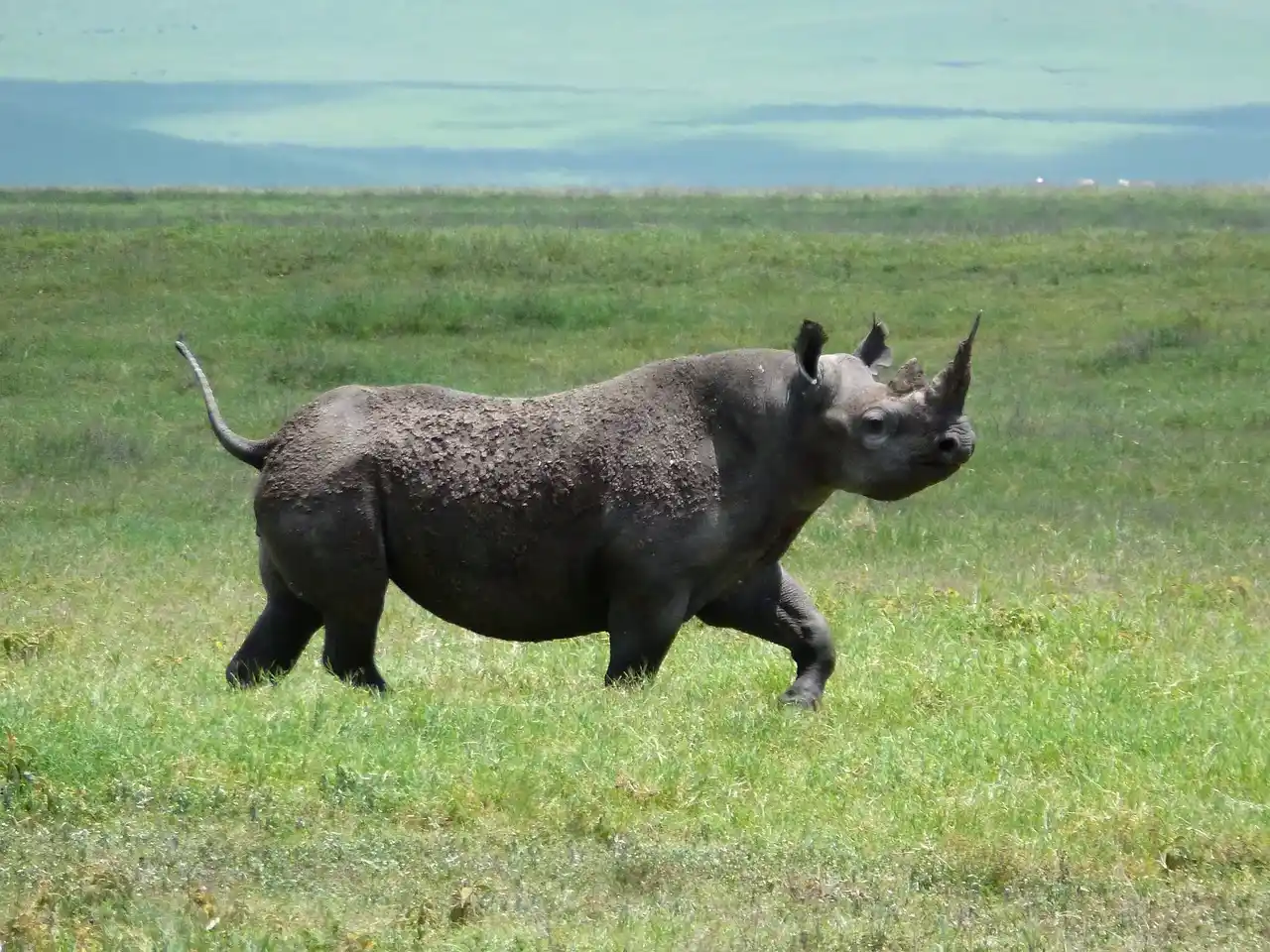
The internet is full of exaggerated claims, especially about the Big Five. Some will tell you it’s easy to tick the Big Five off the bucket list. However, we know how embarrassing it can be when you are searching for the black rhino, which is extremely rare in some parks, simply because someone told you you could see it there.
So, we owe you an explanation to clear the air. On this blog, we bring fresh, well-researched, and recent information about the black rhino. For more context, let’s begin with the basics.
What is the black rhino?
The black rhino (Diceros bicornis) is one of two species of rhinos native to Africa, with the other being the white rhino (Ceratotherium simum). The naming, white and black, has nothing to do with the colors of these animals. Both are grayish-brown. The name ‘white’ is a misinterpretation of the Dutch word ‘wijd’ (Afrikaans ‘wyd’), referring to the squared lip of the white rhino.
The black rhino has a pointed or hooked lip. Chances are, it was named so to distinguish it from the square-lipped white rhino or because of the black color it gets after wallowing in the mud.
Does Tanzania have both white and black rhinos?
At the time of writing, Tanzania hosts both white and black rhinos following the reintroduction of 18 white rhinos into the Ngorongoro Conservation Area in March 2025. The move sponsored by the government and &Beyond is aimed at restoring the lost population of white rhinos.
Originally, both white and black rhinos thrived in Ngorongoro. The white are grazers: they thrive in the open savannahs and woodlands, while the black are browsers, preferring shrubs and scrubs. So, these two species are not ecological competitors: they can coexist.
They lived together in Ngorongoro for decades until the 1970s and 1980s, when poaching brought the rhino population down to 32 in 1995. White rhinos disappeared entirely not only in Ngorongoro but also in Tanzania, while black rhinos survived thanks to strict conservation strategies employed by the government and partners.
The disappearance of white rhinos lasted for almost 50 years, until recently, when the first phase of white rhino translocation was implemented on March 4, 2025. The project aims to translocate 36 southern white rhinos from South Africa’s Munywana Conservancy to the Ngorongoro Conservation Area in two phases.
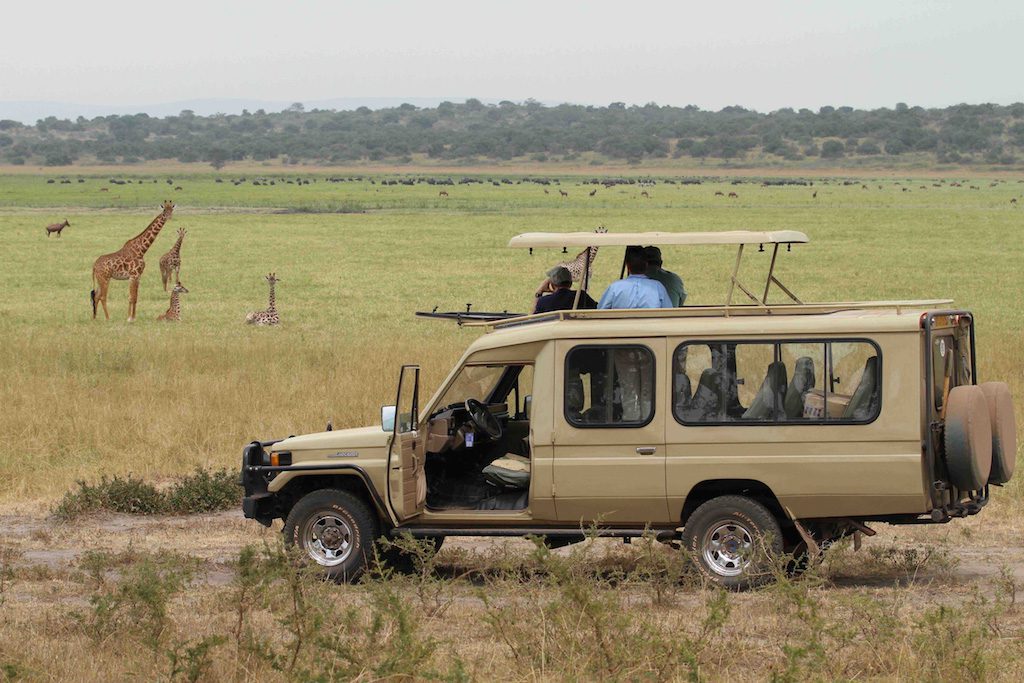
How many rhinos are there in Tanzania, and where can you see them?
As of now, Tanzania hosts 302 black rhinos according to the 2024/2025 census report by the Tanzania Wildlife Research Institute (TAWIRI). With that population, Tanzania is the fifth stronghold of black rhinos in Africa, with Namibia at the top of the list with 2,196 rhinos, followed by South Africa at 2,056, Zimbabwe at 1,033, and Kenya at 938.
Tanzania’s rhino population is confined to a few protected areas, mainly parks and the Ngorongoro Conservation Area, under constant surveillance to deter poaching. These include Serengeti, Ngorongoro Conservation Area, Mkomazi National Park, and Nyerere National Park. (We’ll talk about the first three).
Serengeti National Park
Home to the wildebeest migration, the endless plains of the Serengeti harbor about 160 rhinos. The park offers one of the most hilarious safari experiences, from watching large herds of ungulates move from the south to the north to ticking the Big Five off the bucket list.
You can easily spot black rhinos in the south-central region called Moru Kopjes. Rhinos are elusive. They spend most of the day alone in the shrubs and thickets. Although they are surveilled by rangers, seeing one of them is a special treat and deserves a photo. So, bring your good camera.
Serengeti is huge—about 14,763 sq km or 5,700 sq miles. That means the search for a rhino sighting can be tedious if you don’t approach it well. Good locations for rhino sightings include Moru Kopjes, Seronera, Grumeti Reserve, and Northern Serengeti. Best camps for a rhino safari include Dunia Camp, Singita Sasakwa Lodge, and Sayari Camp.
Ngorongoro Conservation Area
The world’s largest unbroken caldera is, without a doubt, a promising destination for rhino sightings. Ngorongoro Crater is just 264 sq km (100 sq miles) in size, but it’s home to about 50 black rhinos, according to the Ngorongoro Conservation Area Authority (NCAA). The odds of coming across this giant mammal are greater than in the Serengeti due to the nature of the crater’s ecosystem, which consists largely of open woodlands.
A safari drive in the crater is equally rewarding because of the higher wildlife density, not to mention how it is to see the black rhinos. The NCAA allows only a game drive for six hours. A crater service of $295 per vehicle is charged for a permit to drive on the crater floor. No worries: we can spread the cost with fellow travelers if you want us to.
As mentioned, the first phase of the reintroduction of white rhinos to Ngorongoro has been successful. So, as you plan your visit to Ngorongoro, add white rhinos to your must-see animals. On top of rhinos, visitors often enjoy the spectacular backdrop of the crater rim and Ngorongoro highlands. Should you have enough time, pay a visit to the Olduvai Gorge, Empakai Crater, and Maasai bomas.
Places to stay in the Ngorongoro Conservation Area include Ngorongoro Crater Lodge, Entamanu Camp, Lemala Ngorongoro, and Kirurumu Ngorongoro for luxury travelers. For more affordable options, you can stay in Karatu in camps like Acacia Farm Lodge, Endoro Lodge, and Kitela Lodge, or in the highlands at Plantation Lodge.
Mkomazi National Park
A quiet, remote wildlife sanctuary in the northeastern region of Tanzania, Mkomazi is probably a less popular place for rhino sightings. Its location, 190 km (118 miles) northeast of Arusha, is off the main safari route, while the Serengeti, Tarangire, Lake Manyara, Ngorongoro, and Mount Meru are in the northwest.
Mkomazi Rhino Sanctuary, which started in 1989, now holds about 50 black rhinos. The project was managed by Tony and Lucy Fitzjohn until 2019, when they handed it to the Tanzania National Parks Authority (TANAPA). In 2021, the project was open to the public, which means you can go and watch black rhinos. We suggest you should because there’s no traffic.
Regarding places to stay inside the park, there are Babu’s Camp, Mkomazi Bandas, Mkomazi View Tented Camp, and Mkomazi Wilderness Retreat. There are also great places outside the park, including Elephant Motel and Johnson Villas.
It’s time for your rhino safari.
The best time to go on safari is now. And we are here to help you. With our ten-year experience in the game and top-level experts, we are your compass throughout your safari. We share genuine information about unpredictable events like the wildebeest migration and where you should go to see the endangered black rhinos. Email us at info@exploreafricansafaris.com to start planning.
