
Horombo Huts – Your Second Camp on Marangu Route
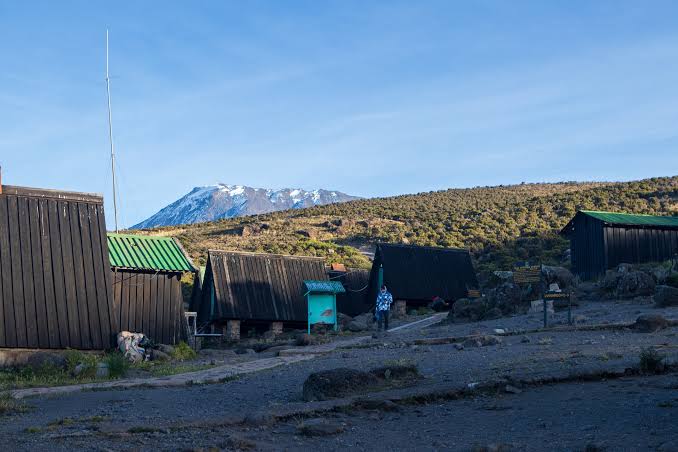
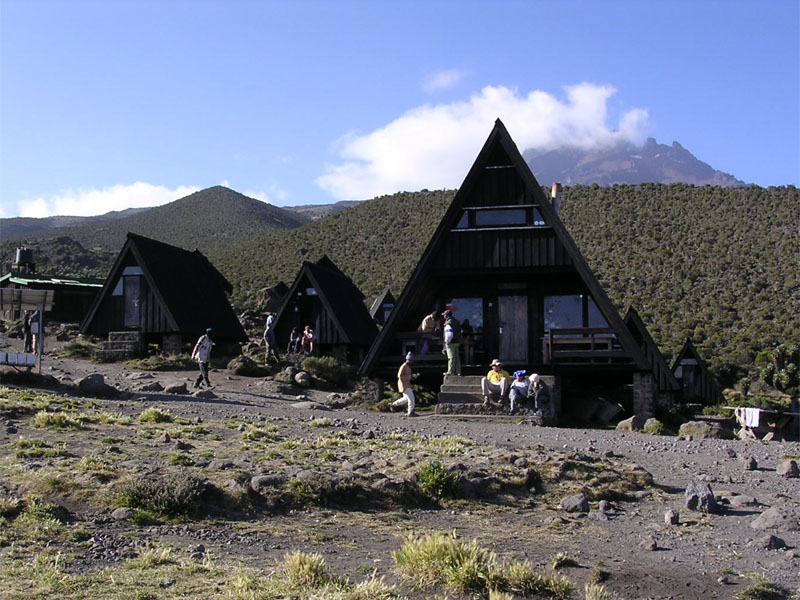
Horombo Huts lie at 3,720 meters (12,205 ft) above sea level and are your second campsite on the popular Marangu route. And like all other Marangu route camps, Horombo consists of A-framed wooden cabins offering dormitory-style accommodation for Kilimanjaro climbers. But it’s a bit more advanced compared to Mandara Huts, with the capacity to accommodate about 120 climbers in one night.
Horombo is one of the oldest campsites on Kilimanjaro. According to locals, the camp was established in the 1960s and was named after the former chief of Rombo District, Horombo Urio. With the best camps, most climbers favor the Marangu route. However, we recommend booking a 6-day climb with an acclimatization day at Horombo Huts.
Horombo Huts Facilities
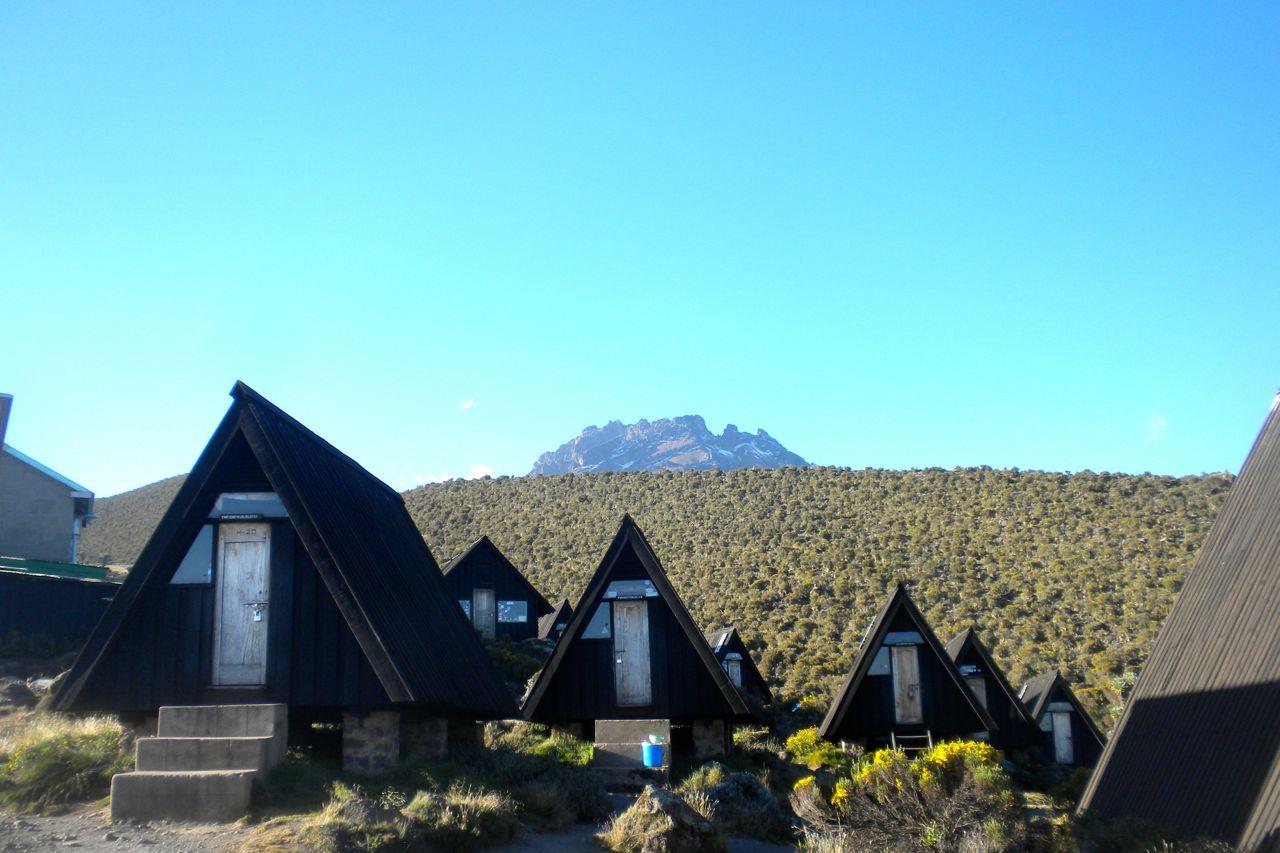
Horombo features wooden cabins, each accommodating 6 to 8 people. The maximum number of guests Horombo can host per night is 120. Each cabin has 6 to 8 bunk beds; guests receive mattresses and pillows upon arrival. During the high season, the number of guests may exceed 120. Tents are given to accommodate climbers who didn’t get a spot in the cabins.
There’s a ranger office, where climbers enter and leave the camp register, and a separate cabin for guides, chefs, and porters. The camp has a kitchen and a communal dining hall where you will enjoy your meals and a kitchen (and maybe swap summit stories).
Horombo has both flush and long-drop toilets. While a shortage of water is a common problem for many camps on Kilimanjaro, Horombo Huts is the only exception. Water is drawn from a nearby stream, so there is no problem with bathrooms (treat it for drinking, though). Climbers on descent via the Marangu and Rongai routes prefer this campsite for relaxing after conquering the peak. Last but not least, Horombo has solar-powered lighting.
The hike to Horombo Huts
Horombo is about 12 km (7 miles) away from the first camp on the Marangu route: Mandara Huts (8,858 ft). The hike takes about 6-8 hours. After breakfast, you start navigating through the remaining rainforest zone and emerge into the heath and moorland zones where Horombo is located. At this point, you can view Kibo and Mawenzi peaks, two of the three volcanic peaks of Kilimanjaro.
How is the hike? Still gentle, but with an altitude gain of approximately 1,020 meters (3,347 feet.) Our familiar advice is simple: ‘Take it slowly,’ or pole pole. Along the way, you’ll see various plant species, such as giant lobelias and groundsel. Occasionally, you may encounter creatures like mice, small antelopes, and montane birds.
Why Acclimatization at Horombo Huts Is Crucial for Summit Success?
It takes only five days to climb Kilimanjaro via the Marangu route. But there’s something wrong with the 5-day climb—it has lower success rates, often around 30-50%. That’s because it has no acclimatization day. To acclimatize means to spend an extra day on the mountain for your body to be suitably adapted to high altitudes. This isn’t necessarily a day lost; it’s your preparation day to conquer the summit (and dramatically boost your odds to 70-85%+ with good operators).
Acclimatization is done at Horombo Huts, preferably on the third day of your climb. On this day, you will hike from Horombo (12,205 ft) to Mawenzi Ridge or Zebra Rocks (14,400 ft), spending 2-3 hours during the ascent and 1-2 hours during the descent. You will cover about 10 kilometers with an elevation gain of about 600-700 ft, which prepares you well to conquer Uhuru Peak in the next few days.
Descending to Horombo Huts
After conquering the world’s tallest freestanding mountain, your next stop is Horombo Huts. And honestly, we can call this the most challenging part of the hike. You will wake up at midnight to start your summit push, targeting to witness sunrise at Uhuru Peak. After enjoying the sunrise and taking photos, you will start the descent to Horombo Huts.
Statistically, you will cover about 18-22 kilometers; that’s 6 km during the summit attempt and 16 km on the descent. During this stretch, you will gain 3,911 ft of elevation—from Kibo Huts (15,430 ft) to Uhuru Peak (19,341 ft)—and then descend roughly to 12,205 ft, losing about 7,136 ft in elevation. That requires about 11-15 hours of hiking.
Upon arriving at Horombo, you eat your last dinner on the mountain and enjoy a well-deserved sleep. The fact that Horombo Huts is used for both hikers on ascent and descent makes it the largest permanent camp on all Kilimanjaro routes.
Wildlife and Scenery
Horombo is situated at a higher altitude compared to Mandara Huts. It’s in the moorland zone, where oxygen supply is a little bit lower. Yet some creatures exist in this zone. You can encounter four-striped grass mice and small antelopes near the camp or along the way. You can also see birds such as malachite sunbirds and Rebmann’s sunbirds.
The moorland zone is mainly composed of shrubs and rocks. Adjacent to the campsite are Zebra Rocks—named not because they relate to actual zebras, but simply because their natural black-and-white bands resemble zebra stripes (perfect for that quirky photo op).
What to expect at Horombo Huts
There’s much to expect at this camp. Our clients often end up getting new friends and business partners because this camp brings together a lot of climbers. You can enjoy group dinners, stargazing, and guided walks and hikes around the campsite. Enjoy the views of Kibo and Mawenzi Peaks.
Three days of your six-day climb are spent at Horombo. So, this camp is your second home while hiking Kilimanjaro. Chefs often prepare the best meals since water is readily available. And you will enjoy hot showers.
Health and Safety Tips for Your Stay at Horombo Huts
Horombo Huts are situated at 3,720 meters—that’s in the high-altitude zone where the oxygen level is about 60% of that at sea level. In addition to that, altitude sickness and colds become real concerns. Therefore, report any symptoms of altitude sickness early, do the acclimatization hike, and hydrate properly. Climbers who follow these guidelines increase their summit success rate to 83%.
Frequently Asked Questions
Do Horombo Huts have hot showers?
There are no hot showers here—any showers are cold only. Stick to wet wipes and a warm basin from your porters.
Why should I spend an extra acclimatization day at Horombo Huts?
Because skipping to 5 days drops your summit success to 40-50%, but adding an extra day for acclimatization boosts it to 70-80%.
How many nights do climbers usually spend at Horombo Huts?
On the popular 6-day Marangu route, you’ll spend three nights total: one on the way up, one for acclimatization, and one after your summit descent.
Let’s book your climb.
It’s always a privilege to guide on conquering Mount Kilimanjaro. Our guides are experts in the field, having knowledge of all that it takes to reach the summit. So, you can trust Explore African Safaris for an unforgettable climbing experience.