
A Guide to Kilimanjaro National Park
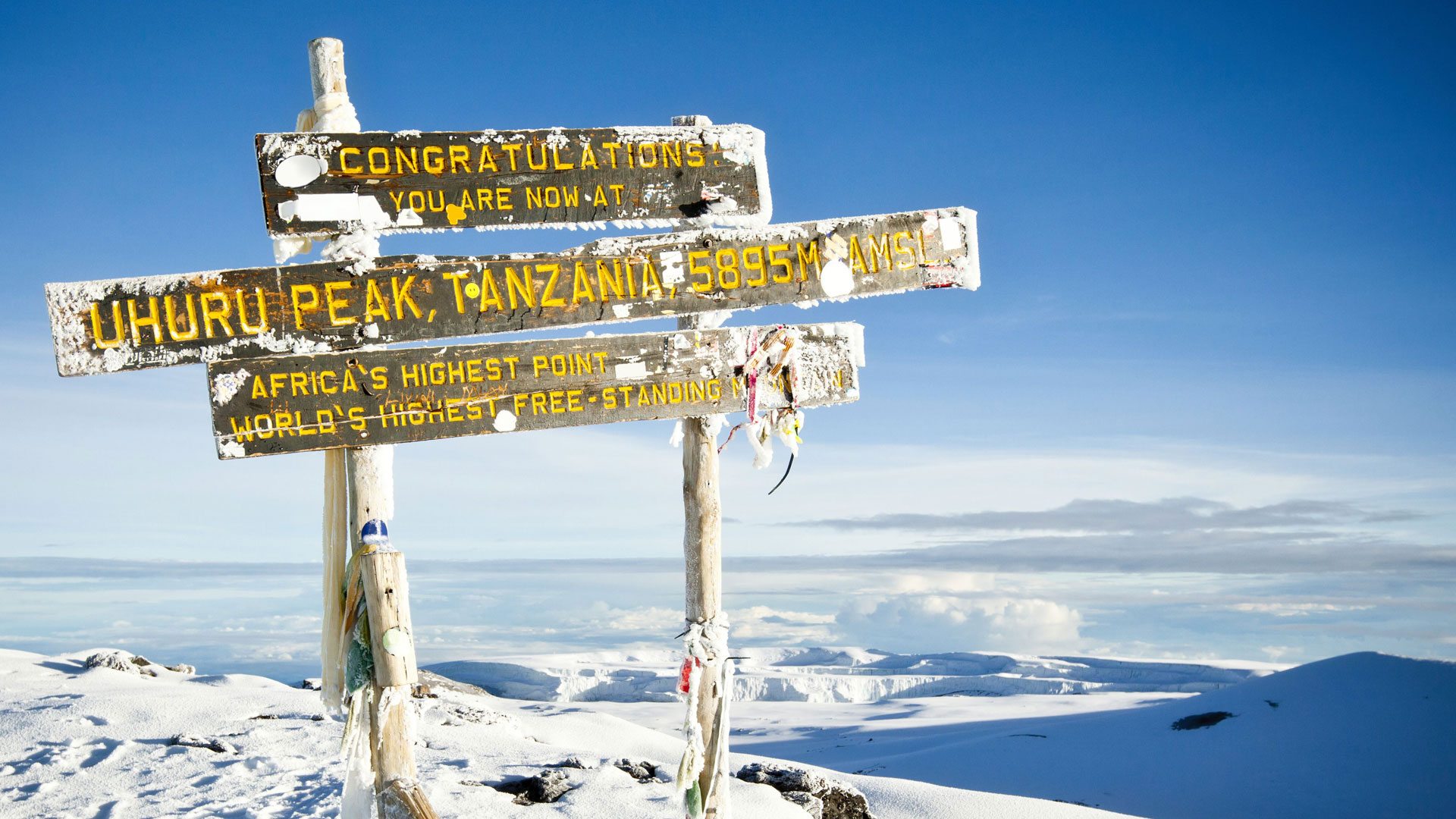
A Guide to Kilimanjaro National Park, Standing at 5,895 meters, or 19,341 feet, above sea level, Kilimanjaro is Africa’s icon. It’s Africa’s highest peak. This snow-capped mountain amazes everyone with its beautiful appearance from a distance (you can see it from Kenya) and its less challenging climb.
Kilimanjaro sits in northern Tanzania near the Kenyan border. (So, ignore anyone telling you this mountain is in Kenya). Our reading below describes Mount Kilimanjaro in detail.
Where is Mount Kilimanjaro?
Mount Kilimanjaro is in northern Tanzania in the Kilimanjaro region. The mount is actually very close to the Kenyan border. Which is why some people make mistakes by assuming that the mountain is in Kenya when it’s not.
Though you can see it from Kenya (views are very clear from Amboseli), all climbing activities are only possible in Tanzania. So, there’s no way you can either start or finish your climb in Kenya.
How can you get to Mount Kilimanjaro?
Kilimanjaro is easily accessible because of its proximity to international airports. Land at Kilimanjaro International Airport, and we’ll transfer you to either Arusha or Moshi. You can use either of these two towns as your base for the climb. But we recommend staying in Moshi because it’s only a one-hour drive to the foot of Mt. Kilimanjaro.
Kilimanjaro Airport has limited flight connections to some continents. Alternative airports in Tanzania—Dar es Salaam Airport (JRO) and Zanzibar Airport (ZNZ)—have multiple flight connections. In addition, Nairobi Airport (NBO) and Addis Ababa (ADD) are also better. All these airports have direct flights to Kilimanjaro Airport.
You will spend the first day (arrival day) unwinding. Our representative will make sure you have all that’s needed for a comfortable (sorry, successful) climb. So, you may go shopping in town or indulge in a spa to relax the body, or pick one of our optional activities: the Materuni waterfall tour, the Chemka hot springs adventure, or the Moshi town tour.
When is the best time to climb Mount Kilimanjaro?
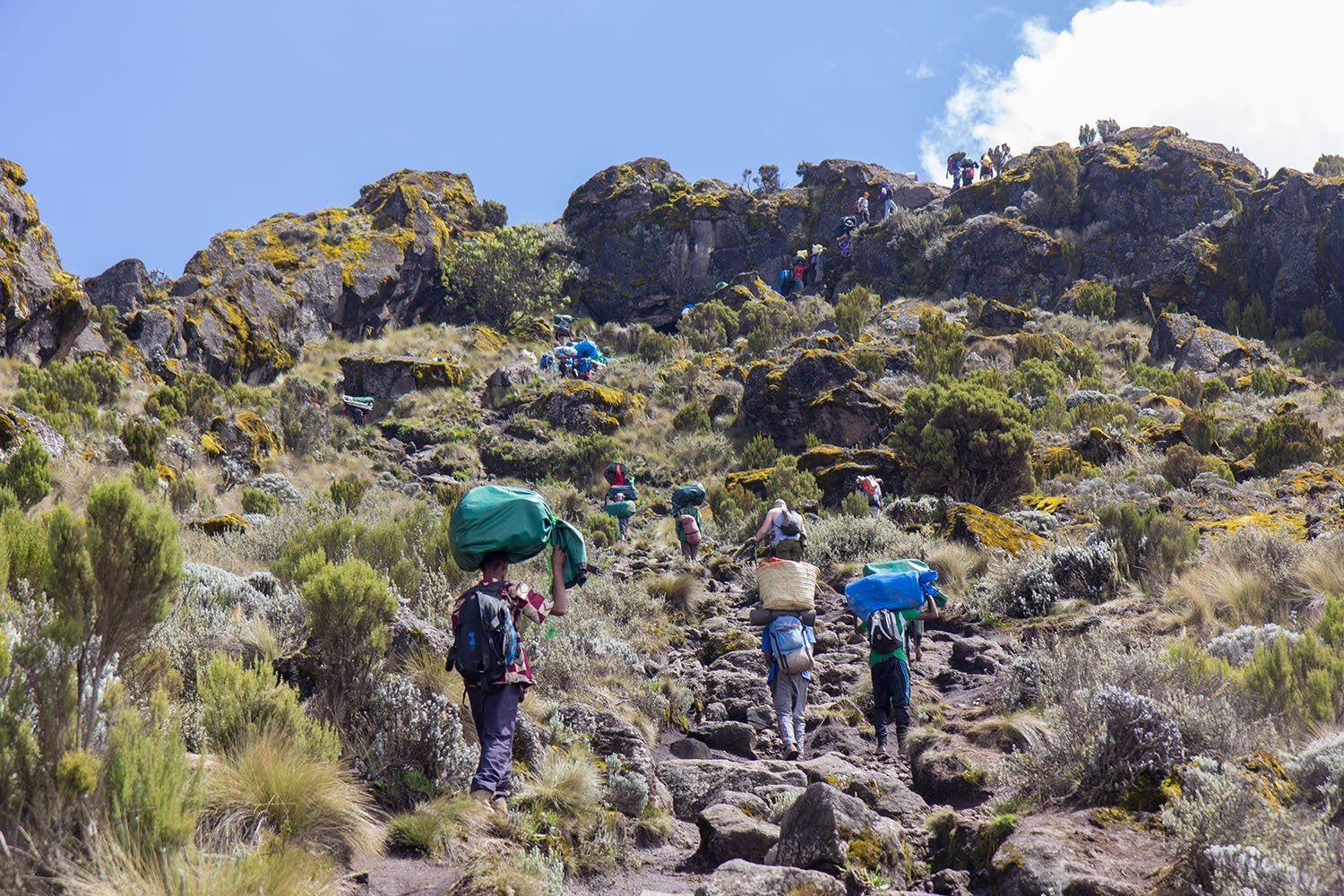
Except for seasoned climbers looking for new ways to conquer the peak of Kilimanjaro, climbers should plan their visit between June and October. This coincides with Tanzania’s dry and high season. Therefore, crowds are common in certain routes, but we are here to give you some can’t-go-wrong tips to be successful in this period.
Why climb Kilimanjaro between June and October? Because conditions are optimal. Clear skies mean you will be getting clear views of all three volcanic cones—Kibo, Mawenzi, and Shira. Rainfall is unusual during this period, so your hike won’t be cut short by frequent rainfall. The dry season also makes the trail easily accessible, especially in the lower rainforest zone.
Concerns about crowds in the dry season are real, but we can handle traffic. Here’s a strip. Many climbers pick the famous (hence crowded) routes, including Marangu and Machame. Our favorite routes are Rongai, Lemosho, and Northern Circuit. They never get heavy traffic, even in the peak season.
Another window, from January through February, is also good for climbing. In these two months, the rain stops making climbing possible. And with the forests bursting into fresh green, climbers who are lucky to have their climbs planned in this period always enjoy scenic views and jaw-dropping photographs.
January and February record a very high volume of visitors. Which means you will just be alone on the trail. We also offer discounted rates for all of our climbing packages.
Where to stay before, during, and after your Kilimanjaro climb?
Most climbers spend their first night in a hotel in Arusha or Moshi. Which town is right for you, anyway? Here is our advice. Both are very close to the Kilimanjaro International Airport. Arusha is just 50 km (31 miles) from KIA, while Moshi is just 40 km (25 miles) away.
However, Moshi is even closer to Mount Kilimanjaro. You have only 30-45 minutes of driving to reach the entry gate. Arusha is somewhat far from the mountain. You’ll need almost two and a half hours (sometimes 3 hours) to drive from Arusha to the entry gate of Kilimanjaro National Park.
Practically, driving from Arusha doesn’t take that long unless there’s traffic. Plus, you’re using a private safari. But we understand you have been on a long flight. And you’re going to take on Africa’s highest peak. Which means you have to save energy for the hike. For that reason, we advise you to stay in Moshi on your arrival day.
In Moshi, you’ll enjoy views of this mountain or indulge in spa treatments at your lodge. We also offer optional activities, such as a Moshi town tour, a trip to Kikuletwa waterfalls, a Chemka hot springs tour, or a visit to Rau Forest Reserve.
Kilimanjaro Trekking Routes.
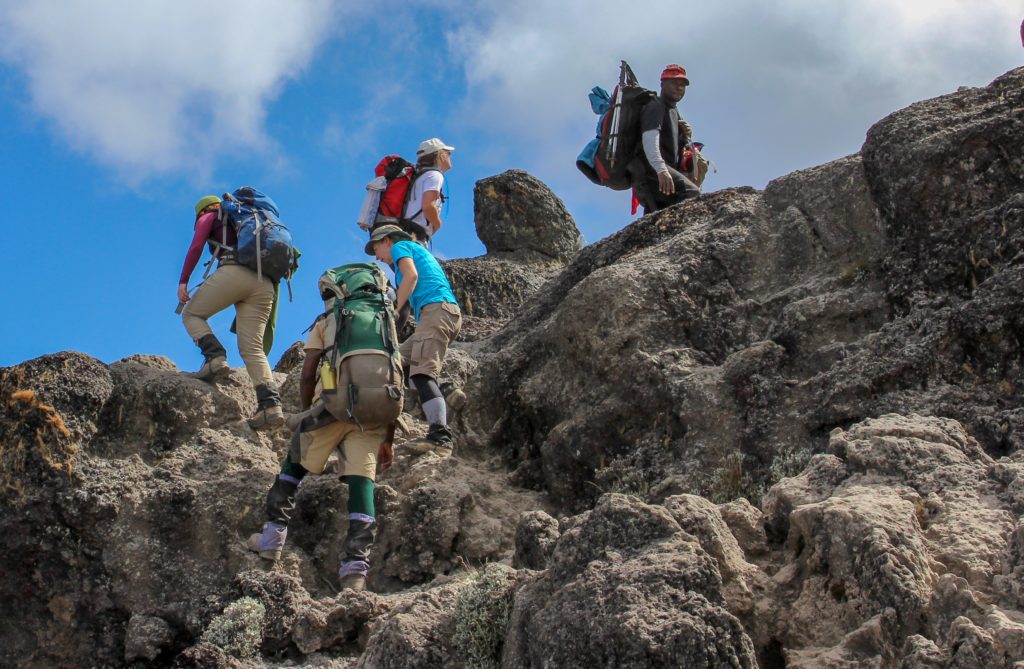
One of the critical parts when planning your Kilimanjaro trek is the choice of the route. Pick the wrong route, and you’re halfway to failure. Kilimanjaro has seven trekking routes, each with varying difficulties, slopes, and lengths. The routes are Marangu, Machame, Lemosho, Rongai, Shira, Umbwe, and Northern Circuit. We describe favorite routes below.
Marangu Route
This is the most popular route on Kilimanjaro. Approaching the mountain from the west, this route is better established than the rest. And it’s often called the Coca-Cola route because of its popularity. It’s short, often taking 5 days to complete, and has well-erected huts.
Pros: Marangu is short and has a good inclination; hence, it is best for beginners. Its well-established A-style wooden huts are favorites for many first-time climbers.
Cons: Marangu has low success rates (50-60%). This is because it doesn’t allow enough time for acclimatization. The 5-day climb is always straightforward from start to finish. No acclimatization. This route also gets traffic in the high season.
Our pro tip: Include an acclimatization to boost your summit success. 6-day and 7-day climbs have high success rates (80% and 95%, respectively).
Machame Route
Machame is the second most popular route after Marangu. Usually referred to as the “Whiskey” route, Machame is a little bit more challenging compared to the easier-to-climb Marangu. It takes 6 days to complete, and unlike Marangu, Machame has campsites, not huts.
Pros: Machame has success rates of around 80-90%. It’s not crowded compared to Marangu.
Cons: Machame is challenging, especially when you reach the Barranco Wall. Climbers also have to set up their tents in public campsites.
Our pro tip: Machame offers a challenging hike, perfect for seasoned climbers. We advise beginners to include at least one day for acclimatization.
Lemosho Route
Lemosho is a great option for climbers seeking a quiet and scenic climb. This route takes about 8 days to complete. It has no permanent accommodations. Campsites are available.
Pros: Lemosho has good success rates of up to 88%. The scene is very attractive as you will go through forests and valleys.
Cons: It may not be good for climbers in a hurry. On top of that, camping is the only option. This may not be good for beginners who prefer huts over tents.
Our pro tip: Machame is very good for both beginners and experienced hikers. It’s particularly good if you want to take photos.
Rongai Route
Rongai is the only route that approaches Mount Kilimanjaro from the north, near the Kenyan border. It’s a 6-day route endowed with scenic views along the way.
Pros: It never gets crowded throughout the year. It has good rates of up to 80%. It’s the best route during the rainy season because the northern side of Kilimanjaro receives little rainfall.
Cons: Rongai doesn’t allow climbers to acclimatize well. There’s no climb high, sleep low.
Plan your hike with Explore African Safaris
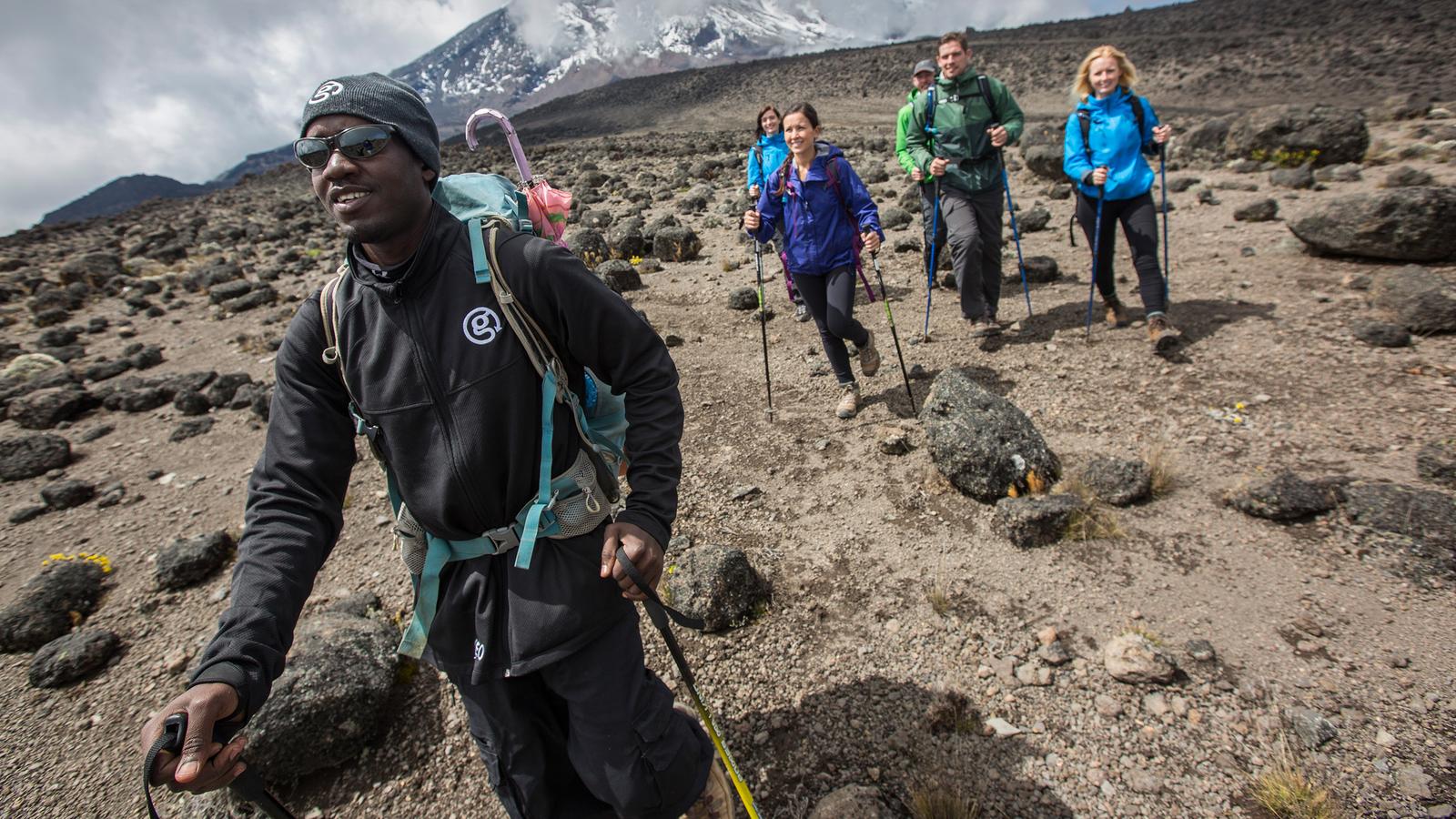
Are you ready to conquer Kilimanjaro? We can help you do that. We guide climbers through the ups and downs to the very top of Africa’s highest peak. We know Kilimanjaro is a big challenge for you. We will do our best to make sure your climb is successful. Talk to our experts now.