
Walking Safaris In Arusha National Park
Walking Safaris In Arusha National Park , Nestled at the foot of Mount Meru, Tanzania’s second-highest peak, Arusha National Park is one of East Africa’s most underrated yet breathtaking wildlife destinations. Covering approximately 552 square kilometres, this compact but extraordinarily diverse park lies just 25 kilometres east of Arusha city — the safari capital of Africa — and a mere hour’s drive from Kilimanjaro International Airport. Despite its proximity to civilisation, the park offers a genuinely wild experience that rivals its more famous neighbors.
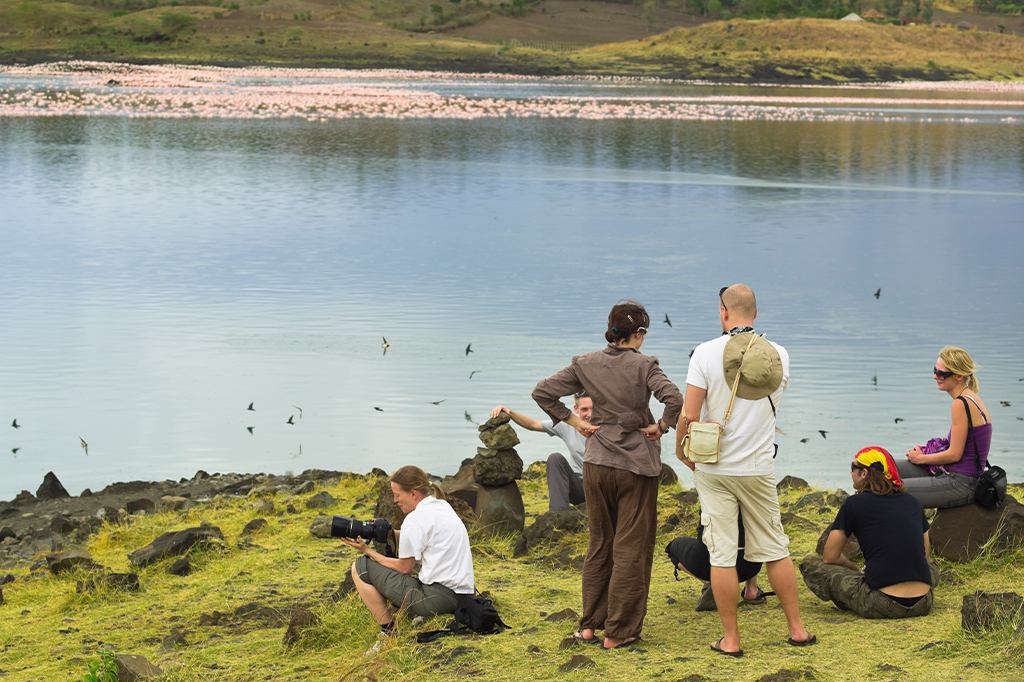
Unlike the sprawling savannahs of the Serengeti or the volcanic splendour of Ngorongoro, Arusha National Park is a mosaic of habitats: highland montane forests cloaked in mist, open grassy plains, shimmering alkaline lakes, and the dramatic Ngurdoto Crater — sometimes called the ‘Little Ngorongoro’. This variety of ecosystems, compressed into a relatively small area, makes it one of the most ecologically rich parks in Tanzania.
What sets Arusha National Park apart from virtually every other game reserve in northern Tanzania is its walking safari programme. Here, visitors are permitted to leave their vehicles and explore the wilderness on foot — an intimate, sensory experience that transforms an ordinary game drive into something profoundly personal. Walking safaris in Arusha offer a level of engagement with the natural world that no vehicle can replicate.
Did You Know? Arusha National Park was one of the first parks in Tanzania to officially offer walking safaris, making it a pioneer in sustainable, low-impact wildlife tourism.
What is a Walking Safari?
A walking safari is precisely what it sounds like: a guided expedition through wilderness terrain on foot, in the company of an armed ranger and a knowledgeable guide. Rather than watching wildlife from the elevated comfort of a 4×4 Land Cruiser, guests walk at ground level — the same level as the animals, insects, birds, and plants they have come to see. This fundamentally changes the dynamics of the wildlife encounter.
On a driving safari, the vehicle acts as a kind of moving hide: animals largely ignore it, and guests observe from a distance of metres or tens of metres, separated from the wild by glass and steel. On a walking safari, that barrier disappears. The crunch of dry grass underfoot, the smell of elephant dung, the distant rumble of a hippo — everything is immediate, unfiltered, and real. You become part of the landscape rather than a spectator peering in.
Walking safaris require a different mindset from vehicle-based game viewing. Patience is essential. Groups typically move slowly and quietly, covering two to eight kilometres over two to four hours. Guides regularly pause to examine tracks, read signs left by animals, identify bird calls, and explain the ecological relationships between species and their environment. The pace is contemplative — unhurried and deeply rewarding.
Expert Tip: The best walking safaris are not about tallying species. They are about depth of experience — understanding how a single acacia tree supports an entire community of birds, insects, mammals, and fungi.
Arusha National Park: An Overview
Gazetted as a national park in 1960, Arusha National Park is managed by the Tanzania National Parks Authority (TANAPA). The park encompasses three distinct ecological zones: the Ngurdoto Crater and surrounding forests in the south, the Momella Lakes in the northeast, and the slopes of Mount Meru in the west. Together, these form one of the most compact yet diverse protected areas in the entire African continent.
Geography and Landscape
The park rises from an altitude of roughly 1,500 metres at its lowest points to 4,566 metres at the summit of Mount Meru — a dormant stratovolcano whose dramatic ash cone and inner crater wall create one of East Africa’s most spectacular mountain vistas. For walking safari purposes, most trails are conducted in the lower montane forest and grassland zones, between 1,500 and 2,000 metres above sea level.
The Ngurdoto Crater, a collapsed volcanic caldera roughly three kilometres in diameter, forms a natural bowl of protected wilderness. The crater floor — which cannot be entered — serves as a refuge for buffalo, waterbuck, warthog, and a variety of waterbirds. Walking trails circumnavigate the crater rim, offering elevated viewpoints across the lush interior.
The Momella Lakes — a series of seven shallow, alkaline lakes fed by underground springs — attract extraordinary concentrations of flamingos, as well as hippos, waterbuck, and a dazzling array of resident and migratory birds. Walking paths around the lakes are among the most scenic in the park.
Wildlife
Despite its size, Arusha National Park supports a remarkable diversity of wildlife. The park is particularly famous for its large population of Colobus monkeys — striking black-and-white primates that inhabit the montane forest canopy and are frequently encountered on walking trails. Blue monkeys are equally common, and vervet monkeys are abundant around the lake shores.
Buffalo are plentiful in the park, and encounters on foot can be thrillingly close — always managed carefully by armed rangers who know the animals’ behaviour intimately. Warthog, bushbuck, Kirk’s dik-dik, reedbuck, and waterbuck are regularly seen. Hippos wallow in the Momella Lakes and the Jekukumia River. The park also harbours leopard, hyena, and serval, although these are more elusive.
Arusha National Park does not have lions or elephants, which — counterintuitively — makes walking safaris considerably safer and more relaxed. Rangers and guides can focus on a richer range of ecosystems and smaller wildlife without the heightened vigilance required in big-five areas.
Birdlife is exceptional. Over 400 species have been recorded in the park, including the silvery-cheeked hornbill, African emerald cuckoo, crowned eagle, Schalow’s turaco, and large concentrations of flamingos on the alkaline lakes. Walking at a slow pace through forest and grassland makes Arusha one of Tanzania’s premier birding destinations.
The Walking Safari Experience
Before You Set Off
Every walking safari in Arusha National Park begins at a park gate or designated trailhead, where guests are briefed by their armed ranger and guide. The safety briefing covers essential protocols: how to move as a group, what to do in the unlikely event of an animal charge, where to position yourself relative to the ranger, and basic bush etiquette. These briefings are delivered calmly and professionally — there is no intention to alarm, only to ensure everyone is prepared and confident.
Guides typically assess the group’s fitness level, experience, and interests before suggesting a route. First-time walkers or those with limited fitness may opt for a shorter, gentler circuit around the Momella Lakes. More experienced hikers might head into the montane forest or ascend to the Ngurdoto Crater rim. Groups with a strong interest in birds will be directed towards forest trails and lake margins where avian diversity is highest.
The Walk Itself
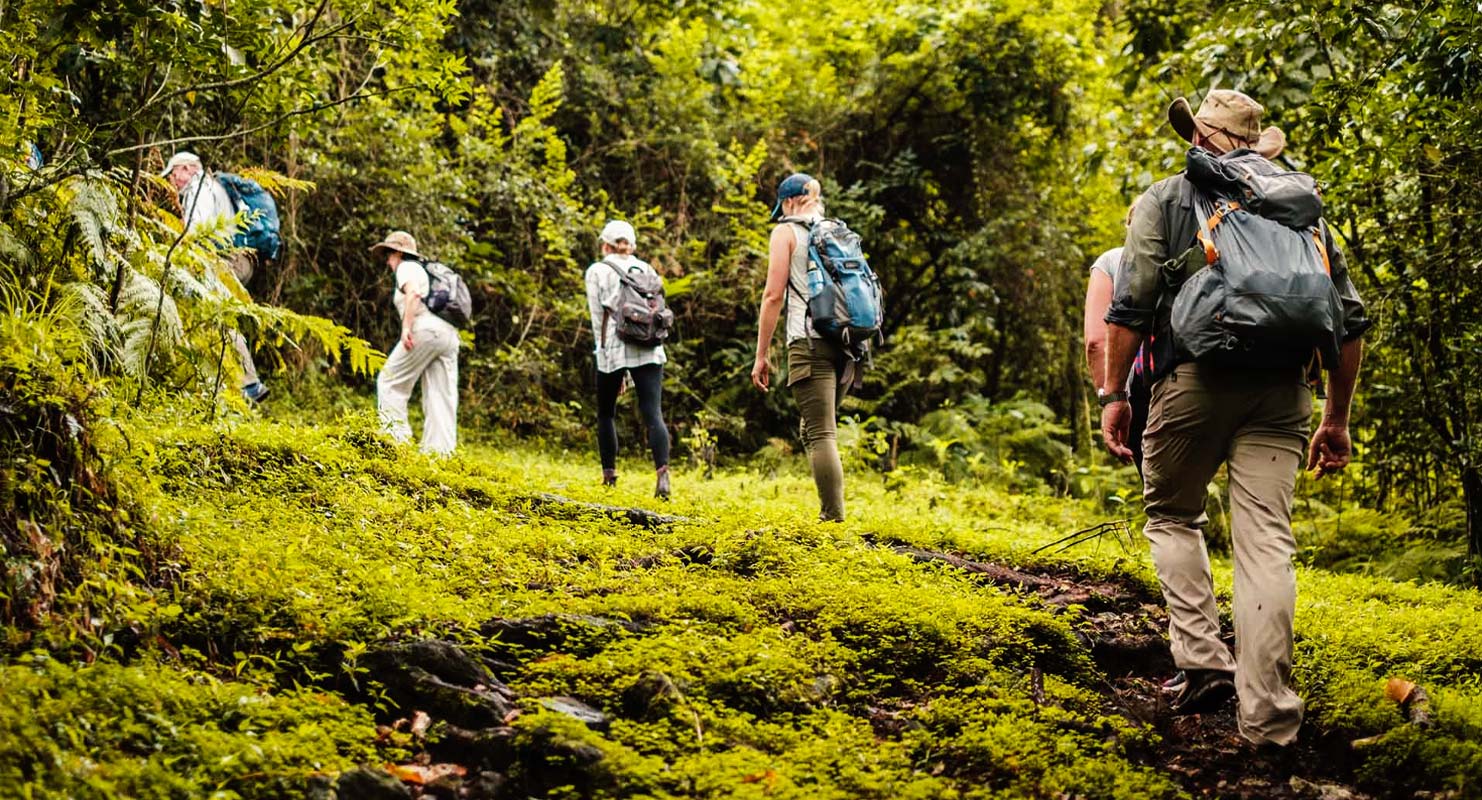
Once underway, the transformation from tourist to bush-walker happens almost immediately. The vehicle track disappears, replaced by narrow game trails worn smooth by the passage of generations of animals. The air changes — damper and cooler in the forest, warm and grassy on open plains. Every footstep feels purposeful.
Guides move with extraordinary quiet and economy of movement, regularly stopping and raising a hand to freeze the group. They may have spotted fresh tracks — the wide, rounded print of a buffalo, the tiny, heart-shaped imprint of a dik-dik, the meandering trail of a tortoise. They explain what each track reveals: the animal’s size, direction of travel, speed, and how recently it passed. Reading the ground becomes as absorbing as watching the animals themselves.
Sound is a constant companion. In the forest, the canopy above is alive with the crashing of Colobus monkeys leaping between branches, their distinctive guttural roar echoing through the trees. Hornbills clatter overhead. Weaver birds construct their intricate nests in roadside acacias. In open grassland, the chirp of cisticolas and the musical whistle of sunbirds form a constant, shifting soundtrack.
Wildlife encounters on foot are fundamentally different from those in a vehicle. When a group of buffalo appears 80 metres away across a clearing, the experience is visceral — you can feel the low vibration of their movement through the earth, smell their distinctive musk on the breeze. Guides position the group carefully, downwind and at a comfortable distance, and the animals may continue grazing, wholly unconcerned by the human presence.
Hippos, often overlooked on driving safaris because they spend most daylight hours submerged, become genuinely exciting on foot. Walking quietly to a lake shore and watching a pod of eight or ten hippos surfacing, snorting, and interacting at close range — with no vehicle noise, no engine idling, no glass between you — is one of the most memorable wildlife experiences East Africa has to offer.
The Intimate Scale of Nature
Walking safaris reveal an entire layer of the natural world that driving safaris entirely miss: the world of the small. Guides will stop to examine a line of safari ants carrying leaf fragments back to their colony, the architectural precision of a termite mound, a dung beetle rolling its prize across a dusty track, or a chameleon frozen motionless on a branch, convinced it is invisible. These micro-encounters — so easily overlooked from a moving vehicle — become sources of genuine wonder on foot.
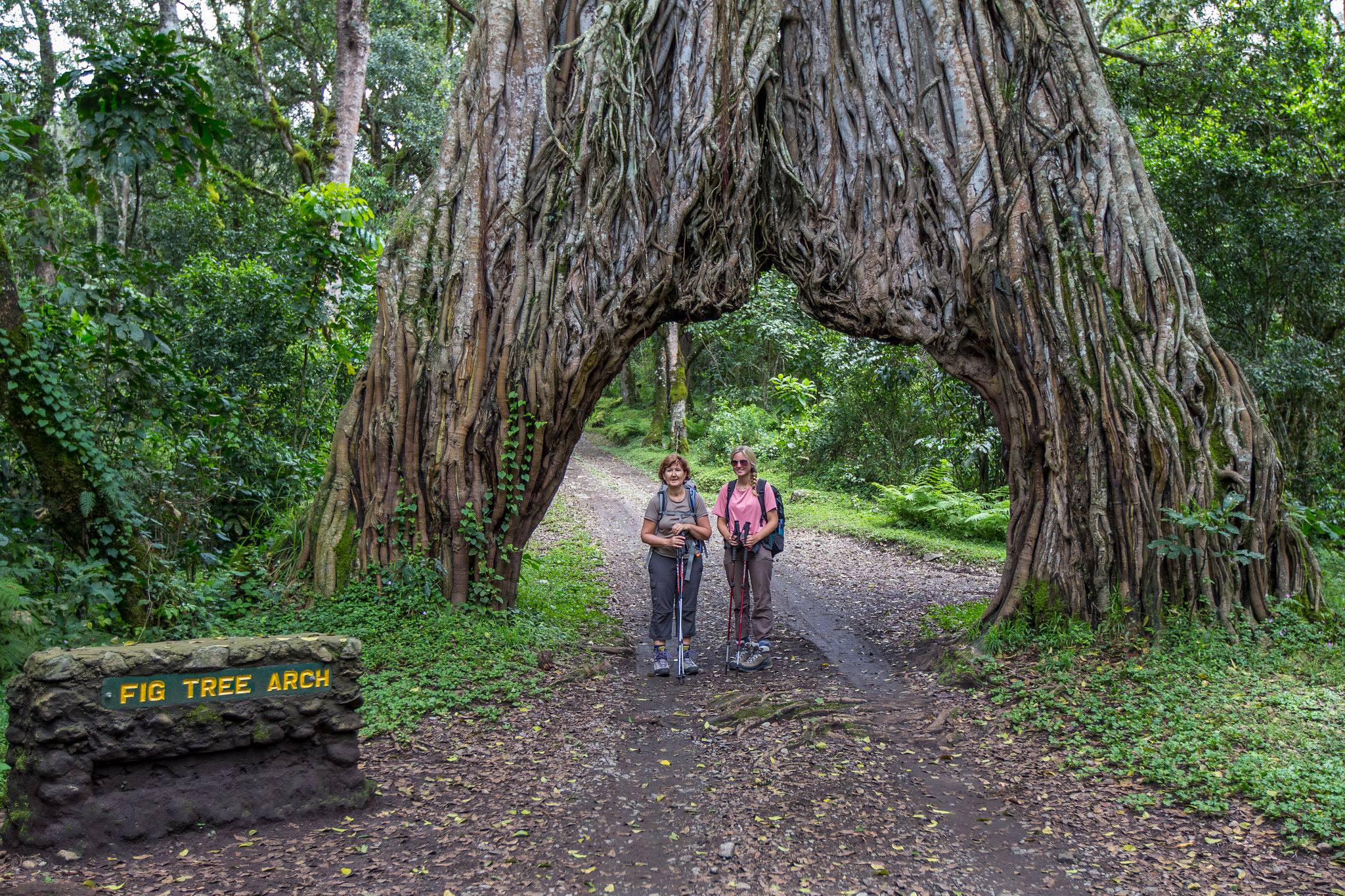
Plant life receives the same attention. Guides identify the sausage tree, whose pendulous cylindrical fruits hang heavy in the forest canopy; the fever tree, its distinctive lime-yellow bark photographed by millions of visitors; the parasitic strangler fig slowly engulfing a host tree in an ecological embrace that will eventually kill it. Every plant has a story, an ecological relationship, a medicinal or cultural significance passed down through generations of local knowledge.
Memorable Moment: Encountering a troop of Colobus monkeys at eye level in the forest canopy — close enough to see the infants clinging to their mothers — is an experience that no camera can fully capture and no vehicle can provide.
Practical Information for Walkers
Best Time to Visit
Arusha National Park can be visited year-round, but the dry seasons — January to February and June to October — offer the most comfortable walking conditions. During the dry season, vegetation is less dense, tracks are easier to follow, animals concentrate around water sources, and the dramatic profile of Mount Meru is frequently visible against clear blue skies.
The long rains (March to May) make trails slippery and visibility through dense vegetation more challenging, though the park takes on a lush, emerald beauty during this period and visitor numbers are significantly lower. The short rains of November to December are generally brief and unpredictable — walking remains possible, and migratory birds are present in large numbers.
What to Wear and Bring
Dressing appropriately makes a significant difference to comfort and safety on a walking safari. Recommended essentials include:
- Neutral-coloured, lightweight clothing — khaki, olive, beige, or grey. Avoid white (visible) and blue (attracts tsetse flies in some areas)
- Long trousers and a long-sleeved shirt to protect against thorns, insects, and sun exposure
- Sturdy, broken-in walking boots with ankle support — this is the single most important piece of equipment
- A wide-brimmed hat and sunglasses for open grassland sections
- Lightweight rain jacket or windproof layer — altitude means mornings can be cool even in the dry season
- High-SPF sunscreen and insect repellent
- At least two litres of water per person — guides typically carry additional supplies
- Binoculars — essential for birding and for observing wildlife at a respectful distance
- A camera with a telephoto lens or a good smartphone camera
- A small daypack for personal items
Fitness and Accessibility
Walking safaris in Arusha cater to a wide range of fitness levels. Gentle lakeside walks around the Momella Lakes are relatively flat and suitable for most visitors, including older travellers and those with moderate fitness. Crater rim walks involve some elevation gain but remain manageable for reasonably active adults. Forest walks can involve uneven terrain and some scrambling.
Guides are highly experienced at reading their group and adjusting pace, distance, and route accordingly. It is always better to be honest about your fitness level at the briefing stage — a slightly shorter, slower walk will invariably be more rewarding than an exhausting forced march. The goal is immersion, not distance covered.
Safety
All walking safaris in Arusha National Park are conducted with an armed Tanzania National Parks ranger, in addition to a professional guide. Rangers are highly trained in animal behaviour and carry rifles as a last resort — encounters requiring intervention are extremely rare, but the ranger’s presence ensures both physical safety and confidence for guests.
Guides maintain continuous awareness of wind direction, sound, and movement throughout the walk. They position the group relative to wildlife with practiced expertise, ensuring comfortable distances and clear escape routes at all times. Following the guide’s instructions promptly and without hesitation is the cardinal rule of every walking safari.
Health precautions standard for Tanzania apply: malaria prophylaxis is recommended, though Arusha at altitude has a lower mosquito burden than lowland areas. Yellow fever vaccination may be required depending on your country of origin. Travel insurance covering emergency evacuation is strongly advised.
Key Walking Routes in the Park
1. The Momella Lakes Circuit
This is the most accessible and popular walking route in the park, circumnavigating some or all of the Momella Lakes on a mixture of game trails and vehicle tracks. The terrain is largely flat, making it suitable for walkers of all abilities. Highlights include close-range views of hippo pods, concentrations of flamingo (particularly on Little Momella Lake), waterbuck grazing on the lake margins, and extraordinary birdlife including kingfishers, herons, egrets, and African fish eagles.
Distance: 5–12 km depending on route. Duration: 2–4 hours. Difficulty: Easy to Moderate.
2. The Ngurdoto Crater Rim Walk
One of the most dramatic walking experiences in the park, the crater rim trail follows the forested lip of the ancient volcanic caldera, offering elevated views across the crater floor to the wildlife below. Buffalo, warthog, and waterbuck are frequently visible from the rim. The forest along the trail is rich in bird and monkey life, with Colobus and blue monkeys regularly encountered.
Distance: 3–6 km. Duration: 2–3 hours. Difficulty: Moderate (some elevation change).
3. The Montane Forest Walk
For visitors with a strong interest in birds, primates, and forest ecology, this route through the highland montane forest is unparalleled. Guides lead guests through dense, humid forest where Colobus monkeys can be found at eye level and the canopy overhead rings with hornbill calls. The forest floor is a world of fungi, ferns, mosses, and insect life. On clear days, views through the forest canopy to Mount Meru are breathtaking.
Distance: 4–8 km. Duration: 2–4 hours. Difficulty: Moderate (uneven terrain).
4. The Jekukumia River Trail
This lesser-known trail follows the course of the Jekukumia River through a mosaic of riverine forest and open grassland. Hippos are regularly seen in the river, and the varied habitat makes for exceptional birding. Buffalo and bushbuck are common along the river margins. This route offers a quieter, more intimate experience away from the most-visited areas of the park.
Distance: 3–5 km. Duration: 1.5–2.5 hours. Difficulty: Easy to Moderate.
The Role of Guides and Rangers
The quality of a walking safari is almost entirely determined by the quality of its guide. The best guides are not merely escorts — they are naturalists, storytellers, and interpreters of the wild. In Arusha National Park, many guides have been born and raised in the surrounding region, giving them a lifetime of accumulated knowledge about the park’s ecology, animal behaviour, seasonal patterns, and cultural significance.
Guides translate the landscape into narrative. A patch of disturbed earth becomes the story of a hyena digging out a mongoose burrow. A broken twig at shoulder height reveals where a buffalo rubbed its horn. The distinctive, musky scent of a bushbuck is pointed out before the animal itself becomes visible. Over the course of a two or three hour walk, an experienced guide transforms the bush from scenery into living, breathing text — and guests leave with an understanding of the natural world that no documentary can provide.
Rangers from TANAPA accompany every walking safari. These men and women undergo rigorous training in wildlife management, animal behaviour, and emergency procedures. While the hope is always that their presence is precautionary, guests invariably find the ranger’s calm, professional demeanour deeply reassuring — a quiet confidence that comes from spending years navigating the same terrain.
Responsible and Sustainable Safari Practices
Arusha National Park has embraced walking safaris in part because of their minimal environmental impact. Groups on foot do not create dust clouds, cannot drive into sensitive habitats, produce no vehicle emissions, and cause far less soil compaction than repeated game drives on the same tracks. When practised responsibly, walking safaris represent one of the most ecologically sound forms of wildlife tourism available.
Responsible walkers observe a simple set of principles: stay on designated trails and avoid cutting through vegetation, never approach wildlife closer than the distance your guide recommends, carry all waste out of the park, avoid noise that could disturb animals or other visitors, and resist the temptation to feed any wildlife, however habituated they may appear.
A percentage of every park entry fee is directed towards conservation and community development programmes surrounding the park. Choosing local operators, staying in community-run lodges, and hiring local guides ensures that tourism revenue remains in the region and provides direct economic incentives for conservation.
Leave No Trace: The golden rule of every walking safari. Everything you carry in, you carry out. Leave the bush exactly as you found it — or better.
Combining Walking Safaris with Other Activities
Arusha National Park is unique in offering a combination of activities that suits almost every type of traveller. Walking safaris can be combined with game drives in the park’s open grassland areas — particularly useful for spotting giraffe, which are found in the park and more easily viewed from a vehicle. Canoeing on the Momella Lakes offers a completely different perspective on hippos and waterbirds, paddling silently among them at water level.
For the more adventurous, Arusha National Park serves as the starting point for climbs of Mount Meru — a challenging four-day trek through five distinct ecological zones, culminating at the crater rim with panoramic views over Kilimanjaro. Many trekkers combine a day’s walking safari in the lower reaches of the park with the first acclimatisation day of their Meru climb.
The park’s proximity to Arusha city also makes it an ideal introductory experience for travellers beginning a longer Tanzania itinerary. A morning or afternoon walking safari in Arusha is the perfect way to acclimatise to the altitude, get a sense of Tanzania’s wildlife and landscapes, and calibrate expectations before embarking on longer, more remote expeditions to the Serengeti or Ngorongoro.
Where to Stay
Accommodation near Arusha National Park ranges from budget-friendly guesthouses in Arusha city to luxury lodges on the park boundary offering direct access to walking trails. Several lodges and tented camps operate within or immediately adjacent to the park, providing an immersive bush experience with the convenience of proximity to Arusha’s airports and infrastructure.
Momella Wildlife Lodge, one of Tanzania’s oldest safari camps, sits within the park’s boundaries and was famously used as a filming location for the classic 1962 movie Hatari! staying here connects visitors to both the wildlife and the history of East African safari culture. A number of newer boutique properties have also opened in recent years, offering contemporary design alongside authentic safari experiences.
For those on a budget or visiting as part of a longer self-drive circuit, Arusha city offers an excellent range of accommodation at every price point, with the park reachable in under 30 minutes by road. Several TANAPA-managed public campsites within the park allow independent travellers to spend nights under canvas amid the sounds of the African bush.
Getting There
Arusha National Park is one of Tanzania’s most accessible major wildlife areas. Kilimanjaro International Airport (JRO) lies approximately 35 kilometres from the main park gate, making it reachable in under an hour from arrival. Arusha city itself is 25 kilometres from the park. Most visitors arrange transport through their lodge or safari operator, though the park is also accessible by public minibus to Ngare Nanyuki village at the park boundary.
Those combining Arusha with a broader northern Tanzania safari circuit will find it conveniently located en route between Kilimanjaro Airport and Tarangire National Park or the Lake Manyara area, making it a natural first stop — a gentle, accessible introduction to the extraordinary wildlife experiences that Tanzania’s northern circuit delivers.
Conclusion: Walk Slowly, See Everything
In an era of ever-faster, ever-more-spectacular wildlife tourism, there is something profoundly counter-cultural about choosing to walk. Walking safaris demand patience, quietness, and a willingness to let the bush reveal itself at its own pace — to find wonder in a beetle instead of a lion, to listen for ten minutes to a single bird and begin to understand its language.
Arusha National Park offers this experience in a setting of remarkable beauty, extraordinary diversity, and genuine wildness. Whether you spend two hours circling the Momella Lakes, half a day exploring the montane forest in the company of Colobus monkeys, or a full day discovering the crater rim and river trails, a walking safari here will change the way you see the natural world.
This is Africa at its most intimate. This is wildlife conservation at its most sustainable. This is the walking safari — unhurried, unmediated, and utterly unforgettable.
