
All You Need to Know About Serengeti National Park
All You Need to Know About Serengeti National Park, Situated in the north-central region of Tanzania, Serengeti is undoubtedly a top-notch wildlife sanctuary in Africa. No doubt you may have heard of it, as it’s everywhere in the media—BBC Wildlife, Nat Geo, social media, or the minds of every nature lover. Our read below explains everything about this fascinating national park.
What to see in the Serengeti?
The Serengeti is home to a myriad of attractions. And yes, you have a lot to see in this park. Whether you’re after the Great Migration or you’re just looking for raw wildlife scenes, this is your place. We feature some of the top attractions in Serengeti National Park.
1. The Great Migration.
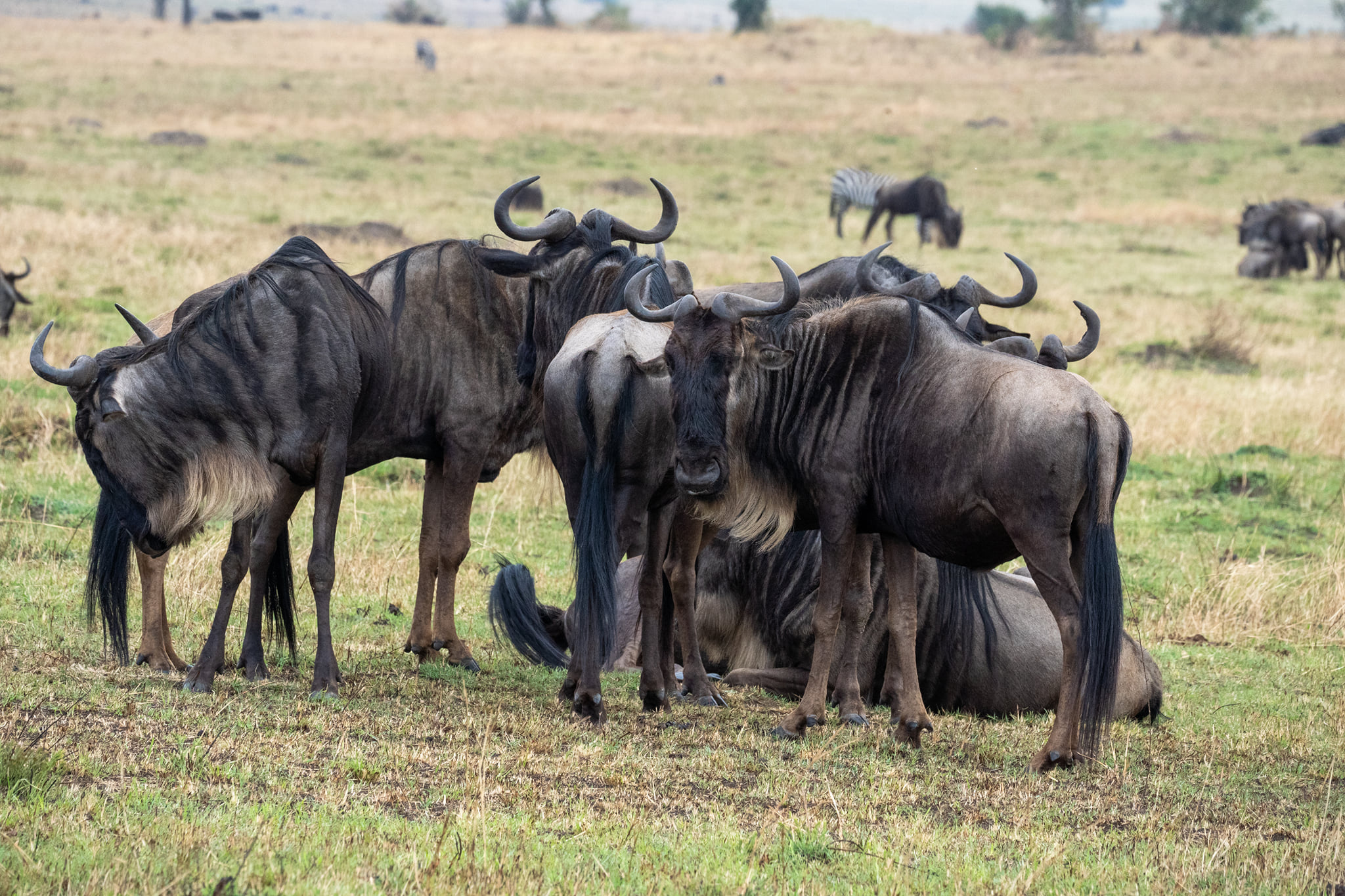
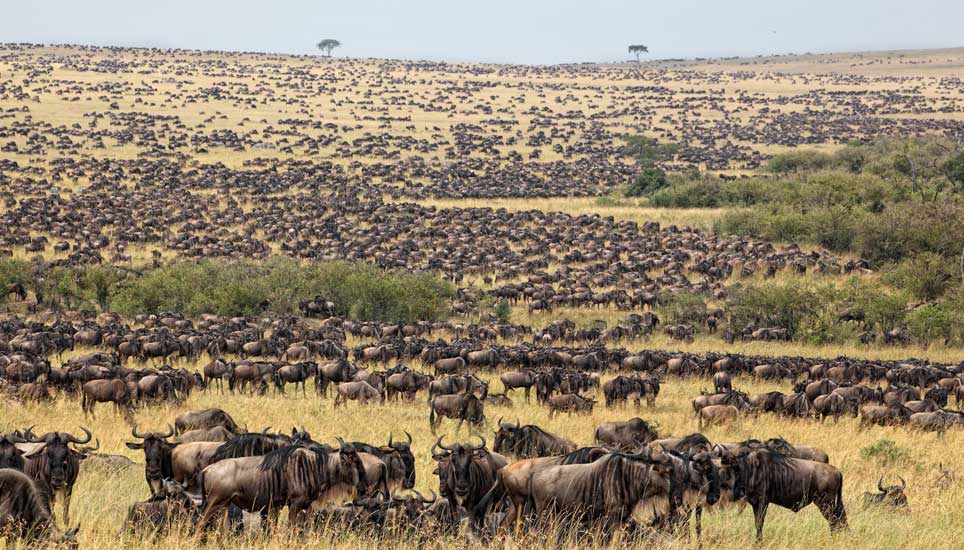
Every year, over 1.5 million wildebeest and hundreds of thousands of zebras and gazelles migrate from the southern plains to the northern part of the Serengeti. This event is known as the Great Migration, one of nature’s greatest wonders. The event has no ‘start’ and ‘finish’ except for the birth and death of animals.
But we always consider the calving season as the ‘beginning’ of this wonderful event, while crossing the Mara River is considered the ‘end.’ The former happens early, from December through March, and it involves the birthing of over 500,000 calves in just three months. The latter happens between July and October. It features thousand-strong herds of wildebeest, zebra, and gazelle crossing the Great Mara River.
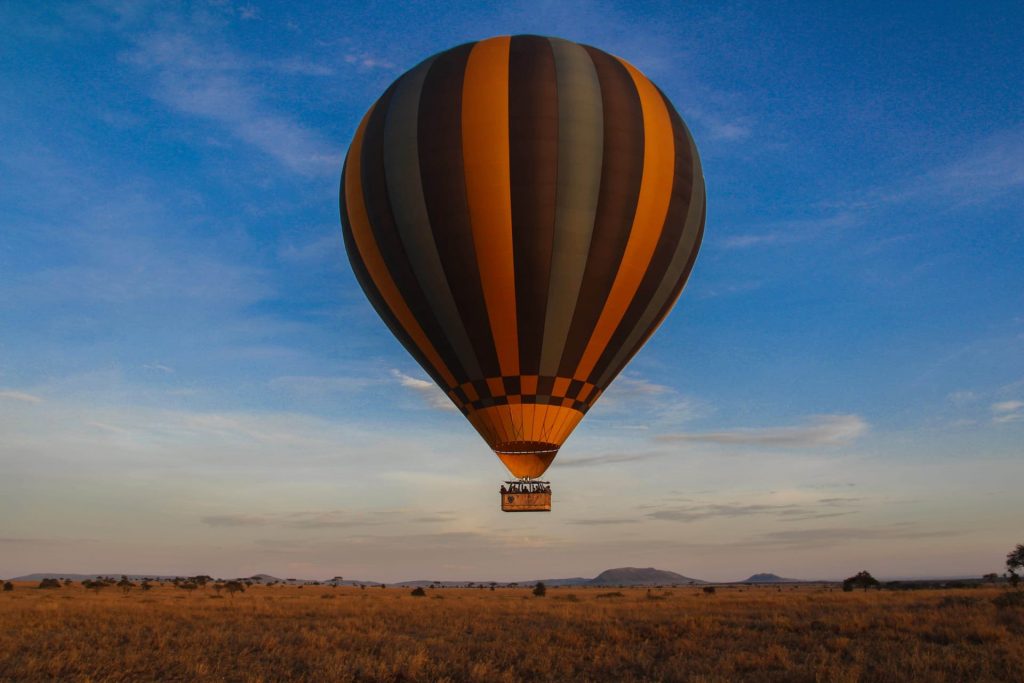
There’s much to see in addition to these striking events. Want to fly over thousands of wildebeest? Sure thing. We run safe, adventurous balloon safaris. You can also watch wildebeest bulls as they fight for females during the rutting season, from April to May.
2. Big Five.
Africa is uniquely endowed with the iconic Big Five, and the Serengeti is their beautiful home. What are the Big Five? Lion, leopard, elephant, buffalo, and rhino make the Big Five group. Is it because of their size? Absolutely not: they’re named so because they are too dangerous to hunt on foot. Where did this all begin? Here’s a story.
Back in the day, old-school hunters went on foot to hunt in the wild for trophies. They found it very intimidating to take down a lion, a leopard, a rhino, a buffalo, and an elephant. Because when cornered, these animals turned ferocious, and in the blink of an eye, they would terribly injure the hunter. So, they named them the Big Five. Tourism adopted the term for marketing.
3. Big Cats.
Are lions, leopards, and cheetahs your favorite animals? Set off for the Serengeti. The park is renowned for its abundant presence of predators in the world, but these special cats (big cats) stand out for reasons. First, they rule Serengeti’s endless plains. Second, they are highly skilled predators. And lastly, they are beautiful to watch.
Lions, for example, make up the largest number of predators. Serengeti is the park with the largest count of lions in the world, holding roughly 3,000 lions (that’s 300 prides). The best locations to find lions include Seronera Valley (throughout the year), Kusini Plains (with the highest count during the calving season), Grumeti, Lobo Valley, and Kogatende.
Leopards are present, but spotting one can be very challenging. Unlike lions, leopards are elusive and do not form large groups (or prides). They spend their daytime resting in trees, especially acacia and sausage trees. They’re active at dawn and at dusk. The best places to spot leopards include the banks of the Seronera River, Namiri Plains, and Kusini Plains.
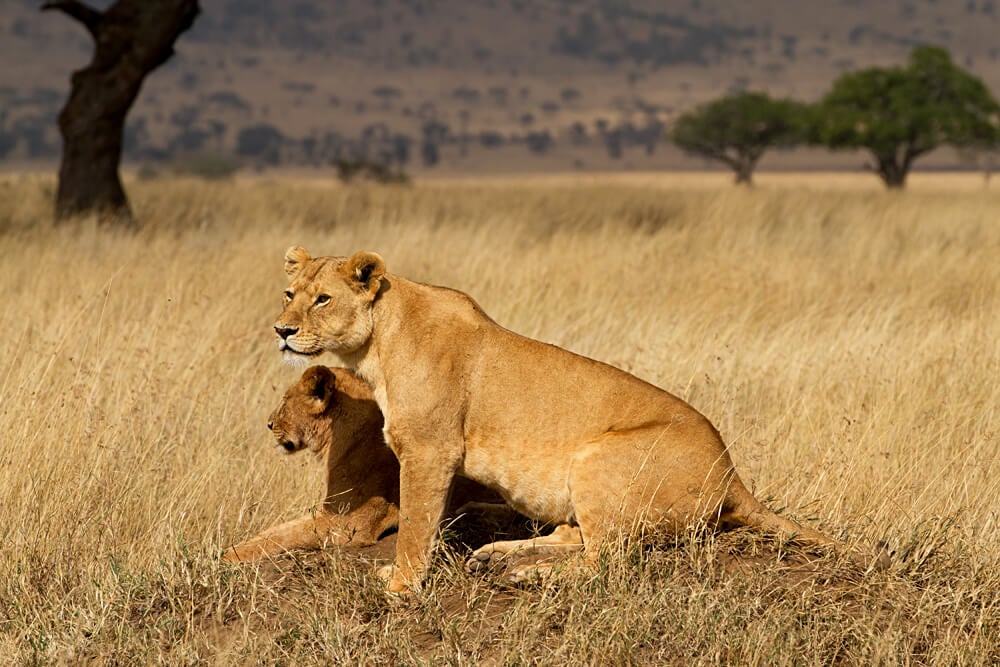
Cheetahs, the world’s fastest land animals, also reside in the Serengeti. Around 550 cheetahs are present. They’re less social, often living in groups of 3-4, and prefer kopjes and grassy plains. Namiri Plains, on the eastern side of Seronera Valley, is home to many cheetahs. The region was once closed for the cheetah project.
4. Diverse wildlife
There’s plenty of wildlife in the Serengeti. On one turn, you may see a long-necked giraffe moving gracefully toward a river. On another turn, a spotted hyena is devouring remains. Common animals include warthogs, impalas, hippos, crocodiles, and monkeys. Others include mongooses, African wild dogs, bat-eared foxes, black-backed jackals, and more.
5. Birds
We can’t ignore Serengeti’s 500 bird species. Here, you will find land-based giants like ostriches and ground hornbills strolling the grassy plains or beautiful species like the ashy starling, secretary bird, crowned eagle, and malachite kingfisher, to name just a few.
What to do in the Serengeti?
In terms of what to do, you choose. You can go for conventional activities, like game drives, or even more adventurous things. Here’s what you can do while in the Serengeti.
1. Game driving.
This activity is always included in most safari packages. Anytime you book a wildlife safari with us, just know a game drive is part of the package. During the morning, animals are very active. Therefore, morning drives give you the chance to see a lot of animals and elusive creatures like leopards, which hide in trees when the heat creeps in in the afternoon.
Many travelers choose to spend the afternoon at your lodge. They may soak in a plunge pool, take a nap, journal, or read. This time isn’t ideal for game drives, as many animals hide under tree shade or thickets.
During the evening, animals come out again for grazing. This is the right time to go for an afternoon game drive. You’ll search for wildlife and finally enjoy a sundowner at a well-prepared setting. Sip your cocktails as you watch the sun sinking into the African savannah.
2. Balloon safari.
There’s magic in hovering above the savannah. We organize hot-air-balloon safaris run by experienced pilots over the Serengeti’s wilderness. On this adventure, you’ll enjoy a bird’s-eye view of the wilderness and wildlife. We highly recommend this activity if you want to view wildebeest and zebra herds during their annual migration.
Balloon safaris are not included in normal safari packages. So, to book one, you will have to pay an extra fee of around $500-$600 per person. Looks expensive? A balloon flight involves a crew of about 20 experts, and balloons are regularly maintained or changed to improve safety. All these add something to the price. But we promise you that you won’t remember the cost. The experience is purely joyous.
3. Walking safari.
A safari isn’t about driving a safari jeep; it’s all about slowing down—yes, exploring nature on foot. This is when a nature walk comes in. You can walk in the Serengeti to watch nature up close. A walk can be short, around your accommodation. You can also take an hour-long walk away from your lodge.
What we love about walking safaris is that you discover small creatures that would otherwise be invisible from the height of a safari vehicle. You will explore flowers and learn about medicinal plants used by the Maasai for treatments. And you’ll always have a backup plan—yes, a safari jeep at your disposal whenever you feel exhausted.
4. Trekking the Great Migration.
You may decide to explore the Serengeti on a migration safari. Many guests prefer the dramatic river crossings, while a few love the calving season. But, from our experience, the Great Migration has a lot of events worth following.
From January through February, you can witness wildebeest giving birth to about 8,000 calves in a day. Between April and May, you can watch many bulls fighting for females as the rutting season steps in. And from June to October, you can watch herds crossing the Grumeti River (in the west, mid-May to June) and the Mara River (in the north, July to October).
5. Birdwatching
Like birds? The Serengeti is your place. Here, you can meet up to 500 bird species. Notable species include ostriches, grey-crowned eagles, African skimmers, storks, turacos, superb starlings, ashy starlings, secretary birds, and more. Pack your camera and binoculars.
Where to stay in the Serengeti
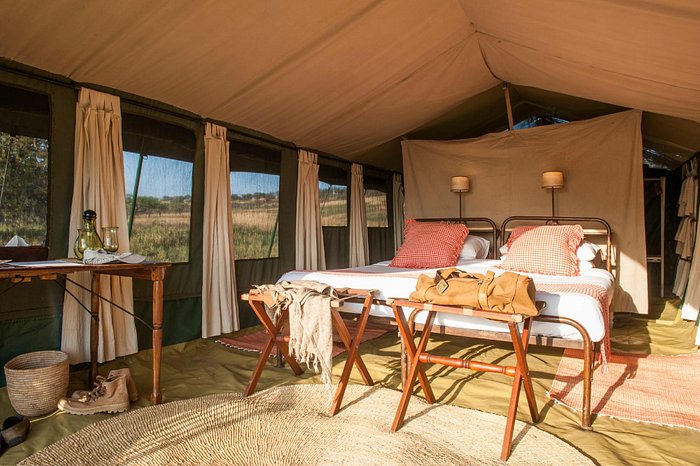
One of the parks with loads of places to stay in Tanzania (and probably in Africa) is the Serengeti. Here, you will find high-end safari camps, large hotels, and simple, down-to-earth campsites.
For luxurious safari-goers, options like Four Seasons Serengeti, &Beyond Grumeti River Lodge, One Nature Nyaruswiga, Siringit Serengeti Camp, Dunia Camp, and Sayari Camp are perfect.
However, if you want to stay in private concessions, pick Mwiba Lodge, Klein’s Camp, or Singita properties such as Sasakwa Lodge, Sabora Camp, and Faru Faru. Staying in these properties can be costly, but you will enjoy additional activities like night game drives, walking safaris, and off-road drives, which are limited in the main park.
For midrange travelers, options like Serengeti Serena, Serengeti Sound of Silence, and many others are great. If you want a more rustic experience, you can stay at a public campsite. Seronera Campsite, Nyani Campsite, and Lobo Campsite are some of the well-established campsites in the Serengeti.
When to visit the Serengeti
There’s no better time than now. The Serengeti is actually good year-round, but the most favorable time is from June to October. During this time, the grass is short, there’s no rain, and it’s easier to spot animals as they gather around a few available water sources.
June to October also coincides with the peak of the Great Migration. During this time, animals reach the Grumeti and Mara Rivers. However, during this period, competition is higher, hence driving the costs up. As a result, nearly everything is sold at a premium cost.
December through March is also great for a wildlife safari in the Serengeti. During this time, you can witness the Great Migration calving season in the grassy southern plains of the Serengeti. On top of that, there are no crowds, and everything is priced fairly.
How to get to Serengeti National Park
The main entry point for many safari-goers going to the Serengeti is Kilimanjaro International Airport, located in Arusha. From here, you can either drive or fly. By driving, the journey takes about 5-6 hours to access Naab Hill, Serengeti’s main gate.
And by flight, you can fly from Kilimanjaro Airport or Arusha Airport to one of the seven airstrips of the Serengeti: Seronera, Kogatende, Lobo, Fort Ikoma, Serengeti South, Grumeti, and Lamai. Where you should land depends on the location of your safari lodge.
You can access private concessions via their private airstrips. Mwiba Lodge has Mwiba Airstrip; Klein’s Camp has Klein’s Airstrip; and Sasakwa Airstrip serves all lodges found in the Singita Grumeti Reserve in the west of Serengeti.
The bottom line.
Time is now. We are here to help you plan your safari to Serengeti National Park. Our field guides know how to take you to unforgettable scenes. What are you waiting for? Plan your adventure today with us.