
Things to do in Arusha National Park- Enjoy the incredible Moments
Things to do In Arusha National Park Despite its diminutive size, Arusha National Park is one of Tanzania’s concealed treasures. The picturesque vistas of the park’s terrain, along with its diverse animals and plants. The park merits a visit while organizing a Tanzania safari. Should you contemplate a vacation to the northern regions of Tanzania and neglect Arusha National Park, it is imperative to reconsider your decision. Otherwise, you are likely to forfeit an extraordinary African safari experience.
Typically, travelers assert that Arusha National Park presents limited attractions. The little wildlife and proximity to the city of Arusha render it an unreliable tourism attraction. These are merely allegations, and none are factual. This essay elucidates why Arusha is among the premier and most dependable tourism attractions in Tanzania and the broader African continent. Indeed, Arusha National Park may not possess the extensive expanse of the formidable Serengeti National Park or the widespread acclaim of the Ngorongoro Conservation Area; nonetheless, it continues to be one of the premier safari locales within Tanzania’s Northern Circuit. It is, in fact, undervalued.
Geographical Location
Arusha National Park is situated several kilometers from Arusha town. The travel from Arusha town to Arusha National Park requires no more than one hour. This is one of the reasons to include Arusha National Park in your travel itinerary. Its excellent placement alleviates the necessity for early rising for the passenger. Envision an African safari locale where you awaken at your leisure.
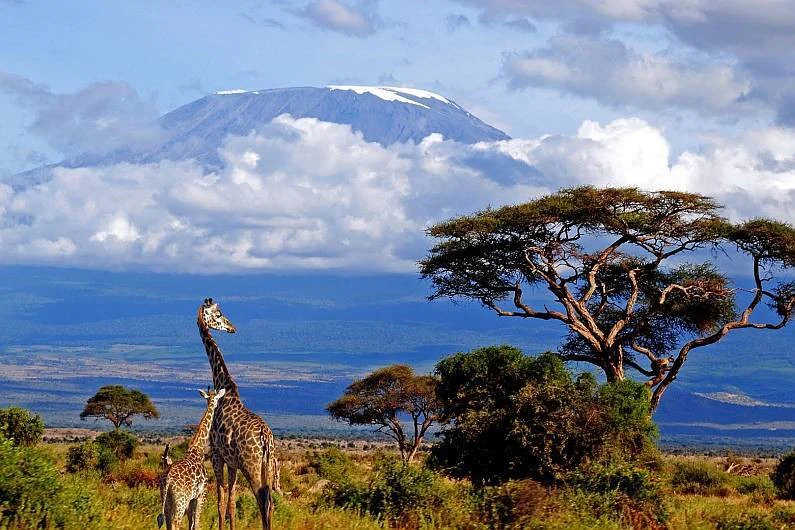
Furthermore, Arusha National Park offers picturesque vistas of the enchanting Mt. Meru and its environs. No visitor desires to forgo the exquisite vistas created by the interplay of sunlight and topographical elements, particularly at dusk or morning. Such moments are quintessential in the realms of cinematography and wildlife photography. You need not forgo any of these. Mountain Meru is the second largest mountain in Tanzania, following Mountain Kilimanjaro, which is the largest. It is an inactive stratovolcano that last erupted in 1910. It is situated to the north of Arusha town within Arusha National Park.
The peak of Mount Meru ranks fifth in Africa, at an elevation of 4,561 meters. The caldera at the summits measures 3.5 km in width. The hiking opportunities and vistas of this mountain, along with numerous other attractions in Arusha National Park, have significantly attracted tourists to the area. I recommend that novice hikers commence their expedition with an ascent of Mt. Meru. This is a preliminary education for them before they may ascend the huge Kilimanjaro Mountains — Africa’s tallest peaks.
For individuals seeking to hike Mt. Meru or Mt. Kilimanjaro, Explore African Safaris is at your service. They provide hiking permits, hiking equipment, a professional safari guide, and superior safari accommodations for your journey.
History of the Park
Arusha National Park was founded in 1960 and designated as a national park. The park is situated northeast of Tanzania, adjacent to Arusha city. It was called after Arusha, one of Tanzania’s principal cities.
The park spans 137 km², encompassing a compact area that is abundantly adorned with stunning landscapes and attractions. The predominant physical characteristic of this national park is Mount Meru.
Mountain Meru is the second largest mountain in Tanzania, following Mountain Kilimanjaro, which is the largest. It is an inactive stratovolcano that last erupted in 1910. It is situated north of Arusha town within Arusha National Park.
Mount Meru ranks fifth in Africa, with an elevation of 4,561 meters. The caldera at the peaks has a width of 3.5 km. The walk and vistas of this mountain, along with numerous other attractions in Arusha National Park, have significantly attracted travelers to this location.
What contributes to the renown of Arusha National Park?
Arusha National Park houses the global population of giraffes. The park is renowned for its proximity to Arusha, one of Tanzania’s principal cities. This renders it a preferred safari spot for brief excursions in Tanzania. A three-day safari in Tanzania is best recommended at Arusha National Park. A one-day safari game drive is feasible, allowing for a return to your hotel in Arusha town.
Anticipations to avoid in Arusha National Park.
Travelers often have negative experiences in safari destinations due to their inflated expectations. Africa possesses a wealth of offerings, although not all can be located in a single location. Do not anticipate the large wildebeest migration at Arusha National Park like one would in Serengeti National Park or Lake Natron. Do not anticipate the presence of several elephants and Baobab trees as found in Tarangire National Park.
Each African safari destination presents distinct and novel experiences. This is a primary reason why an African safari will always be an exhilarating experience. Adjust your expectations and explore what the Park offers.
If you seek activities beyond the Park, Explore African Safaris is prepared to build exceptional, bespoke safari packages in Africa for you. Time and financial resources are your sole constraints. Our expertise lies in integrating multiple safari locations into a single journey while prioritizing cost reduction to enhance the overall experience. Explore the exceptional combo or group trips in Tanzania here.
Attractions in Arusha National Park
Wildlife in Arusha National Park
The national park hosts fewer wildlife species than other national parks in Tanzania. Wildlife observation provides tourists the opportunity to observe several species, including elephants, bushbucks, zebras, warthogs, cape buffaloes, and others.
The diverse topography of Arusha National Park provides a stable habitat for various animal, avian, and plant species. Some inhabit the lower savannah plains of the park, while others are observed on the slopes of Mt. Meru. Certain species are elusive, while others are endemic to this location.
Birds
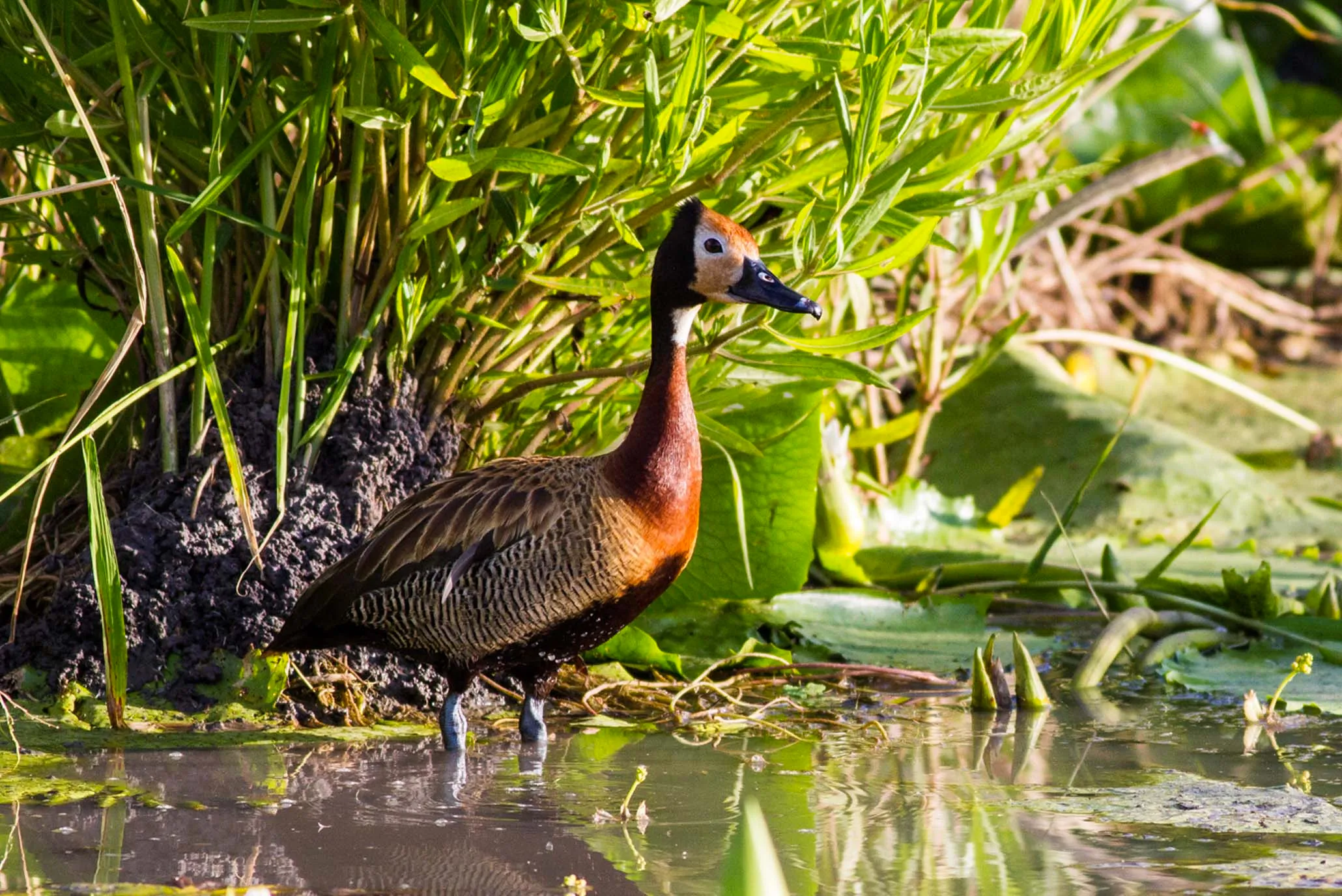
Arusha National Park is recognized as a premier birdwatching location. It boasts more than 120 observable bird species. The prevalent avian species to observe in the national park include, but are not limited to, Hartlaub’s turaco, scaly spurfowl, hadada ibis, silvery spotted hornbill, cinnamon-chested bee-eater, Taveta weaver, bar-tailed trogon, and Narina trogon. Flamingos at the Momella lakes might provide valuable insights during a birding safari.
Momella Lakes
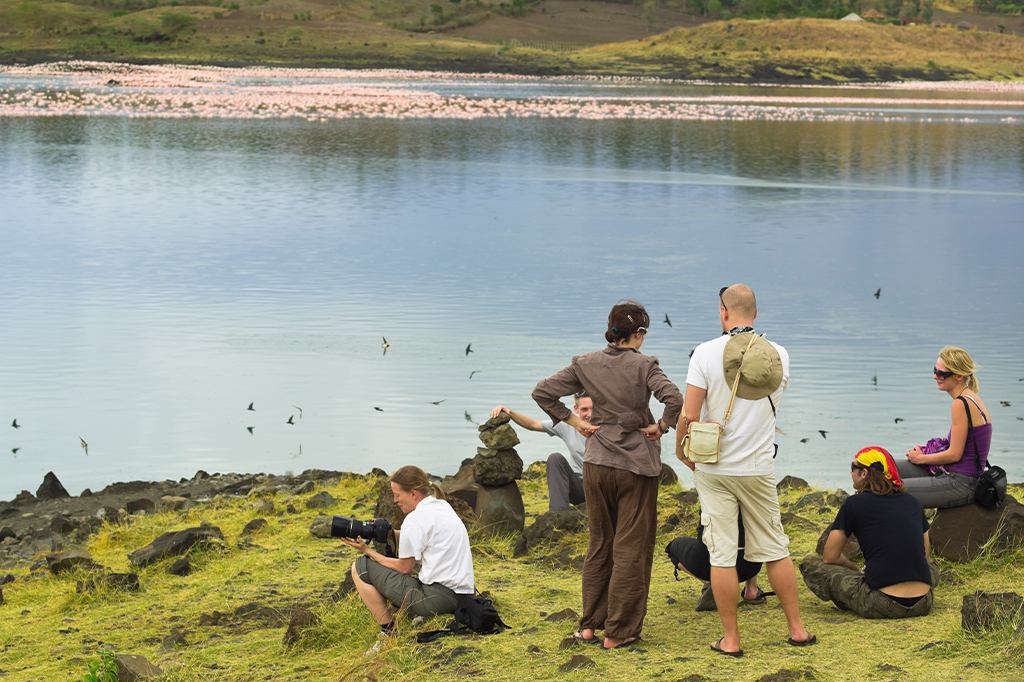
The Momella lakes are situated on the northeastern aspect of the park. The region contains seven Momella lakes: Tulsan, Lekandiro, Kusare, El Kekhotoito, Big Momella, and Small Momella. These are alkaline lakes generated by volcanic debris resulting from the previous eruption of Mount Meru. These lakes serve as habitats for wading birds and provide excellent opportunities for birdwatching. Other species, like zebras, can also be observed from the shores of the lakes. These lakes also host flamingos, which can similarly be found in Kenya’s Lake Nakuru National Park.
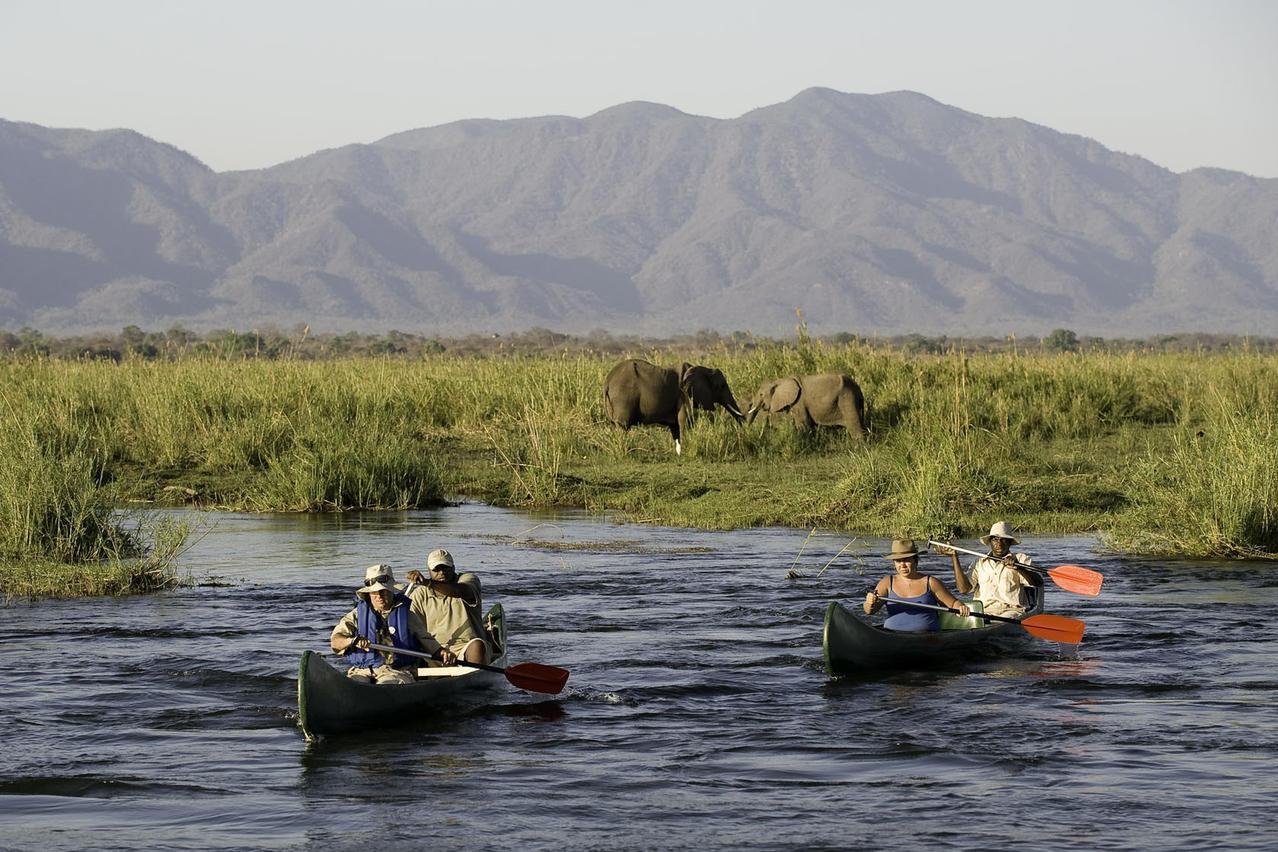
Travelers typically engage in paddling on this lake while appreciating the stunning vistas of flamingos and the expansive terrain of the neighboring regions.
The park is organized into three areas that contain the primary attractions of Arusha National Park.
West Meru Crater Area
This constitutes the western boundary of Arusha National Park. It includes Mount Meru Peak and the Jekukumia River. This converging river flows into the production of maio water. A hike along the riverbanks, accompanied by the invigorating sensation of the Maio waterfall’s waters, is indeed worthwhile.
Southeastern area/Region
The southeastern area of the national park is predominantly characterized by grasslands and the Ngurdoto crater. This crater has a depth of 100 meters and a breadth of 3.6 kilometers. This region is marshy and hosts several wildlife species, making it a dependable location for safari game drives. The Ngurdoto forest in this region is home to black and white Colobus monkeys, a highly coveted wildlife species in Africa.
The Momella small lakes constitute the northwest region. It is appropriate for animal observation and avian watching.
Tululusia Hill
Tululusia Hill was historically utilized as a vantage point for monitoring advancing adversaries during conflicts. At present, it ranks among the premier trekking and camping destinations in Africa. Visiting this hill provides guests with an opportunity to explore Tanzania’s history about tribal and colonial conflicts. This region is densely wooded. This site is excellent for observing elephants, buffaloes, Colobus monkeys, and various other inhabitants of the enchanting park.
Things to do in Arusha National Park
Game drives
Game drives in Arusha National Park occur around the Momella Lakes. A variety of wildlife species use these lakes. They refrain from consuming the water due to its alkaline nature. The presence of fauna near the lakes provides opportunities for wildlife observations on game drives across the plains of Arusha National Park. Wildlife locations feature hyenas, zebras, giraffes, cape buffaloes, elephants, leopards, hippopotamuses, wildebeests, and numerous others. The optimal period for wildlife observation in the Park occurs during the dry season, specifically from June to October.
Mountain Climbing
The presence of Mount Meru provides an exceptional opportunity for trekkers to explore this national park. Mount Meru is approached by the Momella lakes from the eastern entrance. The climb offers a stunning aerial vista of the Arusha Park sceneries and the peak of Mount Meru, located on the western Meru crater.
Bird Watching
Arusha National Park is home to nearly 400 bird species. Bird watching is a remarkable pursuit that enthusiasts can partake in during a safari expedition in Tanzania. Prominent avian species in the Park encompass the African fish eagle, Narina trogon, Little grebe, Great crested grebe, Egyptian goose, Black Saw-wing, Bar-tailed trogon, Hartlaub’s turaco, cinnamon-chested bee-eater, Bearded vulture, African olive pigeon, Verreaux eagle, Tawny eagle, Silvery-cheeked hornbill, scaly francolin, peregrine falcon, red-fronted parrot, southern pochard, Augur buzzard, flamingos, among numerous others.
The optimal birdwatching period at Arusha National Park occurs on the finest days of the dry season, specifically from June to October, although opportunities are available year-round. The period from November to April is optimal for observing migratory birds from Europe and North Africa.
How to get to Arusha National Park
Access to the park is available via road transfer or air transfer. It is situated 25 kilometers from Arusha, 35 kilometers from Kilimanjaro National Park, with the park’s main entrance being 25 kilometers from Arusha city, accessible in a matter of minutes.
Travelers who prefer air travel can fly to Kilimanjaro Airport and subsequently drive a few kilometers to the park.
What is the optimal time to visit Arusha National Park?
Similar to most national parks in Tanzania, Arusha National Park remains accessible to visitors throughout the entire year. The optimal period for safari observation is the arid months from June to October. This is an optimal period for observing numerous migratory birds in this location.
Accommodations In Arusha National Park
A diverse array of lodging options is accessible for tourists to Arusha National Park or for extended stays. Included are Hatari Lodge, Ngurdoto Mountain Lodge, Africa Tulip, Arusha Serena Hotel, Ngare Sero Mountain Lodge, Momella Wildlife Lodge, and Mount Meru Game Lodge.
In conclusion, Arusha National Park is one of the premier destinations to experience during your African safari. Reserve your Arusha excursion with Explore African Safaris here.
