
Interesting facts about the Great Migration
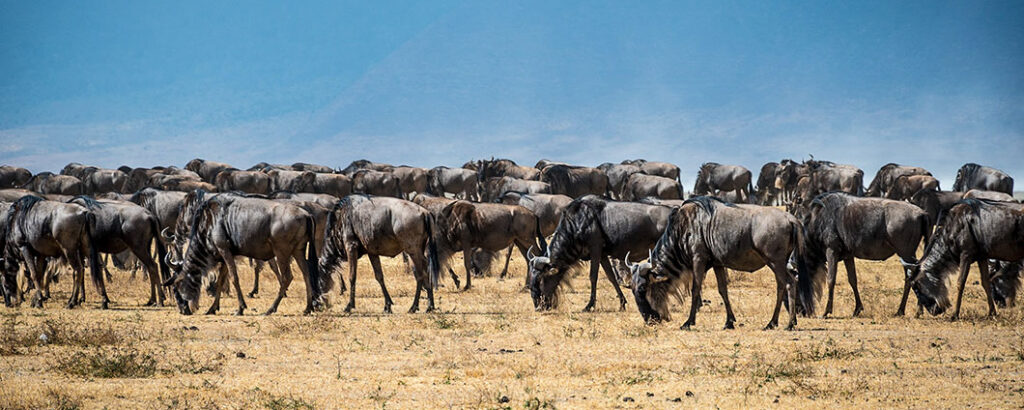
Interesting facts about the Great Migration, Every year, columns of wildebeest, zebras, and gazelles migrate from the south of the Serengeti to the north. The motive behind this greatest mammal migration is the search for fresh grazing grounds. Animals follow rain patterns of the Serengeti-Mara ecosystem and would change trajectory should there be any sudden climate change.
The Great Migration (or simply the Serengeti Migration) should not be confused with the American Great Migration, which is the movement of Black people from the South to the North, Midwest, and West. The Serengeti Migration features approximately 2 million ungulates (wildebeest, zebras, and gazelles) from the southern plains to the north.
The wildebeest migration is arguably one of the Seven Wonders of Africa. On this blog, we have gathered six interesting facts about this fascinating mammal migration. Let’s explore them.
1. It’s the largest migration of big land mammals.
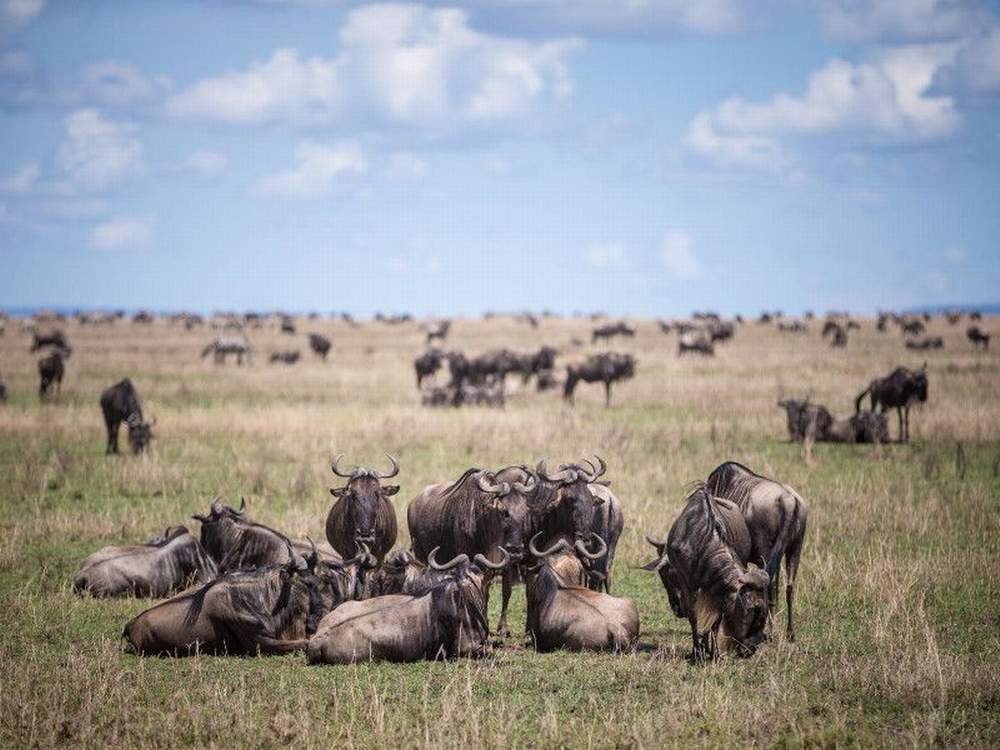
The wildebeest migration features large beasts: wildebeest, zebras, and gazelles. They are joined by other antelopes and may also trigger other herbivores to move either away or along the way. This makes a total of over 2 million animals moving in large herds. That’s approximately 1.5 million wildebeest, 400,000 zebras, and 200,000 gazelles.
There are actually plenty of animal migrations in the world, including the bat migration in Zambia and the Great Nile Migration in South Sudan, but the Serengeti’s migration is world-famous. It features breathtaking events, including the dramatic river crossings, bull fights in the rutting season, and the calving season. For most safari-goers, witnessing a river crossing fulfills their travel desires.
2. Over 500,000 calves are born in two months.
Over the course of two months, the southern plains of the Serengeti and Ndutu welcome about half a million newborns. The herd arrives back in the southern Serengeti in December following greener grazing grounds after the onset of the short rain season in early November. The animals spread across the plains and take advantage of the nutrient-rich grass in Ndutu as they enter the final stages of their pregnancies.
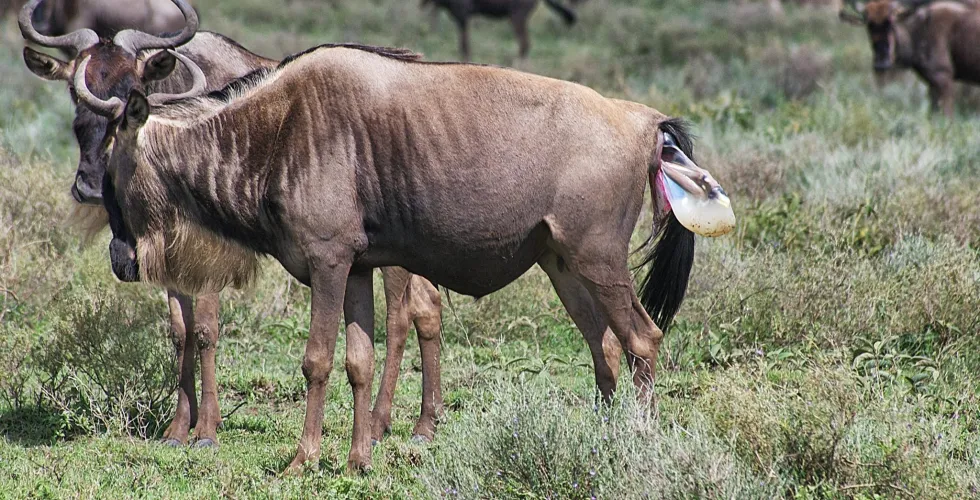
Calving starts in late December through early March, with January and February being peak months. In these months, the southern plains and Ndutu are full of newborns. The wildebeest calves are born prepared to survive in a hostile environment full of hungry predators. For instance, they can stand up after a few minutes after birth and will run after just an hour.
3. Predators time their birth with the calving season.
Nature is often astonishing. We can’t help ourselves but wonder how predators such as lions, leopards, cheetahs, and hyenas give birth between December and March. Wondrously, most of these births occur in the southern Serengeti and Ndutu region of the Ngorongoro Conservation Area.
Why would predators wait until December to give birth? And how do they know the right time to mate so they can give birth when the Serengeti is full of young, vulnerable prey? We just don’t know yet. Maybe animals know family planning very well. They don’t bring newborns when food isn’t readily available.
Predators also love being surrounded by young animals. They use these helpless calves to teach hunting practically (yes) to their cubs. The battle between ‘mothers’ (lionesses and wildebeest moms) isn’t always easy. The wildebeest form protective layers by surrounding the calves when grazing or during movements.
4. The wildebeest migration is visible from space.
Those who have been on a balloon flight or helicopter safari over the wildebeest migration know how it feels to watch these animals from atop. Studies have found that it’s possible to detect the movement of massive herds from satellite images. Using high-resolution imagery, satellites can monitor and even count animals migrating.
Satellite imagery helps not only to track the movement of animals but also to estimate the herd size. This data, together with that of the aerial survey, is used to update authorities and stakeholders on the status of the wildebeest migration. The movement benefits not just wildebeest, zebras, and gazelles but also predators and local communities whose livelihoods depend on tourism.
5. Zebras are the architects of the Great Migration.
The wildebeest take all credits for the greatest spectacle, but zebras play an important role. Zebras are bulk eaters, often eating the top part of the grass, leaving the middle piece for fussy eaters, like wildebeest.
Additionally, zebras have good eyesight and memory, while wildebeests have a good sense of smell and sound. The smell of rain and thunderstorms from miles away is detected by the wildebeest. And they then move, following green pasture after the rains.
Zebras with their good eyesight and memory remember the safe routes. How do they know a route is safe, though? They just watch wildebeest move and see if there’s a predator or not. Thanks to zebras, the Great Migration has been following the same age-old routes.
6. The wildebeest migration is purely natural and unpredictable.
Imagine traveling all the way from the US or UK to the Serengeti, aiming to witness a river crossing. You then spend three days driving early in the morning to one of the crossing points and witness no other thing than Nile crocodiles basking in the sun. It’s frustrating, right? We feel you.
Nature teaches us tough lessons that some events are not predictable, including the Serengeti wildebeest migration. The grand finale of this event happens in the north, where animals brave the mighty Mara River in a battle between life and death. The scene might be wildebeest making it to the other side of the river or Nile crocodiles taking their share, or both.
However, a river crossing is always unpredictable. Animals cross the river when they want, not to impress guests (who does that, by the way?). They have enough time to cross the river; you have three days to stay in the Serengeti. So, the odds favor animals.
The good way to approach this hard truth is to stay calm and enjoy every wildlife sighting before you. You can also search for other animals—the Big Five, big cats, over 500 bird species, and more. Depending on the season, most river crossings happen in July and August.
Let’s design your migration safari.
We track the movements of wildebeest, and we share genuinely what you should expect based on your time of travel. Our guides will make sure you enjoy your migration safari. Let’s help you design it. Email us at info@exploreafricansafaris.com.