
Northern Tanzania Safari Guide: Everything You Need to Know
Tanzania is home to a myriad of tourist destinations evenly distributed throughout the country. The northern safari circuit is well-known and without a doubt well-established. This region offers the world’s most diverse experiences, which include game driving, culture exploration, mountain climbing, and more.
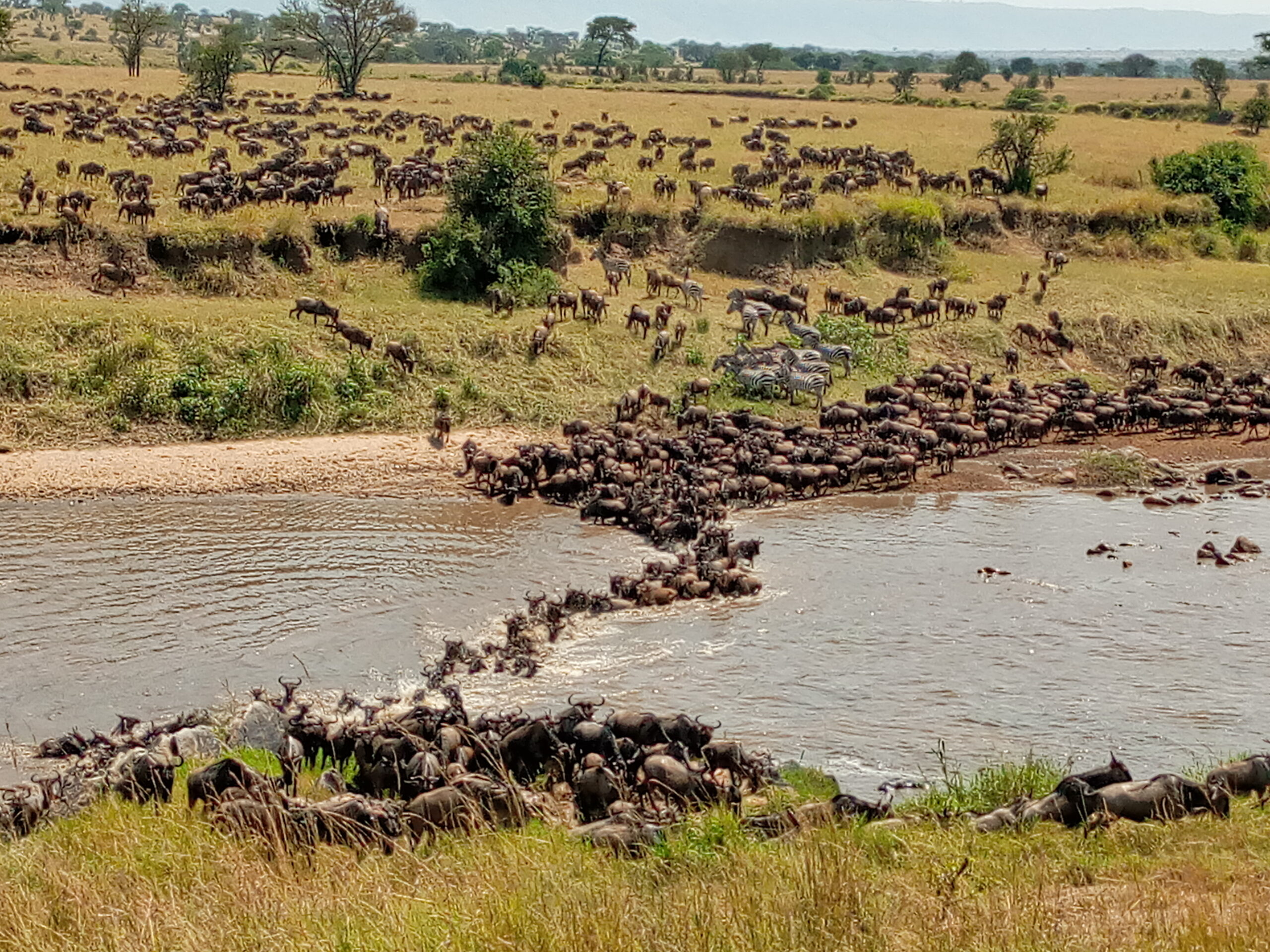
The world-famous Serengeti National Park and Ngorongoro Crater are the main drawcards here, not to mention Mount Kilimanjaro, the world’s tallest freestanding mountain. And that’s not all. At its peak (between June and October), the annual migration of wildebeest and zebra is the most striking natural event on Earth.
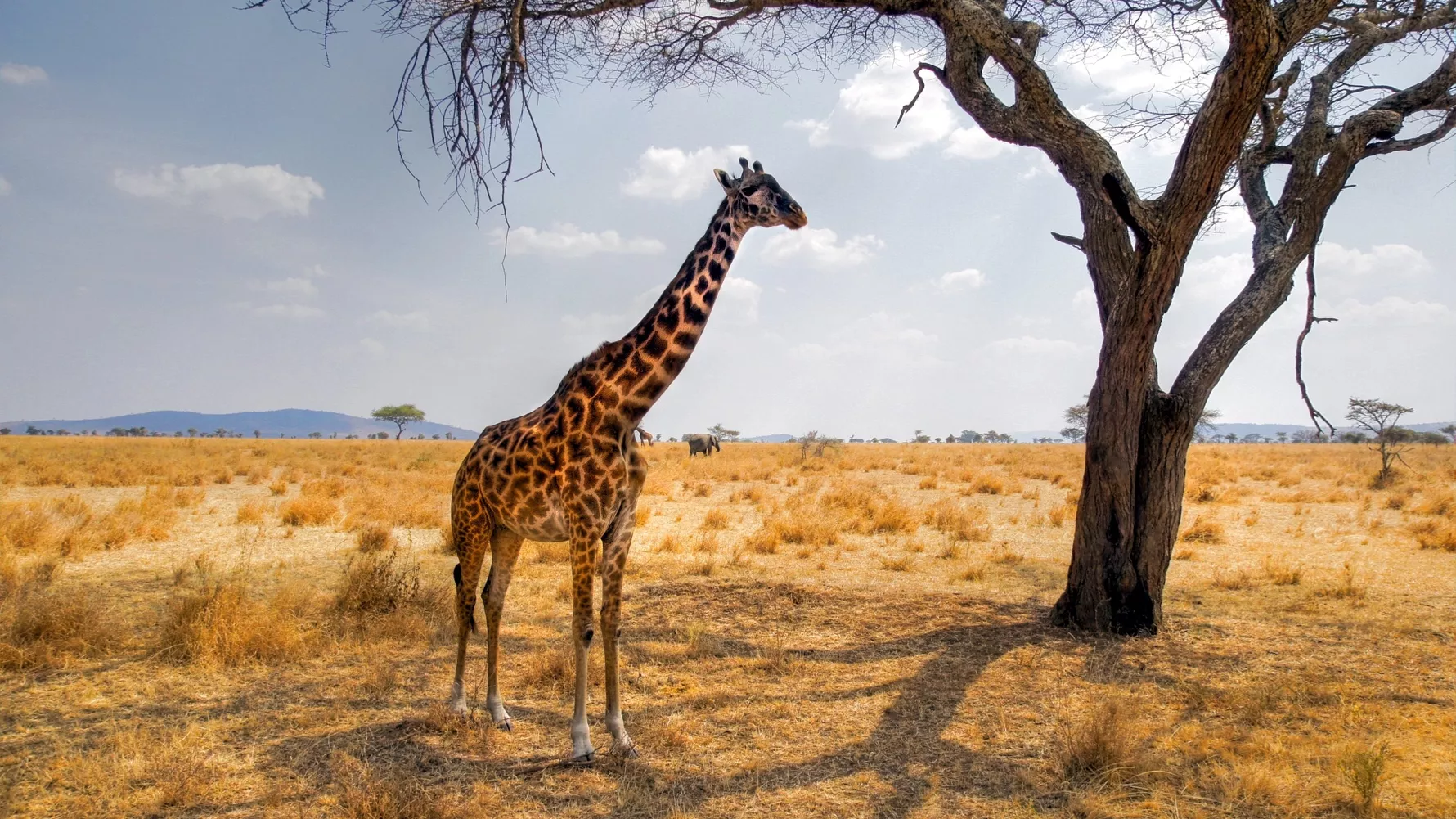
The lesser-known places, Tarangire National Park, Lake Manyara, Mkomazi National Park, and Arusha National Park, still deliver exceptional experiences without the crowd. In addition, Lake Natron, Lake Eyasi, the Ol Doinyo volcano, Empakai, Maasai, and Hadzabe also offer unforgettable experiences.
On this blog, we explore all the details in the northern safari circuit. Should your question go unanswered, please talk to our experts.
How to get to Northern Tanzania
As we said, the North is well-established in terms of logistics. International visitors can land at Kilimanjaro International Airport in Arusha, which has direct flight connections with major travel hubs, including Doha, Amsterdam, Addis Ababa, and Nairobi.
There are also seasonal flights from Zurich, Paris, Brussels, and Milan. Alternatively, you can fly from Dar es Salaam Airport (DAR), which has more flight connections, including to Moscow, Dubai, Istanbul, Qatar, Mumbai, and Johannesburg. Dar es Salaam is a two-hour flight to Arusha.
Currently, no airport in Tanzania has a direct flight connection to North America. However, you can connect through Nairobi, the hub of Africa, which offers daily flights to Kilimanjaro Airport. For instance, Kenya Airways flies directly from New York (JFK) to Nairobi.
Nairobi also has many flights from Europe, including British Airways and Kenya Airways from London Heathrow, Air France from France, Swiss Air from Zurich, Brussels Airlines from Brussels, and Lufthansa from Frankfurt.
When is the best time to go to Northern Tanzania?
The dry season, June through October, is the best time to visit Northern Tanzania. Pleasant weather, fewer water sources, and dry trails make it easier to search for wildlife. This season also synchronizes with the peak of the wildebeest migration in the Serengeti. If you want to watch herds braving the torrents of the Mara River, then make your visit at this time.
The vegetation thins out, and the water dries, forcing animals to concentrate in a few places. In Tarangire, for instance, large herds of elephants migrate from other places to quench their thirst in the Tarangire River.
The dry season may get busier in the Serengeti and Ngorongoro Crater as many people seek the Big Five and the annual wildebeest migration. Prices may be a little bit higher than normal, and you may sometimes compete with at least five safari vehicles for a wildlife sighting.
Northern Tanzania or Southern Tanzania?
Both offer a unique taste to your safari. The North is well-known for frequent wildlife sightings, including the Big Five, predators, and ungulates. This circuit is also well-established. There are plenty of hotels, lodges, tented camps, and even mobile camps designed to follow the Great Migration.
The downside of it is that it is often crowded in the high season. However, it is worth noting that only the Serengeti and Ngorongoro Crater get the largest share of traffic. Yet, it’s possible to explore hidden corners of the Serengeti. And for the case of the crater, we recommend spending two nights because the floor may be flooded with vehicles.
Prices may also go higher as lodges and operators charge a premium (park fees also climb in the high season). So, you may not see the value of your money. To cut the costs, you may want to travel as a group so you can share the cost. Or, you can stay in budget-friendly camps, drive instead of flying, and visit less popular parks like Tarangire and Lake Manyara.
The South is remote and lush. The roads are not well-established, and there are few, yet smaller, camps. The best way to get there is by flying from Dar es Salaam Airport, which is a 45-minute flight to Nyerere (Selous) and a one-hour flight to Ruaha National Park. No layover.
The upside of it is that you enjoy wildlife views without the crowd. The landscape is also evergreen and hilarious, something you can’t stop looking at, especially when ballooning. You can also spot rare species like the African wild dog, roan, and sable antelope.
The South also offers a wide range of safari activities beyond traditional game drives. Walking, which is limited in the north, is allowed here. You can also drive during the night, go for a boat ride in the Ruaha or Rufiji rivers, or enjoy a sleepout in a simple fly camp. All these come at a lower price compared to a drive-only safari in the north.
The downside of it is that you have fewer camps to choose from, some of which are only open in the high season, June through October, and December through February. In addition to that, most parks are very lush, with trails either being poor or unestablished.
How can you design your Northern Tanzania tour?
Most northern circuit tours are designed around Serengeti National Park and the Ngorongoro Crater. Many visitors start with a one-day visit to either Tarangire or Lake Manyara or both before heading to the Serengeti for a multi-day visit.
You will arrive in Arusha and spend the rest of the day unwinding from jet lag, or if you arrive early, take a city tour or coffee plantation walk.
Because the crater is small and jam-packed with animals, crowds may build on the floor. Two nights, one for the crater and one for the conservation area and the Maasai, are enough. For the Serengeti, plan to spend at least three days to discover more of it and to increase your chances of spotting a river crossing.
After the safari part of your tour, we recommend a beach holiday in Zanzibar or along the mainland coast. Do this after you have explored the Serengeti, and fly directly from Seronera Airstrip to Zanzibar (Unguja) or via Dar es Salaam to Pemba or Mafia Island.
For Kilimanjaro, set aside at least 6 days to conquer the roof of Africa, and if you are interested (and if you have time left and a budget), go for a safari or beach holiday. We understand your feet are tired, especially after climbing to 5,895 meters above sea level. So, a beach holiday would be better than a safari.
Let’s design your northern Tanzania safari.
Our experts know much of Northern Tanzania and are ready to share it with you. At Explore African Safaris, we don’t sell safari packages; we show the natural beauty of Tanzania. Should I go north or south? We can help you decide. We are an email away.