
The Best Time to Visit Serengeti for the Great Migration
The Best Time to Visit Serengeti for the Great Migration, Large herds of ungulates trek following age-old routes in the quest for greener grazing grounds. The wildebeest, zebras, Thomson’s gazelle, eland, and Grant’s gazelle migrate from the southern plains of the Serengeti to the north. This is the Great Migration (not to be confused with the American Great Migration of African Americans).
The movement features approximately 1.7 million wildebeest moving in columns of up to 25 km in length, quickly followed by zebras, gazelles, and elands. If a wildebeest were to finish the entire migration route, from the south to the west to the north and back to the south, it would cover about 800 km (500 miles).
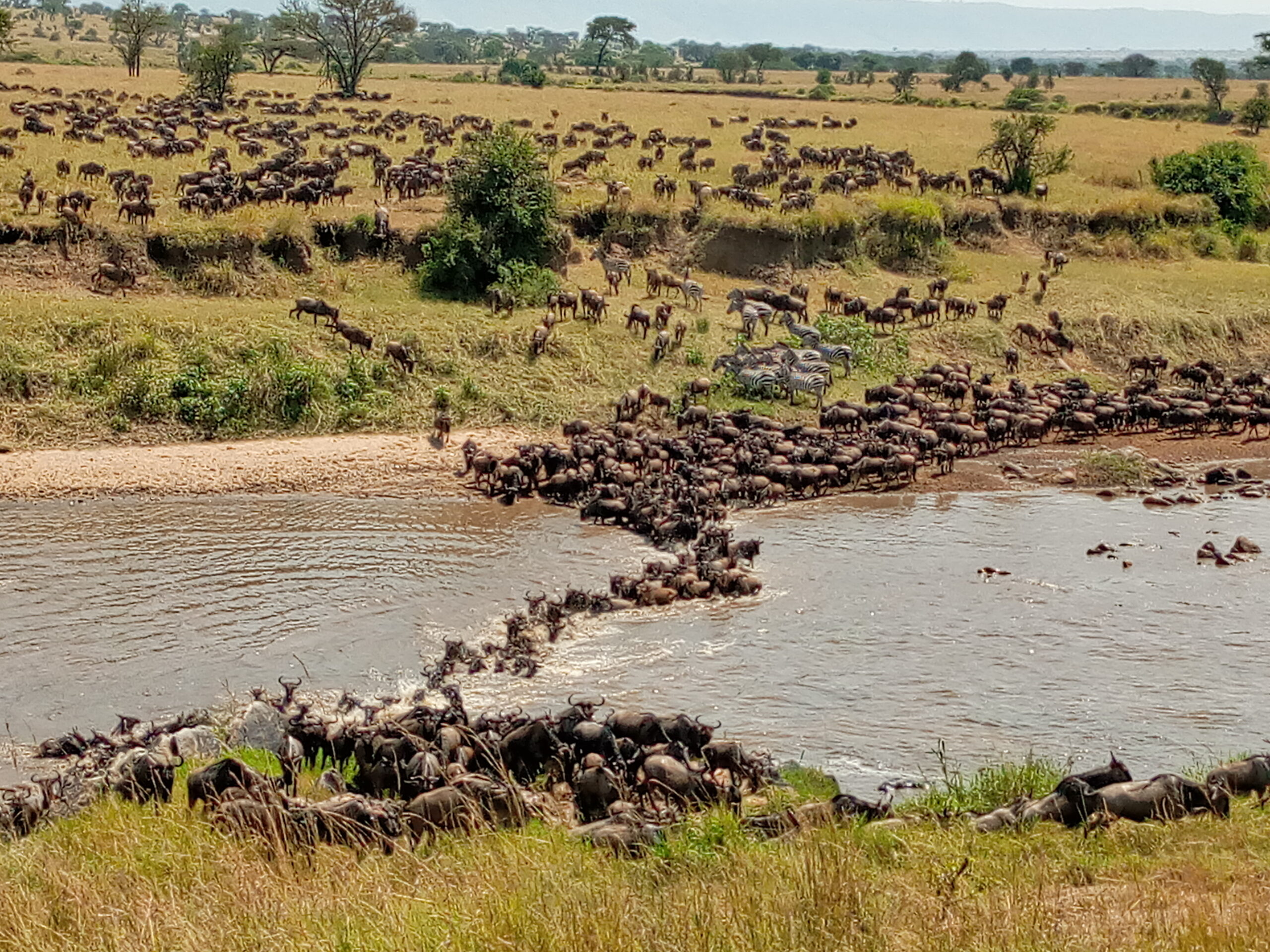
For most safari-goers, the Great Migration is the main attraction for their Serengeti safari. But there are a lot of things to add to your Great Migration safari, including the Big Five, the famous lion population, among many others. While it is impossible to precisely predict the next move of this event, timing still matters to make sure you don’t miss your favorite episodes. Read more about the best time to visit the Serengeti for a Great Migration safari on this page.
In the Serengeti-Mara ecosystem, nature features its greatest show on earth, where nearly 2 million ungulates move from south to west, then to north and back to the south again. The motive behind this movement is their endless search for green pasture and quality water.
The animal migration is so massive that it is visible from space. It begins with the birthing of about half a million calves in the nutrient-rich southeastern plains, followed by massive treks to the north when the southern plains dry off.
For a wildebeest or zebra to make a complete cycle, it has to survive a lot of tragic events. Hungry lions, leopards, and hyenas spy the fringes for an opportunity. Over 2,000 Nile crocodiles wait patiently to take their share. In addition, hunger and fatigue may also weaken animals, making them targets for opportunistic predators.
When is the best time to see the Great Migration?
The annual migration features various events, including the calving season and river crossings. You can actually time any of these events. Here is a general timeline of every crucial event of the Great Migration.
The calving season
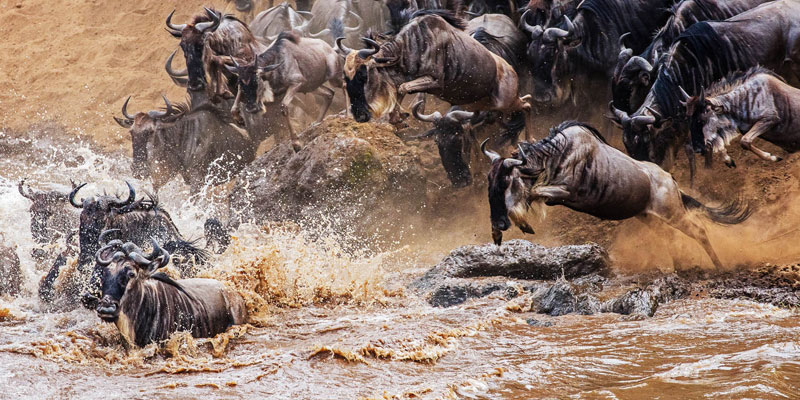
The early short rains that commence in October make the southeastern plains of the Serengeti greener, hence drawing massive herds to these plains. By December, the migration herd had settled in the southeastern plains with an overspread into the Ndutu plains of the Ngorongoro Conservation Area.
The animals arrive here to feast on the nutritious grass, which is favorable for the growth of the newborns. While plains are almost everywhere in the Serengeti, those in the south are fertile. Millions of years ago, the Ngorongoro Highlands erupted, and the ashes were carried away by the wind to the Ndutu area.
The calving season runs from December through March. It reaches its peak in January and February. A single day in February, for example, may welcome about 8,000 calves—roughly 56,000 calves per week.
The abundance of young animals attracts a variety of predators—lions, leopards, hyenas, and cheetahs—turning the plains into a battlefield for survival. These carnivores take advantage of young, vulnerable prey to feed their newly born cubs. But it’s not that simple.
Young wildebeest, however, are born ready to survive in hostile environments. Scientifically, the wildebeest, zebra, and gazelle are precocial, which means newborns are relatively mature, mobile, and able to move around, or able to feed themselves a few minutes after birth.
On the flipside, cubs (and puppies) are born helpless, blind, and highly dependent on their mother. For this reason, predators have to coincide their birthing times with the calving season to ensure there’s plenty of ‘easy’ prey. The herbivores also synchronize their birthing times with the commencement of short rains in the southern plains. Why is this? Simply because of the availability of nutritious grass. The short grass also offers a defensive advantage for ungulates, as it is easy to spot the enemy.
When to plan a calving season safari?
The best time to visit Serengeti for the calving season is from December through March. However, we recommend planning your safari in January or February, when the plains are flooded with young life. The weather is also favorable for wildlife viewing due to clear skies, green landscapes, and dry trails. On top of that, you will enjoy discounted rates as lodges and camps compete for a few guests arriving.
Where to stay for a calving season safari?
The southern part of the Serengeti is home to relatively fewer camps and lodges compared to the central part. And some of them close temporarily from November through May. However, there are two permanent camps, Sanctuary Kusini Camp in the southern Serengeti and Ndutu Lodge in the Ngorongoro Conservation Area.
The River Crossings
Grumeti River crossings
When rainfall declines in May, the herd moves northwards to the western corridor. Here, they face their first major threat—the Grumeti River. Depending on the season, animals may reach this region anywhere between May and early June. So, plan wisely (we’re here to help you). The Grumeti River crossings are quite spectacular, but they aren’t famous. We highly recommend them for anyone who wants privacy and undisturbed wildlife action.
After they cross the Grumeti, some head straight north via Lobo, while others enter the Ikorongo Game Reserve and may spread to Maswa Game Reserve. These reserves were established to protect the routes of this migration from being encroached on by local communities.
When to see the Grumeti River crossings?
The Grumeti River crossings occur between May and June. However, the great wildebeest migration heavily depends on the rain pattern. So, in some years, animals may cross the Grumeti early or late. At Explore African Safaris, we will keep you posted on the latest events happening before and during your safari. In addition to that, you will enjoy views of lions, leopards, cheetahs, giraffes, buffalo, and elephants, among many others.
Mara River crossings
By July, the herd was on the banks of the Mara River. Here is where the most iconic pictures of the Great Migration are shot. And this is the most tragic moment the wildebeest go through. Right in front is the large river full of powerful crocodiles. And on the fringes are hungry predators ready to feast on the cowards and weak.
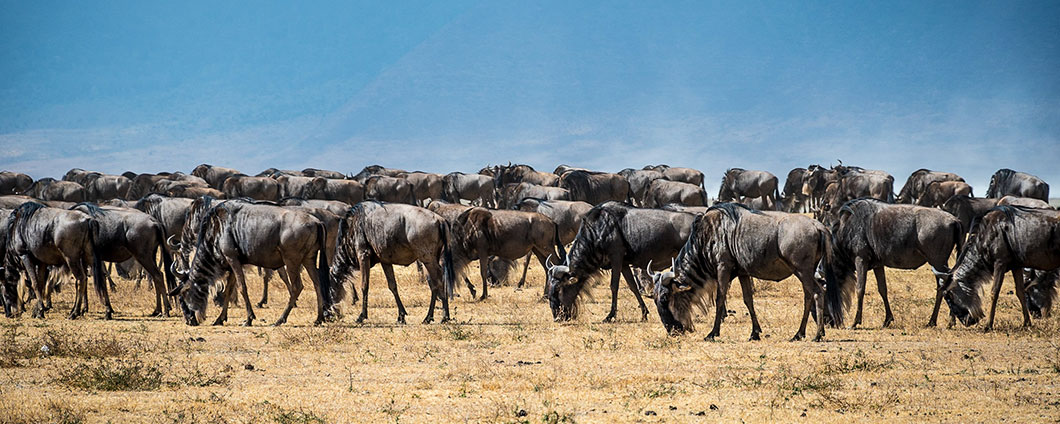
When they have no option, the animals cross the river dramatically. The lucky (and strong) make it to the other side of the river, but the weak are devoured by the crocs. Most travelers aim for this scene, but only a few of them witness it. Why is this? Because animals cross the river when they want, not when you (the viewer) want. So, it is all about patience.
At Explore African Safaris, we want our guests to experience the best of the Great Migration. Our advice is to stay longer to give the animals time to move naturally. We also advise enjoying other scenes like the Big Five, predators, and others as you wait for a possible river crossing. That reduces so much pressure on you.
The bottom line
We understand that you want to experience the best of the wildebeest migration. Our team is always on track with the changes and movement of the animals. We also partner with mobile camps and lodges to ensure that we are taking the right direction for your migration safari. Talk to our expert to start planning.