
Your Ultimate Guide to Serengeti National Park in 2026
Your Ultimate Guide to Serengeti National Park in 2026, Every year, the Serengeti welcomes about 350,000 visitors. And in 2024, Tanzania’s flagship destination recorded about 589,300 tourists (as of data released by the Tanzania Investment and Consultant Group Ltd.). The park is projected to surpass that number in 2025 (data for the year hasn’t been published at the time of writing).
So, we can say (supported by data) that Serengeti is a favorite safari destination in Tanzania (and Africa). If you are planning to visit this world-famous destination in 2026, this guide is for you. We’ve compiled all the important news, updates, and tips for a rewarding Serengeti safari.
Location and how to get there.
Serengeti is located in north-central Tanzania, approximately 420 kilometers (260 miles) from the town of Arusha. You can simply get there by driving or flying. Driving is the best option if you are okay with spending 6-7 hours on the road. The drive is extra rewarding, with scenes of local villages and plantations along the way. More importantly, it introduces you to the hustle and bustle of Tanzania’s town and rural life.
If you want to get there quickly, then flying is the best alternative. Serengeti has great flight options from Arusha, Dar es Salaam, and Zanzibar. Depending on your entry point, you can fly into one of its seven airstrips, especially one that’s even closer to your lodge. The flight from Arusha takes about one hour, while flights from Dar es Salaam and Zanzibar often take 2-3 hours.
How big is Serengeti National Park?
Serengeti spans 14,763 square kilometers (5,700 square miles). The vegetation of this park is mainly of vast, expansive plains. The Maasai named it ‘Siringet,’ meaning the land that runs forever. Apart from savannahs, the Serengeti also features granite rock kopjes, rolling hills, rivers, and valleys.
What to see in Serengeti National Park
Great Migration
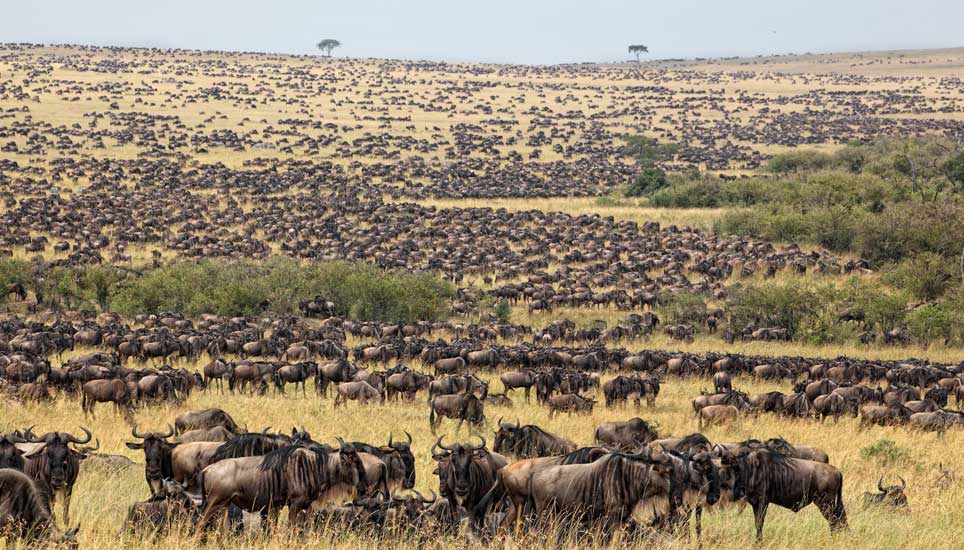
Every year, the Serengeti-Mara ecosystem hosts the world’s greatest mammal migration. Big herds totalling about 2 million ungulates, wildebeest, zebras, and gazelles, migrate from the southern part of the Serengeti to the north into Kenya’s Masai Mara. The migration is marked with a lot of events, from the birthing of about half a million calves in the southern short-grass plains to the dramatic river crossings.
If you want to have a glimpse of this event, timing is key. To witness the calving season, plan your safari between December and March. Head to the southern plains of the Serengeti and Ndutu area. But if you want to witness herds crossing the mighty Mara River, you will have to plan your safari between June and October. Remember, June-October is the high season, and lodges sell out months in advance. Book early.
Big Five
The Big Five (lion, leopard, buffalo, elephant, and rhino) are must-see animals for most safari-goers. And when it comes to Big Five safari destinations in Africa, Serengeti tops the list. Plan to spend at least two days searching for the Big Five. While other animals (lion, buffalo, and elephant) may be easy to spot, leopards and rhinos are rare.
The best region to scan for rhino is Moru Kopjes, south of Seronera. These prehistoric mammals usually hide in shrubs and thickets. Armed rangers protect this region to prevent poachers from taking advantage of their precious horns. Leopards are not endangered. They prefer silence, hence they escape from the noisy areas and stay in trees during the afternoon.
Predators.
If you want to see more predators, then go to the Serengeti. It’s, with no doubt, the capital of predators in the world. We already talked about lions and leopards. In addition to these big cats, you can spot cheetahs, the fastest land animals. Cheetahs are abundant in the eastern plains of the Serengeti, especially in the Namiri Plains. On top of that come spotted hyenas, jackals, striped hyenas, bat-eared foxes, and mongooses.
Other animals
Many other animals will also appear during game drives. These include Maasai giraffes, roan antelopes, dik-diks, bushbucks, monkeys, hippos, impalas, elands, oribis, and topi.
What to do in Serengeti National Park
Game drives
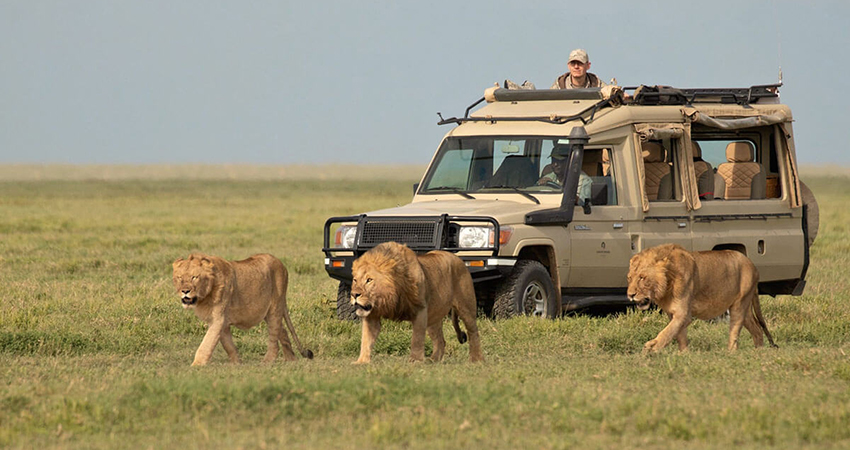
This is the main activity for people visiting Serengeti National Park. In the morning, animals are very active: herbivores find the best grazing grounds, and predators look for possible prey for an early meal. On top of that, the sunlight turns the vast plains golden, creating a scenic background sought after by many travelers. And a full-day game drive is what many people think of when going to the Serengeti. You should not miss this one.
Balloon safaris
There’s magic in flying over the savannah plains. Think… massive elephants moving like tankers (kidding). Or graceful giraffes strolling the woodlands and forests. And the views are sensational when viewed from atop. A balloon safari is always the best add-on activity to the traditional game drive. It is organized during the morning and is often not included in most safari packages.
Walking safaris
There are scenes you can’t experience from the height of a safari vehicle. Yes, small creatures, medicinal plants… and more. All these are experienced on a nature walk. A guided walking safari that makes your safari slow and easier. This simple, comfortable stride can be done around the camp or far in the bush. Be sure to wear protective clothing and avoid black clothing.
Places to stay in Serengeti National Park
As for accommodations, Serengeti has a lot of options, from simple safari tents to high-end tented camps. Your choice mainly depends on the budget. But be aware that lodges in the Serengeti sell out months in advance, especially for the high season. So, book early.
Examples of lodges include the Four Seasons Serengeti, Olakira Camp, Nomad Lamai, One Nature Nyaruswiga, and Siringit Serengeti Camp. If you crave exclusivity and a place with a variety of safari activities, then stay in private concessions, such as Mwiba Wildlife Reserve and Singita Grumeti Reserve.
The bottom line
So then, are you ready for a game drive in the Serengeti? Explore African Safaris can design (if you allow us) a customized safari itinerary just for you. Our experts are here to assist you with the planning process. Let’s get in touch.