
Maasai Mara National Reserve : Are you looking for an amazing African wildlife safari destination for wildlife adventures in Africa? If yes, then you don’t have to worry much because this enormous continent is blessed with spectacular wildlife safari destinations. Africa is home to the greatest ecosystem, the Serengeti Ecosystem which encompasses of the Tanzanian magnificent park, Serengeti National Park and the Kenyan Masai Mara National Reserve. The Serengeti Ecosystem itself is well-known for hosting the greatest mammal migration on earth, which involves more than 1.5 million wildebeests, over 500,000 zebras and more than 250,000 Thomson’s gazelles. This event involves two spectacular parks, Serengeti National Park and Masai Mara National Reserve. Now, let’s explore some important info about the Masai Mara National Reserve.
Situated in the southwest part of Kenya, Masai Mara National Reserve is an incredible tourist destination, an animal paradise for those who want to experience a first-hand encounters with the Big Five, Great Migration, birdlife, stunning vegetation and other attractive wild animals. This super national reserve covers a total area of 1510 square kilometers and is densely populated with wild animals making it the highest concentrated park in Kenya.
Since Masai Mara National Reserve is mainly visited for wildlife adventurous safaris, the best time to visit it is between June and October. During this time, little or no rains are observed in Masai Mara, hence increasing the accessibility of many rough roads around the national reserve. The migration herd enters the Masai Mara from Serengeti National Park between these months. Therefore, if you are interested in trekking the Great Migration while in Masai Mara National Reserve, consider planning your trip in this time.
How to get to Masai Mara National Reserve
Visitors coming from any countries in the world can easily access the Masai Mara National Reserve by booking flights to Jomo Kenyatta International Airport (NBO), which is located in Nairobi city. After touching down in this international airport, you will be taken to Nairobi Wilson Airport (WIL) where domestic flights to Masai Mara are available. Masai Mara has major airstrips which receive a number of domestic flights; they include Serena Airstrip, Ol Kiombo Airstrip, Musiara Airstrip, Mara North Airstrip and Keekorok Airstrip. You will choose an airstrip as directed by your tour operator, or by considering the one that is close to your accommodation facility.
Masai Mara can also be accessed by road. You can drive from Nairobi to one of the Masai Mara National Reserve gates. However, roads entering the gates are unpaved, therefore get prepared for a bumpy drive.
Attractions in the Masai Mara
While on your visit in the Masai Mara National Reserve, you will enjoy a lot of attractive things including wild animals, birds, vegetation, and Big Five.
The Great Migration: Between August and September, the herd crossed the Great Mara River in Tanzania and enters the Masai Mara National Reserve. When visiting Masai Mara during this time, you will get the chance to view uncountable herds of wildebeests, zebras and gazelles grazing in the savannah plains and grasslands. For a fantastic view of the Great Migration, most tour operators offer a hot-air balloon safari, which is once-in-a-lifetime experience during your visit at Masai Mara National Reserve.
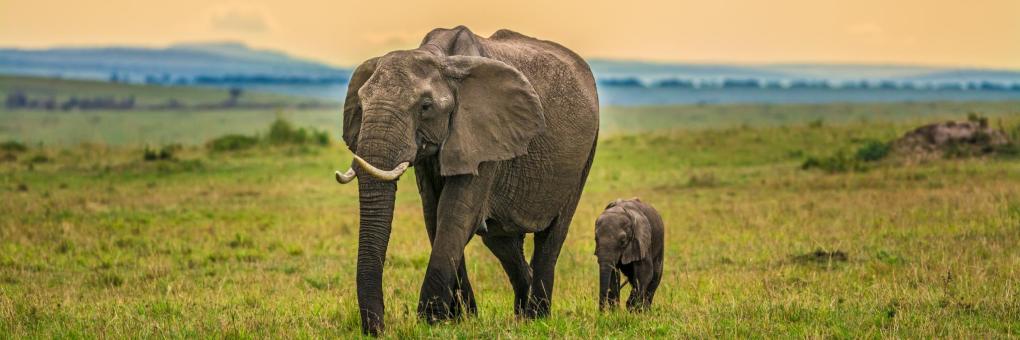
The Big Five: Along with the Serengeti National Park, Masai Mara National Reserve is among few destinations where you can view all the Big Five animals, which encompasses of lion, leopard, elephant, buffalo and rhino. They are labelled as “Big Five” due to the danger they pose to their predators. For that reason, giraffes are not included in the Big Five because they pose less or no danger at all to their predators.
Wild animals: Forget about the Big Five and migratory animals, Masai Mara National Reserve is home to over 90 species of other wild animals. A game ride through the Masai Mara will make you encounter some superb wild animals such as cheetahs, giraffes, elands, hyenas, hartebeest, Grant’s gazelles, impalas, several antelopes, bushbucks, hippos, aardvarks, African hare, banded mongoose, bush babies, olive baboons, Klipspringer and foxes among many others.
Birds: Masai Mara hosts over 500 bird species, which makes it a superb destination for birders. Even if you are not a birder, you will be one after taking an adventurous safari through this tremendous park. Some of them include ostrich, Denham’s bustard, Giant kingfisher, Hildebrandit’s starling, silver bird, Schalow’s turaco, Swahili sparrow, Red-throated tit, Lazy cisticola and many others.
Masai Mara National Reserve Entrance Fees
If you want to have a safari in Masai Mara, you have to be aware of entrance fees for both adults and children. Adults of the age above 17 years will have to pay $100 per day while children aged between 9 and 17 years will have to pay $50 per day. These fees applies when your safari is between January and June 2024. The fees for travelers from July to December 2024 are $200 per day for adults and $50 per day for children with an age between 9 and 17 years.
All things considered about Masai Mara National Reserve can be explored more by consulting Explore African Safaris, and let them help prepare your safari program. Booking a trip to this masterpiece of the Great Serengeti Ecosystem will reward you with an adventurous Kenya safari ever.
