
The umbwe route : Here is to the most challenging and hardest climb to the roof of Africa! Even though it’s the most demanding of all the routes, it also stands as the shortest route to the Southern Glaciers of the Kilimanjaro.
It’s the most preferred route for athletics who wants to prove a point, challenge their peers or set a record, it needs the most resilience out of a person but also give a reality check sometimes to the rebellious ones. Being the most challenging path with fairly unpredictable success rates, its infrequently used. This adds to ow magnificent it can get to the hikers looking for a true challenge.
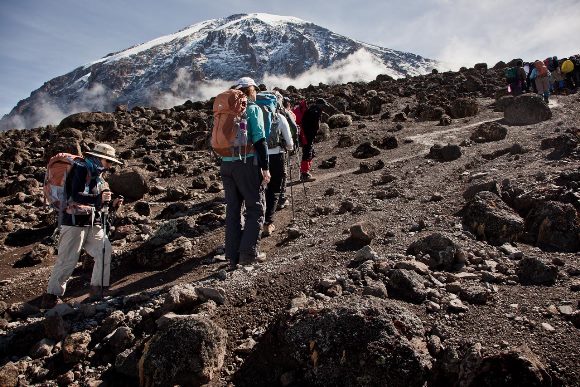
The lonely path can be difficulty due to the barely established trail that may sometimes require crawling and scrambling over tree roots and rocks to get from a point to another, however, it doesn’t still qualify a technical climb of the mountain i.e can still be climbed with minimal equipments.
Umbwe is the most direct route to the summit, being direct is what brings all these other challenges, the steepness of the ascents, several ridges on the way that may be difficult to navigate whilst catching a breath altogether. You can’t make it if you have a only a week of preparing, usually its for experienced mountain and regular trekkers who have probably done a mountain or two, even have done kili through a relatively easier route.
Unlike other route that have up and down ascent mode, the umbwe is steady upward climb that is constantly gaining altitude, this doesn’t favor much acclimatization which is the gold to success when it come to mountain climbing secrets.
Despite the hardships that comes with the umbwe route, its known to have best views than most other routes, in fact the first few ascents distance are enough to have scenery close to that of a summit at the peak. Its is probably what most people experience the worst hardship of the trek in history of climbing mountains cling to, for them to be able to make it to the summit.
The hardship may be just a little charred due to the fact that there are not so many people in the trail due to its reputation, until it joins the Machame route a few days later into the climb where there is going to be an opportunity to acclimatize on day three at Barranco camp. From the crater camp, there is an option to hike following the Reusch crater that offers glorious highlights with perfect circular ash pits, a rare opportunity for tourists to see.he other option on the other hand is to explore the areas around Furtwangler glacier.
From this camp it the umber route follow the Southern ice field and you will summit at Barafu camp and descend through the Mweka route. At Mweka you will make a history by receiving your certificates for summiting as a gesture to congratulate your effort.
Best time to take the Umbwe route!
You want to encounter Umbwe when the weather is most stable, when its not raining! This will add to the challenge of it even more! July and September is considered the best time to hike.
When is the best time to Trek Umbwe Route?
July-September is the best time to trek the Umbwe Route, as the weather is most stable during this period and encountering rain is less likely. That said, since it is close to the equator it is possible to climb the mountain at any time of the year. April and May is the rainy season so this period is best avoided.
What is the success rate of the Umbwe route?
Considered to be the most difficult route on Kilimanjaro, the Umbwe route should be attempted only by experienced climbers. The success rate of the route is between 60% and 70%, with higher chances of reaching the summit if you give yourself extra time for acclimatization.
Umbwe Route tips
- Altitude sickness often appears on the third day of your hike, so it’s best to allow extra time in your itinerary where possible
- Before your Kilimanjaro adventure, make sure your shoes are worn in to prevent blisters on your feet and consider adding insoles and proper socks to your packing list
- Trekking poles will become your best friend and some operators might provide these in your tour price however it is suggested that you enjoy a few hikes beforehand to practice using your poles
- Make a packing list and triple check you have everything you need before you go, rentals will be available through some operators however you’d hate to be missing any essential items
- Consume as much water as physically possible as this will help reduce the symptoms of altitude sickness
- Most importantly, have fun and don’t forget to enjoy the view
The trek is shorter and much more direct than the other trails, however, should not be attempted by novice climbers. And while it is not a technical climb, it’s both a physically and mentally challenging journey. Previous trekking experience is highly recommended, as the days will feature 6-8 hours hiking with daily ascents of 900m to 1,000m, perhaps with the odd day ascending around 1,100m to 1,200m. Depending on the route, you may be trekking at an altitude of over 3,500m. You need complete confidence in your ability to trek for many days over difficult terrain.
Extremes of altitude and weather may be encountered, as may the use of ice axes and crampons for some routes. A degree of physical and mental stamina will be essential to complete the hike as the days will be tiring.
- Difficulty rating: Extremely challenging
- Height: The Umbwe route travels to the summit and reaches the Uhuru peak and a height of 5,895 metres (19,341 feet)
- Duration:The Umbwe route can be completed in 5 days, however, this is not advised as there are no acclimatisation days and success rates are low. Most itineraries will travel for 6 or 7 days which allows time for acclimatisation.
- Trail conditions:The trail itself is steep, and you will find yourself trekking through rocky outcrops, and in places, you’ll be holding on to tree routes as you haul yourself up to the slope. As you travel to the high alpine zone you will encounter strong winds and will be exposed to the elements.
Umbwe Route Climbing Facts covers the Total Ascent & Descent Distance, Total Trek Duration, Difficulty & Highlights. Have these to Conquer Kilimanjaro!
- Ascent Distance: 27.71 Km
- Descent Distance: 20.6 Km (Mweka Route)
- Total Distance: 48.31 Km
- Total Trek Duration: 6-8 Days
- Trek Difficulty: Strenuous, Steep
- Highlight: Steep, For experienced climbers only
- The Umbwe Route has a short and soak starting profile up to Barranco camp where trekkers join climbers from the Lemosho, Shira and Machame route
- Some Umbwe Route trekkers don’t join the southern circuit at Barranco however rather proceed with north, up to Lava Tower and after that onto the Western Breach
- The Umbwe has poor acclimatization openings because of its quick climb and thusly achievement rates can be low on this Kilimanjaro route
- Completely catered camping
Based on these UmbweRoute Climbing Facts, Choosing Umbwe Route gives the best
