
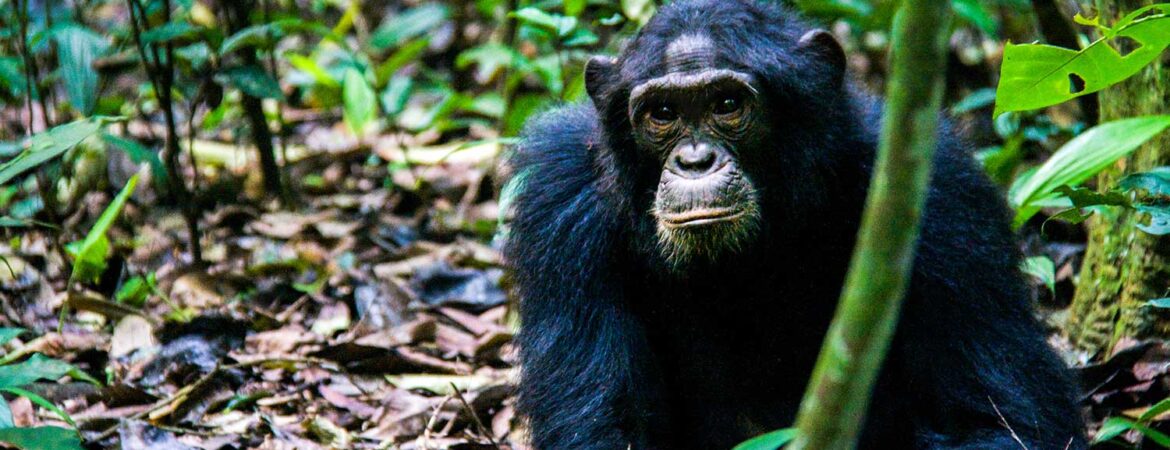
Chimpanzee Trekking In Uganda : Uganda’s chimps are not just a supporting act for the gorillas; they are also a draw in their own right. Chimps are close to us, not simply in terms of DNA, despite living in different ecosystems than gorillas and within diverse social structures. They have a dark side that captivates as much as their more appealing qualities.
CHIMPANZEE TREKKING IN UGANDA
Uganda is unusual in its ability to incorporate a wide range of wildlife and safari experiences into a single itinerary. Chimp tracking in Uganda is one of the most memorable wildlife encounters on the continent.
There are three prominent chimp trekking destinations in Uganda: Kibale Forest National Park, Murchison Falls National Park, and Queen Elizabeth National Park. Kibale Forest is ideal for chimp trekking because of its high population density and frequent encounters.
WHAT IS CHIMPANZEE TREKKING?
Chimpanzee trekking, one of Uganda’s most popular wildlife activities, allows you to experience chimpanzees in their natural environment. Uganda Wildlife Authority Interpretive Rangers lead a small group (maximum of 8) into the world of chimps.
The hikes run about three hours and involve up to an hour with the chimps, who can be seen from a safe yet intimate distance of 8–10 meters. Get up close and personal with chimps to discover their beauty, intelligence, and social structure.
WHAT IS CHIMPANZEE HABITUATION?
Chimpanzee habituation is a very immersive experience. Join the habituation team’s researchers on a half- or full-day journey deep into the forest. These chimpanzees are less accustomed to human presence, so the encounter is more unpredictable.
While it can be difficult to follow the example of these swift primates, the experience is extremely rewarding. The biggest difference between ordinary chimp treks and habituation experiences is the amount of time spent with the chimps. The habituation experience allows you to spend considerably more time with the chimps.
WHERE CAN I GO CHIMPANZEE TREKKING IN UGANDA?
Kibale National Park
Kibale Forest National Park, home to approximately 1,500 chimpanzees, is Uganda’s principal chimpanzee trekking destination. The rainforest is located in south-west Uganda, close to Kampala and Entebbe cities.
The forest has thriving chimpanzee populations, and the park has become synonymous with them. The odds of seeing wildlife here are 90% or higher, and the park is conveniently located on the south-western safari circuit, making it easy to combine with other activities.
The tracking excursions leave twice a day at 08:00 and 14:00, and the morning excursions are busier because many itineraries include an afternoon visit to the Bigodi Wetland Sanctuary.
Tracking permissions are required and can be obtained from the Uganda Wildlife Authority. Kibale National Park also offers chimp habituation sessions. For those who attend for the entire day, you will join the chimps from the time they break their nests at around 06:30 until they nest again for the night at around 19:00.
Budongo Forest Reserve, Murchison Falls National Park
Murchison Falls National Park is Uganda’s top safari destination. The sheer array of experiences available here is remarkable. A single visit can include game drives, boat cruises, chimp trekking, walks to breathtaking waterfalls and landscapes, and sundowners at boutique lodges overlooking the savannah.
The Budongo Forest Reserve, located in the woodland south of the gorgeous park, is an ideal place to monitor chimpanzees. Budongo has a contact rate of over 80%, which is higher than that of Kyambura Gorge in Queen Elizabeth National Park. While sighting opportunities are greater at Kibale, the smaller visitor numbers make the encounter more personal. Tracking permissions can be obtained from the National Forestry Authority.
Budongo offers excellent guiding, with up to six guided groups of three people tracking the chimps each morning and afternoon. Because of the center’s historical connection to the Jane Goodall Institute, the interpretive guides excel at explaining the larger tale of the chimps and the forest.
A typical tracking excursion lasts about three hours, with contact usually made after only one hour of walking. A full-day habituation session is also available for travelers who want to spend more time with the chimps.
Kyambura Gorge, Queen Elizabeth National Park
Kyambura Gorge, a pleasantly concealed ravine in the generally flat savannah bordering Queen Elizabeth National Park, is Uganda’s third-most popular chimpanzee trekking site.
Kyambura Gorge, located in the extreme east of Queen Elizabeth National Park, is also known as ‘the valley of the apes’. The lush forest that covers the valley walls is the result of decades of erosion by the Kyambura River and is an ideal habitat for chimps. As an experienced Ugandan Wildlife Authority guide walks you through this secluded forest, you’ll feel as if you’ve entered another universe.
Only 17 chimpanzees live in the gorge, and the chances of sighting them are roughly 60%. The sights and sounds of the forest inspire tension and make a sighting even more satisfying. Tracking permissions can be obtained from the Uganda Wildlife Authority.
Kyambura Gorge is typically added to an existing safari at Queen Elizabeth National park, as the park has significant biodiversity and is frequently visited for game drives, boat cruises, and the park’s tree-climbing lions in the Ishasha sector.
Semiliki Wildlife Reserve
The Semliki Valley, in western Uganda, is home to a small chimpanzee population. Do not anticipate it to be easy to locate the chimpanzees in Semliki. Due to the arid and scarce woodland environment, they must travel far and wide to find enough food. The study project here is cutting-edge, as scientists attempt to understand the relationship between chimps walking on two legs and the evolution of our own species.
WHEN IS THE BEST TIME TO GO CHIMPANZEE TREKKING IN UGANDA?
Chimpanzee trekking in Uganda is best done during the dry seasons of June to September and December to February. Uganda is a year-round destination. Its equatorial environment ensures that temperatures remain stable throughout the year. Uganda’s seasons are distinguished by varied amounts of rainfall. The long rainy season runs from March to May, whereas the short rainy season lasts from October to November.
The dry seasons of June to September and December to February provide ideal trekking conditions. The clear, sunny weather should make your walk more enjoyable, although heavy rain is still likely due to Uganda’s tropical environment.
Uganda’s peak tourist season lasts from June to September, and hotel prices rise to accommodate the increased demand. If you are familiar with severe trekking conditions, going during the rainy season can lower the cost of your vacation. Permits are less expensive and easier to obtain during the rainy season due to lesser demand.
