
All You Need to Know about the Calving Season : If you are looking for a place to be in the rainy season, add Tanzania to your bucket list. This country is home to spectacular wildlife destinations like Serengeti, Ngorongoro, Selous, and much more.
Probably, you were not free in the dry season. Now you have free time in the rainy season, but still not able to figure out what to discover at this time. The calving season is among the wonderful events during this season of the Great Migration.
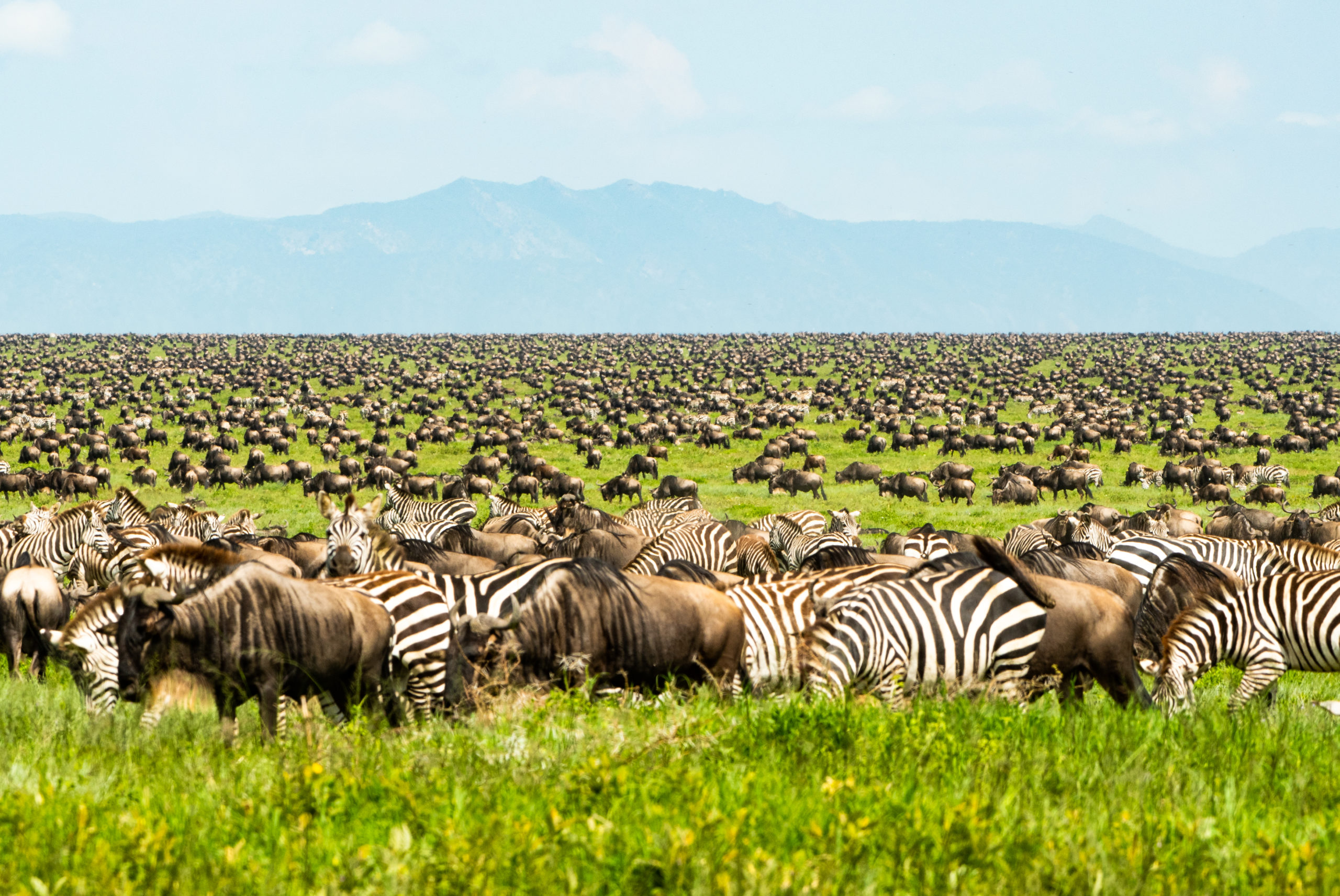
The Great Migration is the most spectacular event in the Serengeti Ecosystem. Every year over 1.5 million wildebeest, 500,000 zebras, and 250,000 gazelles move from the southern part to the northern part of the Serengeti. The major drive of this migration is the search for green pastures. The animals cross the great Mara River and enter the Kenyan Masai Mara National Reserve. Afterward, they return to the southern Serengeti between November and December.
What is the calving season?
The calving season is the time when the wildebeests give birth. About 500,000 calves are born during this season. Everyone thinking of the wildebeest migration usually imagines seeing the river crossings (Grumeti and Mara Rivers). While these events catch everyone’s attention, the calving season goes unnoticed by many.
The calving season happens from January to March. The southern Serengeti and Ndutu areas of the Ngorongoro Conservation Area are rich in green pastures. These areas turn into calving grounds for the three months, January, February, and March.
The Serengeti Ecosystem is huge, why do wildebeest always calve in the southern part? There is an important history there. The Ngorongoro Highlands erupted millions of years ago to form the Ngorongoro Crater. The wind carried volcanic ashes to the plains in the Ndutu area making it fertile. For years, these plains have been fresh grazing grounds during the calving season.
What to see in the calving season?
Expect to encounter thousands of calves. If lucky, you may witness a wildebeest giving birth. Around 8,000 baby wildebeest are born daily during the calving season. The plains
A baby wildebeest need only five minutes to get on their feet for the first time. They are born with instincts to escape predators. A baby wildebeest suckles for at least four months. This young creature, however, begins grazing after just 10 days.
As the number of calves increases, predators like lions, leopards, and hyenas migrate to the south. They target the newly born calves. Hunting is something you might see in the region.
Hyenas are opportunistic predators seizing every weak animal. But it’s not that easy. The wildebeest mothers are overprotective of their babies. They do whatever it takes to keep their calves in the middle of the herd. This makes it difficult for them to be preyed.
Nature is amazing. As wildebeest give birth, the predators like lions and leopards also do the same. They change their mating behavior such that many cubs are born during the calving season. This ensures that enough food is available. Mother lions and leopards take advantage of young wildebeest to feed their families. They also use these newborns to teach their cubs how to hunt.
What else to see during the calving season?
Yes, you are going for a calving season safari. Is that the only thing you will discover? No! Serengeti is the home of diverse wildlife and majestic landscapes. While observing this event, expect to see the Big Five animals: lions, leopards, elephants, buffalos, and black rhinos.
The vegetation is lush and green, making the scene picturesque. This ideal backdrop is the photographer’s choice. The birds fly from tree to tree. Others sing melodious songs close to their nests. You will find beautiful migratory birds. You will find it harder to resist pulling out your camera.
Thousands of grazers like buffalos, impalas, giraffes, zebras, and gazelles follow the green pastures of this part. You may see predators like cheetahs, hyenas, jackals, and many more.
What to pack for the calving season safari?
The calving season happens in the rainy season. Again, the southern Serengeti and Ndutu areas are in the malaria zone. Rainfall is also frequent at this time. As you prepare for this safari, ensure that you bring the following items for a comfortable safari:
Sweaters and jackets. It gets so cold in the rainy season. The sweater helps to warm your body. A waterproof jacket will protect you from rainfall. Do not forget to pack quick-drying clothing to avoid spending a long time with wet clothing.
Be sure to bring waterproof hiking boots. It is muddy and usually slipper. Boots can help a lot. Immunizing for malaria is essential. Bring anti-malarial drugs since there is a huge population of mosquitoes.
Places to stay
Some camps close during the rainy season. As you embark on a calving season safari, be aware of available places to stay. Olakira Migration Camp and Ubuntu Migration Camp offer camping services throughout the year. Check the availability and book early to get your spot.
The calving season is underrated compared to river crossings and other events of the wildebeest migration. However, it is something you’ll observe privately, away from the crowd. This season falls into the wet season. A few visitors reach the Serengeti at this time. Explore African Safaris and organize authentic safaris to witness the calving season. If you are interested, contact our sales team to craft an itinerary in no time. Good luck!
